
Projection Mapping Display Solutions for Buildings, Events, Museums, and Attractions
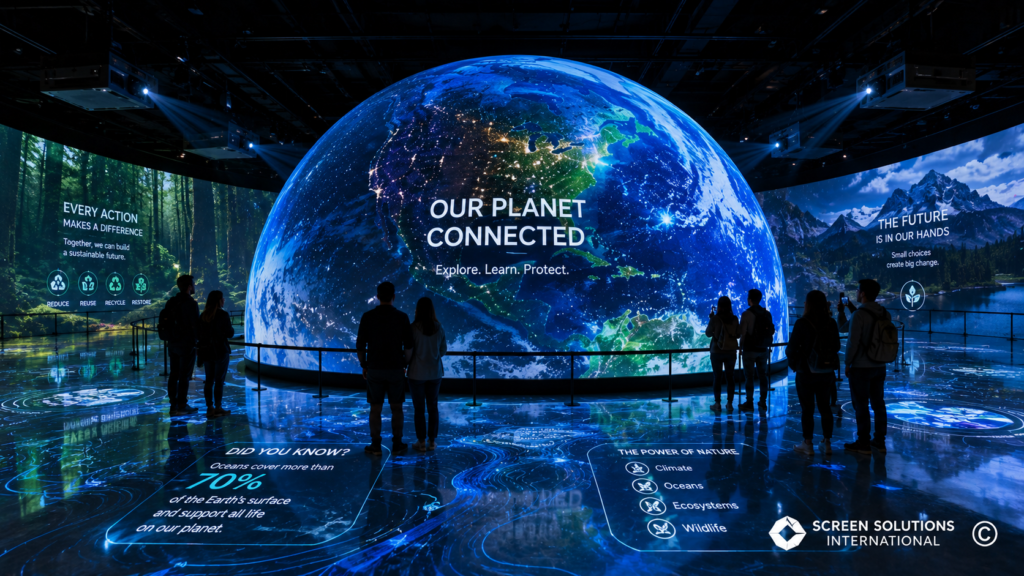
Projection Mapping Display: Creating Immersive Visual Experiences
A projection mapping display is one of the most powerful technologies available for creating large-scale immersive experiences. By precisely mapping digital content onto physical surfaces, projection mapping can transform ordinary objects, buildings, exhibits, and environments into dynamic visual attractions.
As a result, projection mapping is now used across theme parks, museums, corporate events, architectural landmarks, and experiential marketing activations. Furthermore, it continues to be one of the most exciting technologies in the audiovisual industry because it blends physical space with digital storytelling.
What Is Projection Mapping?
Projection mapping is the process of using specialized software and projectors to accurately align digital content with a physical object’s shape and geometry.
Unlike traditional projection screens, projection mapping allows content to be displayed on:
- Buildings
- Walls
- Domes
- Hemispheres
- Products
- Vehicles
- Museum exhibits
- Stage sets
As a result, the physical object becomes part of the visual storytelling. Instead of simply projecting onto a flat screen, designers can turn real-world surfaces into animated, immersive canvases.
Why Projection Mapping Is So Effective
Projection mapping creates an experience that audiences remember. Because it uses familiar physical spaces in unexpected ways, it often creates an immediate “wow factor.”
Benefits include:
- Large-scale visual impact
- Immersive storytelling
- Social media engagement
- Architectural transformation
- Temporary installations without permanent construction
- High perceived value
For many organizations, projection mapping creates a level of impact that traditional displays simply cannot match. Additionally, content can often be updated without rebuilding the physical environment.
Architectural Projection Mapping
One of the most popular applications is architectural projection mapping.
Entire buildings can become digital canvases. Therefore, cities, brands, and event producers use building projection to create memorable public experiences.
Applications include:
City Events
Cities use projection mapping for:
- Holiday celebrations
- Public art installations
- Tourism initiatives
- Community events
Because these installations are highly visible, they can attract crowds and generate strong social media exposure.
Corporate Branding
Brands frequently project large-scale content onto buildings to launch products or create publicity. As a result, a building can become a temporary advertising landmark.
Historical Storytelling
Historic buildings can also be used to tell stories about local culture, heritage, and history. In addition, projection mapping allows these stories to be shared without permanently altering the structure.
Projection Mapping for Museums
Museums continue to adopt projection mapping because it allows exhibits to become more interactive and educational.
Applications include:
Historical Exhibits
Projection mapping can bring historical artifacts, scenes, and environments to life. Consequently, visitors can better understand the context behind the exhibit.
Immersive Rooms
Museums can create entire rooms filled with projected content. As a result, visitors feel surrounded by the story rather than simply observing it from a distance.
Educational Experiences
Projection mapping can help visitors better understand complex concepts through visual storytelling. For example, science museums may use projection to explain ecosystems, space, weather, or human anatomy.
Furthermore, projection mapping can significantly increase visitor engagement while preserving valuable artifacts.
Projection Mapping for Theme Parks and Attractions
Theme parks use projection mapping extensively to create unforgettable guest experiences.
Common applications include:
- Castle projections
- Ride pre-shows
- Interactive attractions
- Dark rides
- Seasonal events
Because projection mapping can be updated through content changes, attractions can remain fresh without major physical modifications. Therefore, theme parks can create seasonal overlays, limited-time shows, and new visual experiences more efficiently.
Projection Mapping for Corporate Events
Corporate events are increasingly utilizing projection mapping to create premium experiences.
Examples include:
Product Launches
Companies can reveal products with dynamic animations and visual effects. As a result, launches feel more cinematic and memorable.
Conferences
Projection mapping can transform stages and presentation environments. Additionally, it helps reinforce branding throughout the event space.
Brand Activations
Brands can create interactive marketing experiences that attract attention and increase social sharing. Consequently, attendees are more likely to remember and engage with the brand.
Projection Mapping on Domes and Hemispheres
One of the most exciting uses of projection mapping involves domes and hemispheres.
At Screen Solutions International, projection systems are commonly integrated with:
- Projection domes
- Projection hemispheres
- Projection spheres
- Custom immersive environments
These installations create highly immersive experiences ideal for:
- Museums
- Science centers
- Visitor centers
- Corporate experiences
- Experiential marketing
Because domes and hemispheres surround the viewer, they create a deeper sense of immersion than traditional flat projection surfaces.
Projection Mapping Software
Successful projection mapping projects typically utilize software such as:
- TouchDesigner
- Resolume
- MadMapper
- Watchout
- Unreal Engine
- Disguise
- Notch
These platforms allow designers to create content that aligns with the physical environment. In addition, they help teams calibrate visuals, manage playback, and adapt content to complex surfaces.
Why Projector Enclosures Matter
Outdoor projection mapping requires equipment protection.
Professional installations often include:
- Weatherproof projector enclosures
- Climate-controlled housings
- Security protection
- Dust management
Because projectors are sensitive to heat, moisture, dust, and environmental exposure, proper protection helps maximize equipment life and reliability. Therefore, projector enclosures are especially important for outdoor and long-term installations.
Projection Mapping vs LED Displays
Projection mapping and LED displays both create powerful visual experiences. However, each technology has different strengths.
Projection Mapping Advantages
- Lower cost at large scale
- Architectural integration
- Temporary installations
- Flexible content updates
Projection mapping often works well when the goal is to transform an existing surface. Additionally, it can create massive visuals without installing a physical display structure.
LED Display Advantages
- Daylight visibility
- Permanent installations
- Higher brightness
- Lower ongoing maintenance
LED displays are often better when brightness, long-term operation, and direct-view visibility matter most. As a result, many permanent venues choose LED for daily-use environments.
In many cases, projects combine both technologies for maximum impact. For example, an installation may use LED walls for high-brightness content while using projection mapping to extend visuals across architecture.
Why Choose Screen Solutions International
Screen Solutions International provides complete projection mapping solutions including:
- Projection domes
- Projection hemispheres
- Projection spheres
- Projection screens
- Projector enclosures
- Content consultation
- System design
- Installation support
Whether you’re creating a museum exhibit, themed attraction, corporate activation, or architectural installation, our team can help design the right solution. Additionally, SSI can help integrate projection systems with LED displays, digital signage, transparent OLED displays, and other immersive technologies.
Conclusion
A projection mapping display offers unmatched flexibility and visual impact for organizations seeking immersive experiences. From museums and attractions to events and corporate environments, projection mapping allows physical spaces to become dynamic storytelling platforms.
As projection technology continues to advance, projection mapping will remain one of the most powerful tools for engaging audiences and creating memorable experiences. Therefore, organizations looking to transform physical environments should consider how projection mapping can support their next project.
Call Screen Solutions International today at 888-631-5880 to discuss your projection mapping project.
Internal Links
- https://ssidisplays.com/projection-mapping/
- https://ssidisplays.com/projection-screens/
- https://projectorenclosure.com/
- https://ssidisplays.com/hemisphere-projection-screen/
Suggested External Sources