
 Introduction
When businesses compare commercial LED displays, they often focus on pixel pitch, resolution, brightness, and refresh rate. However, another specification has a major effect on perceived image quality: LED display contrast ratio.
Contrast determines how clearly a display separates its darkest areas from its brightest highlights.
That difference matters because viewers don’t experience specifications individually. Instead, they see the complete image. Deep blacks make colors appear richer. Bright highlights create greater visual impact. Meanwhile, strong shadow detail adds depth and realism.
Consequently, a display with excellent contrast can appear sharper and more vibrant than another display with similar resolution.
Contrast becomes especially important for corporate lobbies, luxury retail, museums, broadcast environments, trade shows, control rooms, hospitality spaces, and immersive experiences.
At Screen Solutions International (SSI), we evaluate contrast as part of the complete LED system. Pixel pitch matters. However, LED package design, surface treatment, ambient lighting, grayscale, brightness, calibration, and processing also affect what your audience ultimately sees.
This guide explains LED display contrast ratio, the factors that influence it, and how commercial buyers can evaluate contrast before investing.
What Is LED Display Contrast Ratio?
Contrast ratio describes the difference between the brightest white and darkest black a display can produce under specified measurement conditions.
For example, manufacturers may publish ratios such as:
- 3,000:1
- 5,000:1
- 10,000:1
- Higher values for specialized products
A higher ratio generally indicates a greater difference between bright and dark image areas.
However, published contrast specifications don’t always tell the entire story.
Real-world performance also depends on:
- Ambient light
- LED surface construction
- Reflections
- Brightness settings
- Calibration
- Content
- Viewing angle
- Processing
Therefore, buyers should evaluate actual viewing conditions rather than simply selecting the display with the largest advertised number.
Why Contrast Matters for LED Image Quality
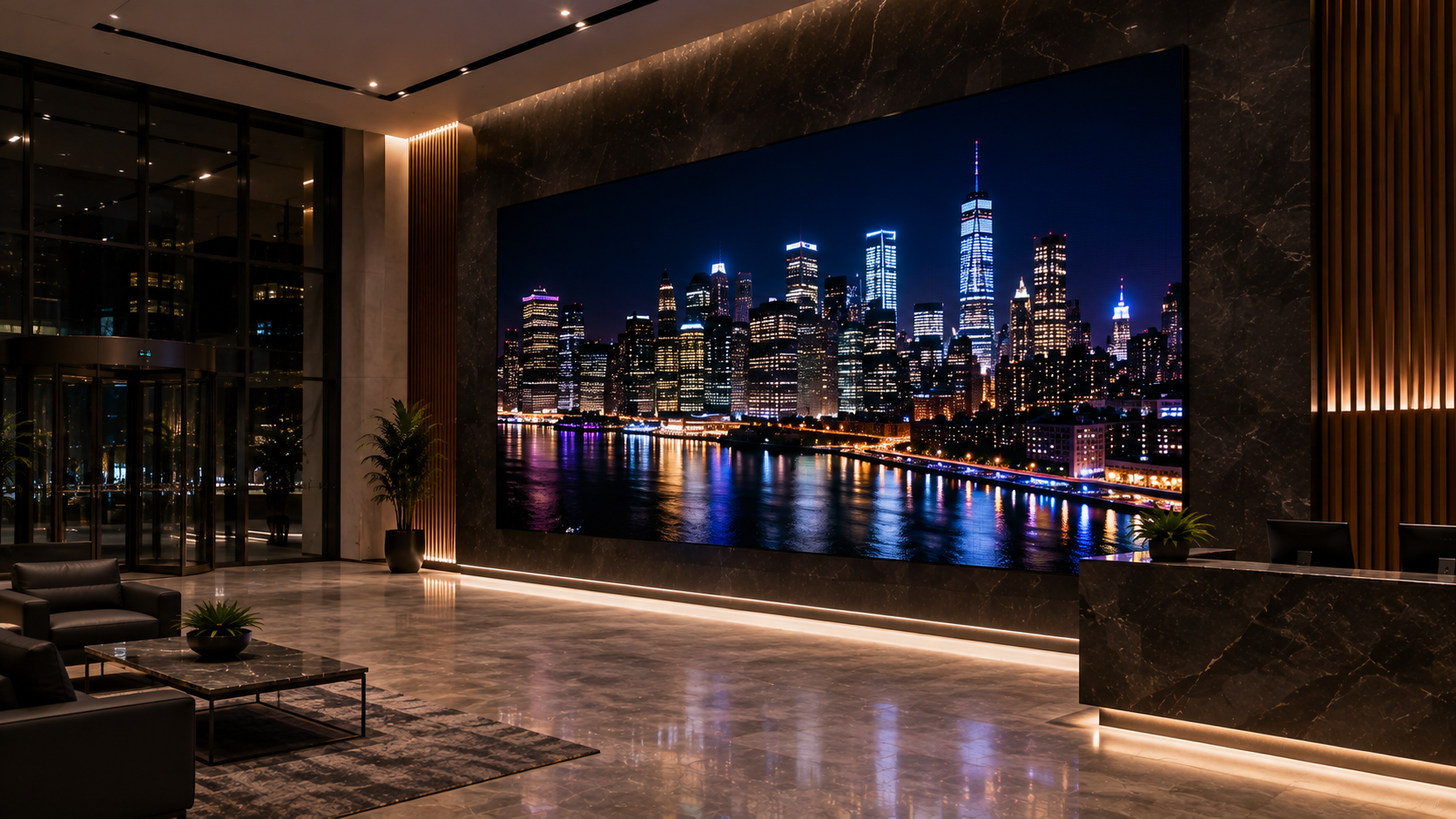
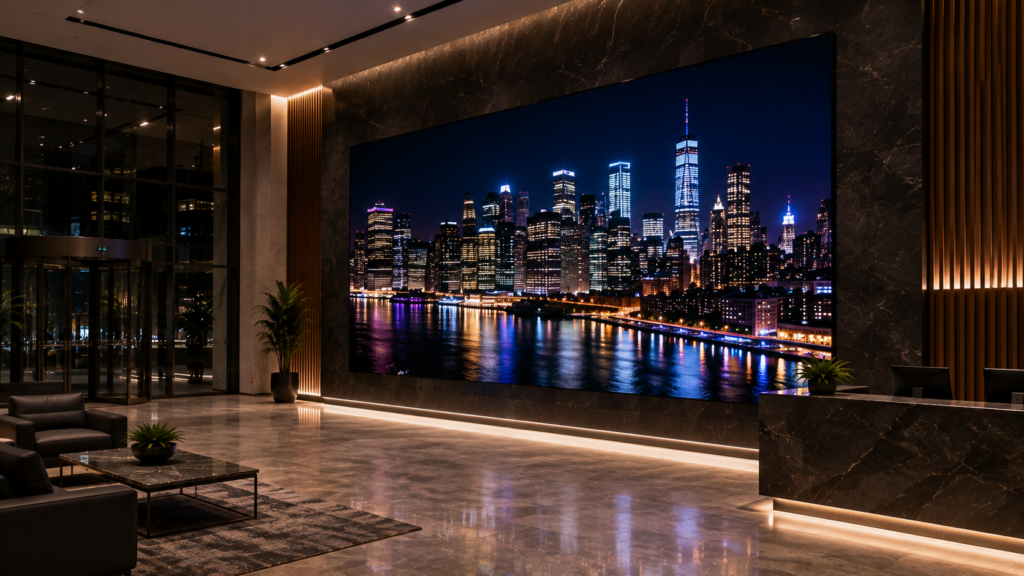
Imagine two LED video walls showing the same image of a city skyline at night.
The first screen produces deep, convincing blacks. Building lights remain bright, while shadows maintain detail.
The second screen produces dark gray instead of black. Consequently, the entire image looks flatter and less dramatic.
Both displays might have identical pixel counts.
However, most viewers will perceive the first screen as having better image quality.
That’s the power of contrast.
Strong contrast can improve:
- Perceived sharpness
- Image depth
- Color saturation
- Shadow detail
- Text readability
- Visual realism
- Overall impact
Therefore, contrast deserves serious consideration when image quality supports the business objective.
Contrast Ratio vs. Brightness
Brightness and contrast work together, but they aren’t the same specification.
Brightness measures the amount of light a display produces.
Contrast describes the difference between bright and dark areas.
For example, an extremely bright display with poor black levels may look washed out.
Conversely, a display with moderate brightness and excellent black levels may appear exceptionally rich indoors.
Therefore, more brightness doesn’t automatically create better image quality.
The environment determines the correct balance.
A corporate boardroom may prioritize:
- Deep blacks
- Fine detail
- Controlled brightness
Meanwhile, an outdoor billboard must prioritize:
- High brightness
- Sunlight visibility
- Weather resistance
Consequently, the ideal LED display depends on the application.
Ambient Light Can Reduce Perceived Contrast
The room around the LED wall matters.
Light striking the display surface can make dark portions of the image appear brighter.
As a result, perceived contrast decreases.
This becomes especially important in:
- Glass atriums
- Retail storefronts
- Airport terminals
- Bright corporate lobbies
- Convention centers
- Outdoor environments
Therefore, SSI evaluates ambient light before specifying a display.
Sometimes the solution requires greater brightness. However, architectural lighting changes, screen positioning, surface technology, or content optimization may also improve the result.
Why Deep Blacks Matter
Black is the foundation of contrast.
If an LED display cannot create convincing dark areas, colors may appear less vibrant.
For example, imagine a bright red sports car against a black background.
On a high-contrast display, the red vehicle appears vivid and dimensional.
However, if the background looks gray, the image loses some of its visual intensity.
Deep blacks become particularly valuable for:
- Luxury products
- Automotive imagery
- Fashion
- Digital artwork
- Cinema-style content
- Space imagery
- Museum exhibits
Therefore, businesses investing in premium visual experiences should pay close attention to black-level performance.
How LED Surface Design Affects Contrast
The physical surface of the LED display can significantly affect contrast.
Manufacturers use various techniques to reduce unwanted reflections and increase the amount of dark surface visible around each pixel.
Depending on the product, these may include:
- Dark LED packaging
- Black masks
- Matte surfaces
- Specialized coatings
- Reduced reflective materials
These techniques can help the screen maintain darker blacks when the LEDs aren’t producing light.
Consequently, physical construction matters alongside electronic specifications.
COB LED Displays and Contrast
COB stands for Chip-on-Board.
This COB technology places LED chips directly onto a circuit board and typically protects the surface with a coating.
For fine-pitch commercial applications, properly designed COB systems can offer excellent contrast potential.
Additional benefits may include:
- Fine pixel pitches
- Strong surface protection
- Easier cleaning
- Improved impact resistance
- Premium close-viewing performance
However, COB doesn’t automatically guarantee better contrast.
Surface treatment, manufacturing quality, driver electronics, calibration, and processing still matter.
Therefore, compare actual products rather than technology labels alone.
Internal SSI Link:
https://ssidisplays.com/cob-vs-smd-led-displays/
SMD LED Displays and Contrast
SMD LED technology remains widely used across commercial LED applications.
High-quality SMD displays can deliver excellent contrast and image quality.
Additionally, SMD provides proven performance across:
- Corporate environments
- Retail
- Trade shows
- Sports
- Entertainment
- Outdoor advertising
- Houses of worship
Therefore, the decision between SMD and COB should depend on the entire application.
Pixel pitch, viewing distance, durability, environment, budget, and image-quality requirements should all influence the decision.
Contrast and LED Grayscale Work Together
Contrast establishes the distance between dark and bright output.
Grayscale controls the tonal steps between those extremes.
Therefore, both specifications matter.
Imagine a nighttime landscape.
Strong contrast creates deep shadows and bright stars.
Meanwhile, good grayscale preserves the subtle transitions throughout the dark sky and mountains.
Without strong grayscale, the image may show visible banding.
Without sufficient contrast, the image may look flat.
Consequently, premium LED systems need both.
Link this section to your SSI LED Display Grayscale article once published.
Contrast and Pixel Pitch
Pixel pitch affects detail.
Contrast affects tonal separation.
Although they’re different specifications, they influence the overall visual experience together.
For close-viewing applications, fine-pitch LED can provide greater image detail.
However, if that fine-pitch display has weak contrast, the image may still lack depth.
Conversely, strong contrast cannot compensate for a pixel pitch that’s too large for the viewing distance.
Therefore, SSI evaluates both specifications according to the actual space.
Internal SSI Link:
https://ssidisplays.com/ultimate-guide-led-video-walls-2/
Why Contrast Matters in Corporate Lobbies
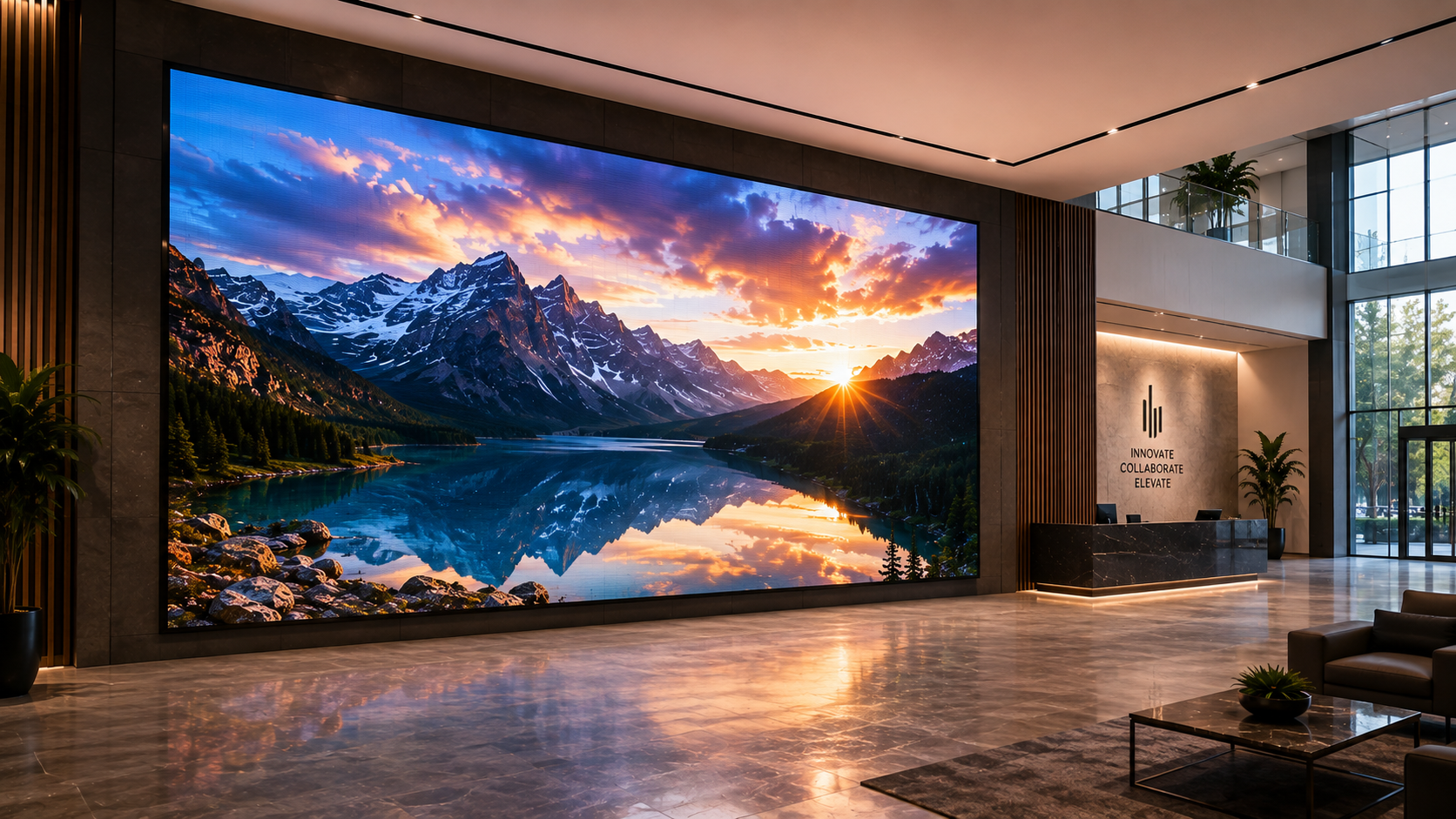
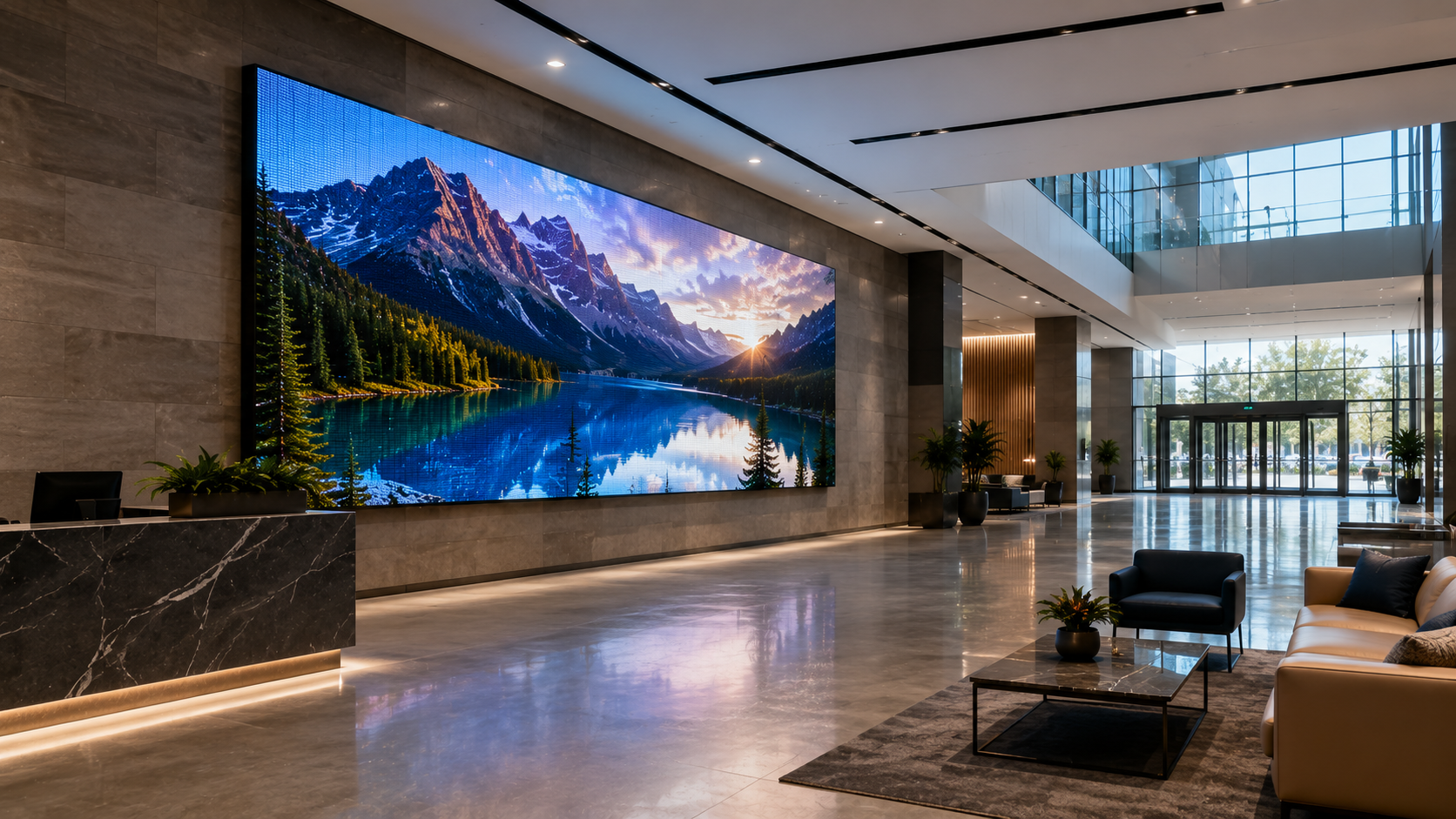
Corporate lobbies increasingly function as brand experience centers.
Businesses use LED video walls to display:
- Corporate films
- Global data
- Product imagery
- Digital art
- Company history
- Welcome messaging
- Live information
A premium lobby display should look impressive throughout the day.
Therefore, contrast becomes particularly important when the space contains large windows or substantial architectural lighting.
Strong contrast helps content maintain depth despite ambient light.
Additionally, visitors often photograph corporate lobby displays.
Consequently, premium image quality can extend the value of the installation into social media, marketing, and corporate communications.
Why Contrast Matters in Luxury Retail
Luxury retail relies heavily on visual presentation.
Customers expect premium environments.
Therefore, digital displays should support the same level of quality as the products being presented.
High-contrast LED can enhance:
- Watches
- Jewelry
- Fashion
- Cosmetics
- Electronics
- Automotive products
For example, jewelry photographed against a deep black background can appear dramatically more vibrant when the display reproduces strong blacks.
As a result, contrast contributes directly to product presentation and customer experience.
Why Museums Need Strong Contrast
Museums often use digital displays in controlled lighting environments.
That creates excellent opportunities for high-contrast visual storytelling.
Applications include:
- Historical photographs
- Space imagery
- Scientific visualization
- Digital artwork
- Archival footage
- Interactive exhibits
Strong black levels can make exhibits feel more immersive.
Furthermore, visitors can focus on the illuminated content instead of the display hardware.
Consequently, the technology becomes part of the storytelling rather than a distraction.
Contrast for Trade Show LED Walls
Trade shows contain substantial ambient light.
Overhead fixtures, neighboring booths, video walls, and exhibition lighting all compete for attention.
Therefore, an LED wall needs enough brightness to remain visible.
However, brightness alone isn’t enough.
Strong contrast helps content retain depth and visual impact.
That matters because exhibitors typically have only seconds to capture someone’s attention.
Consequently, a well-specified LED wall can function as a visual anchor that draws attendees toward the booth.
Contrast for Broadcast and Camera Applications
Camera applications introduce additional requirements.
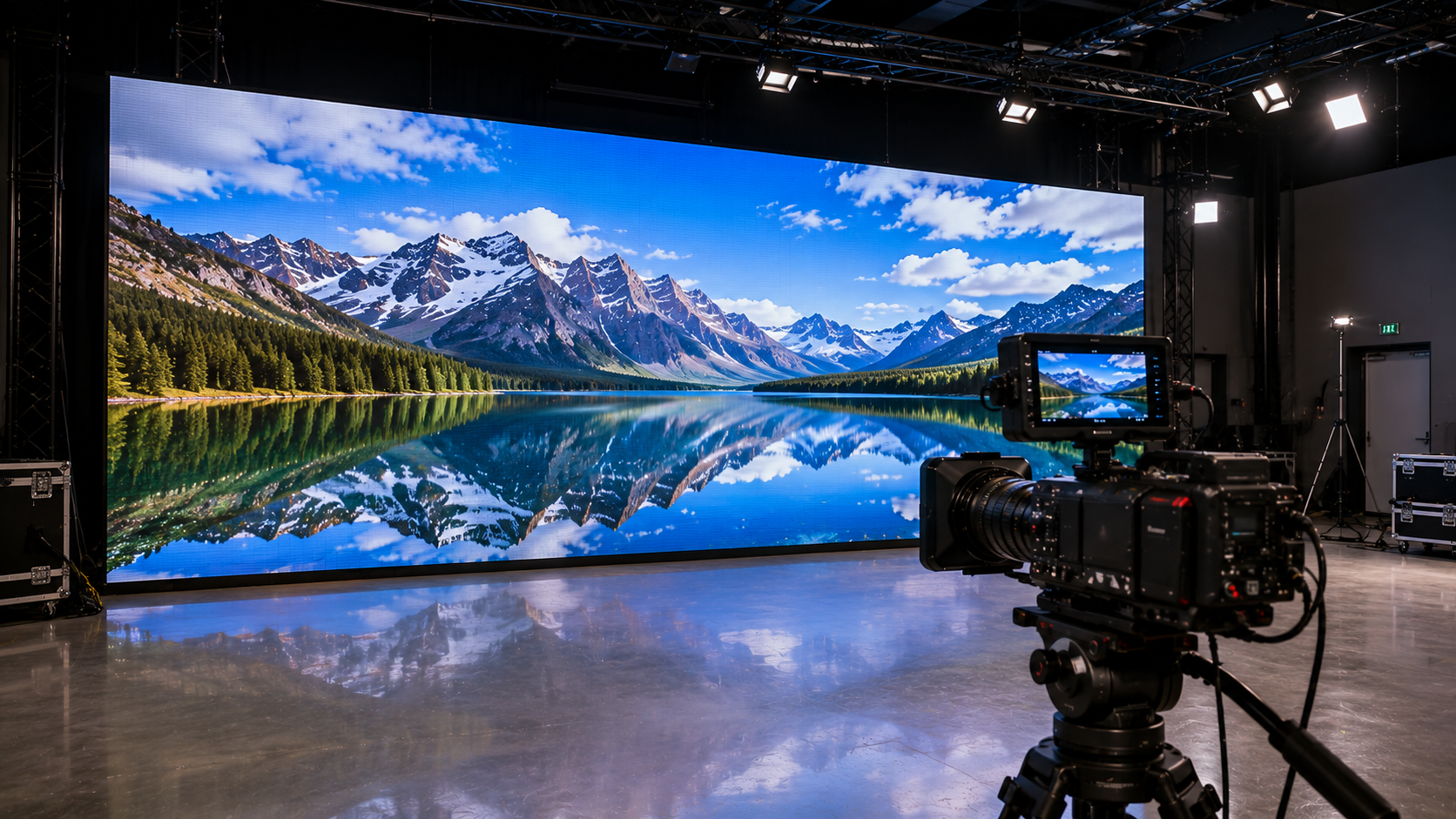
Broadcast studios, livestream environments, and virtual production systems need careful control of:
- Contrast
- Grayscale
- Brightness
- Refresh rate
- Color
- Camera shutter settings
- Moiré
- Processing
Extremely bright highlights combined with weak shadow performance can make camera exposure more difficult.
Therefore, camera-facing LED systems require balanced image performance.
If the display will regularly appear on camera, tell your LED integrator early in the project.
That information can materially change the recommended system.
Comparing Lower and Higher Contrast Performance
| Visual Characteristic | Lower Contrast | Higher Contrast |
|---|---|---|
| Black Areas | More gray | Deeper black |
| Color Appearance | Flatter | Richer |
| Perceived Depth | Lower | Greater |
| Dark Scene Performance | Reduced | Improved |
| Bright Highlight Impact | Moderate | Strong |
| Premium Photography | Acceptable | Better suited |
| Controlled-Light Environments | Good | Excellent |
Actual performance depends on the specific display and environment. Therefore, real-world evaluation remains important.
Contrast and ROI
Contrast may sound like a technical detail.
However, better image quality can create tangible business value.
Stronger First Impressions
Premium visuals help reinforce a premium brand.
Better Product Presentation
Rich colors and deep blacks can improve the way customers perceive product imagery.
Greater Engagement
Visually compelling content can hold attention longer.
Better Marketing Photography
High-quality LED installations can create stronger photography and video content.
Longer Useful Life
A display with strong visual performance may remain competitive as content standards increase.
Therefore, businesses should evaluate image quality as part of long-term ROI rather than treating the display as a commodity.
Common Mistakes When Evaluating LED Contrast
Comparing Published Ratios Alone
Manufacturers may use different measurement conditions.
Therefore, specification-sheet comparisons don’t always reveal real-world differences.
Ignoring Ambient Light
A display that looks incredible in a dark showroom may perform differently in a glass lobby.
Evaluate the intended environment.
Focusing Only on Maximum Brightness
Brightness doesn’t replace contrast.
Instead, both specifications should work together.
Using Only Bright Demo Content
Bright promotional reels can hide weak black levels.
Therefore, test dark scenes as well.
Ignoring Surface Reflection
A reflective LED surface may reduce perceived black levels under architectural lighting.
Consequently, surface construction matters.
How to Evaluate LED Contrast Before Buying
When image quality matters, evaluate several types of content.
Ask to see:
- Nighttime city scenes
- Black backgrounds
- Dark gradients
- Product photography
- Skin tones
- Space imagery
- High-contrast text
- Bright highlights against dark backgrounds
Additionally, test the display at realistic brightness levels.
If possible, evaluate it under lighting conditions similar to the final installation.
That provides significantly more useful information than watching a highly saturated demo reel in a dark showroom.
Future Trends in LED Contrast
Commercial LED technology continues improving.
Improved Surface Coatings
New materials can reduce reflections and improve perceived black levels.
COB Development
Fine-pitch COB technology continues advancing for premium indoor applications.
MicroLED
MicroLED development may provide even greater control over individual pixels.
HDR
High Dynamic Range content increases demand for better contrast and tonal performance.
Smarter Calibration
Advanced processing and AI-assisted calibration can help optimize image performance automatically.
Consequently, contrast will become even more important as commercial LED walls move toward increasingly cinematic image quality.
Why Choose Screen Solutions International
Selecting an LED video wall involves much more than choosing the smallest pixel pitch.
Screen Solutions International evaluates:
- Viewing distance
- Contrast
- Grayscale
- Brightness
- Pixel pitch
- Refresh rate
- Content
- Ambient lighting
- Camera requirements
- Installation environment
- Long-term objectives
SSI provides:
- Fine-Pitch LED Video Walls
- COB LED Displays
- SMD LED Displays
- Corporate Lobby Displays
- High Bright Displays
- Trade Show LED Displays
- Digital Spheres
- LED Floors
- Interactive Displays
- Transparent OLED Displays
- Custom Experiential Displays
Our goal is straightforward: deliver a display that performs exceptionally in the environment where your audience will actually experience it.
Call 888-631-5880 to discuss your project with Screen Solutions International.
Frequently Asked Questions
What is LED display contrast ratio?
Contrast ratio describes the difference between a display’s brightest white and darkest black under specified measurement conditions.
Is a higher contrast ratio always better?
Generally, stronger contrast can improve image depth. However, published numbers alone don’t guarantee better real-world performance.
Does ambient light affect LED contrast?
Yes. Light reflecting from the display surface can make dark areas appear brighter, which reduces perceived contrast.
Does COB LED have better contrast than SMD?
Some COB systems can provide excellent contrast, particularly in premium fine-pitch applications. However, actual performance depends on product design, surface treatment, processing, and calibration.
Is brightness the same as contrast?
No. Brightness measures light output, while contrast describes the difference between bright and dark image areas.
Why do black levels matter?
Deeper blacks can improve perceived color saturation, image depth, shadow detail, and overall visual quality.
Final Takeaway
LED display contrast ratio plays an important role in creating rich, realistic commercial visuals.
Strong contrast produces deeper blacks, brighter highlights, richer colors, and greater perceived depth. However, the best results come from balancing contrast with grayscale, brightness, pixel pitch, processing, and ambient lighting.
Therefore, don’t select a commercial LED wall by a single specification.
Instead, evaluate how the entire system performs in your actual environment.
For corporate lobbies, museums, luxury retail, trade shows, broadcast studios, control rooms, and experiential installations, better contrast can improve customer experience, brand presentation, and long-term business value.
Screen Solutions International can help you select and engineer an LED display around your specific space and objectives.
Contact 888-631-5880 to discuss your next commercial LED project.
Sources
Internal SSI Links
- https://ssidisplays.com/
- https://ssidisplays.com/ultimate-guide-led-video-walls-2/
- https://ssidisplays.com/cob-vs-smd-led-displays/
- https://ssidisplays.com/led-display-types-explained/
- https://ssidisplays.com/how-to-choose-the-right-led-display-for-your-business/
External Authority Sources
- https://www.avixa.org/
- https://www.smpte.org/
- https://www.infocommshow.org/
- https://digitalsignagefederation.org/
- https://www.energy.gov/
Suggested Internal Linking
Link COB vs. SMD LED Displays to:
https://ssidisplays.com/cob-vs-smd-led-displays/
Link LED video walls to:
https://ssidisplays.com/ultimate-guide-led-video-walls-2/
Link choosing the right LED display to:
https://ssidisplays.com/how-to-choose-the-right-led-display-for-your-business/