
Introduction
When comparing commercial LED displays, buyers often focus first on pixel pitch, resolution, brightness, and price. However, another specification can dramatically affect visual performance: LED display refresh rate.
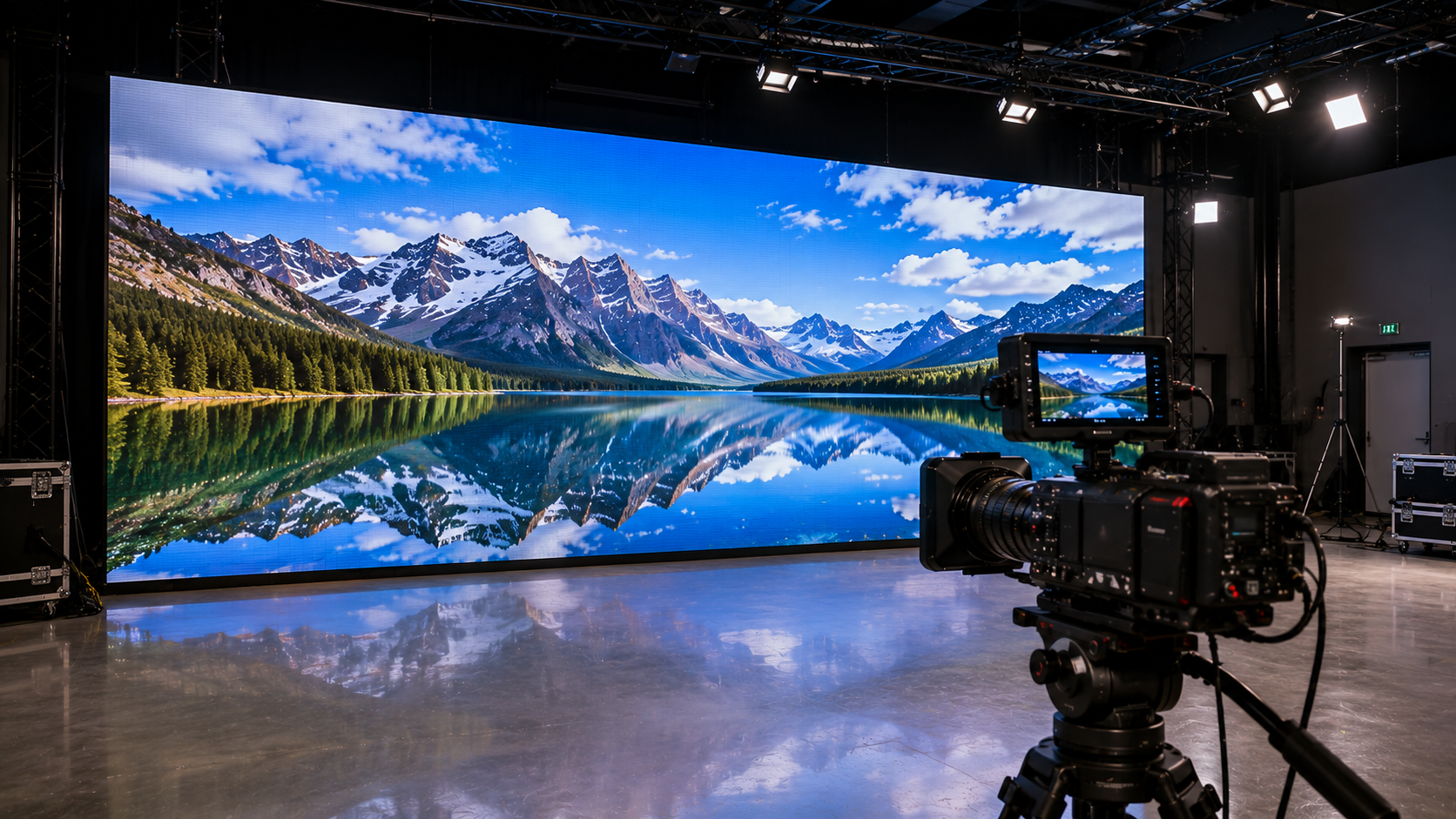
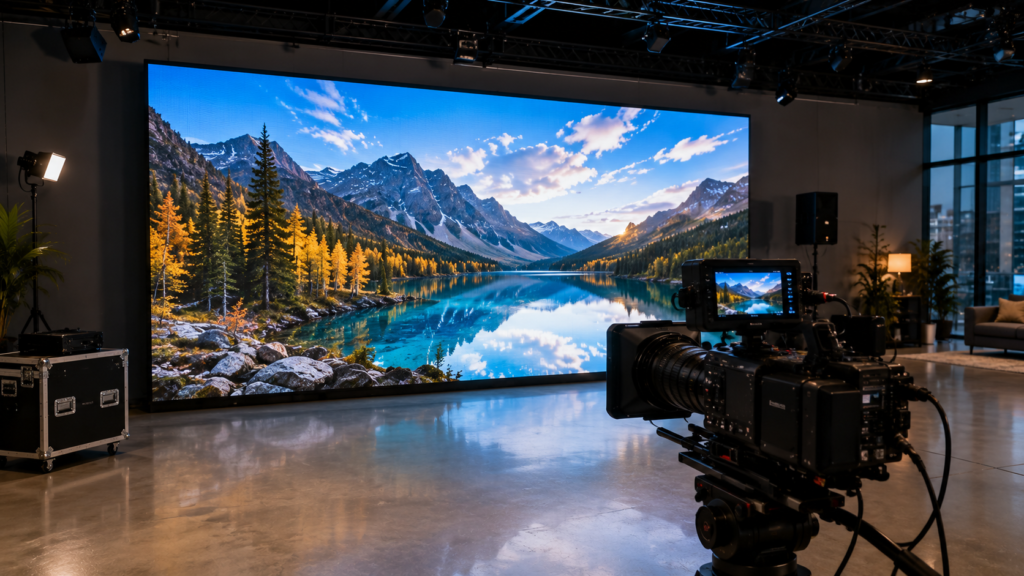
Refresh rate becomes especially important when an LED wall appears on camera. Therefore, businesses using LED displays for broadcast studios, corporate events, trade shows, virtual production, sports venues, livestreams, and presentation spaces need to understand this specification.
A display may look excellent to the human eye yet show visible lines, flickering, or artifacts when recorded by a camera. Likewise, a low-quality LED system may struggle with fast-moving video even when its resolution looks impressive on paper.
Fortunately, selecting the right refresh rate can prevent many of these problems.
At Screen Solutions International (SSI), we help commercial buyers evaluate the entire LED system rather than concentrating on one specification. Pixel pitch, processing, brightness, refresh rate, content, viewing distance, and installation conditions all work together.
In this guide, we’ll explain LED display refresh rate, compare common refresh rates, discuss camera performance, and show how to select the right system for your application.
What Is LED Display Refresh Rate?
LED display refresh rate describes how frequently the display updates its image.
Manufacturers typically express refresh rate in hertz (Hz).
For example, an LED display rated at 3,840 Hz refreshes its LEDs thousands of times every second.
Importantly, refresh rate should not be confused with the frame rate of your video content.
A video may run at 30 or 60 frames per second. Meanwhile, the LED hardware can refresh at a much higher frequency.
Therefore, both specifications affect the final visual experience in different ways.
For commercial buyers, the main takeaway is simple: a higher-quality refresh system can improve visual stability and camera performance.
Why Does LED Display Refresh Rate Matter?
For many everyday indoor applications, viewers may never consciously notice refresh rate.
However, several situations make it extremely important.
These include:
- Broadcast studios
- Livestreaming
- Trade shows
- Corporate events
- Virtual production
- Sporting events
- Houses of worship
- Television production
- Photography
- High-speed camera environments
In these applications, cameras interact with the LED display differently than human eyes do.
As a result, inadequate display performance can produce visible artifacts on recorded footage.
What Does a Low Refresh Rate Look Like on Camera?
You’ve probably seen videos where a digital display appears to have dark horizontal lines moving through the image.
In other cases, the display may appear to:
- Flicker
- Pulse
- Show scan lines
- Produce dark bands
- Lose image stability
- Create uneven brightness
These problems can occur when the camera’s shutter timing conflicts with the way the LED display refreshes.
Consequently, a display that looks perfectly normal to people standing in the room may look unacceptable in recorded video.
For a corporate lobby, that may be inconvenient.
For a broadcast studio or livestream, however, it can become a serious production problem.
Common LED Display Refresh Rates
Commercial LED products are available with different refresh specifications.
Typical configurations may include:
| Refresh Rate | Typical Application | Camera Suitability |
|---|---|---|
| 1,920 Hz | General commercial signage | Basic |
| 3,840 Hz | Premium commercial LED | Very Good |
| 7,680 Hz+ | Broadcast and specialized applications | Excellent |
However, buyers should avoid selecting an LED display based on refresh rate alone.
Driver ICs, scan configuration, processing, grayscale performance, camera settings, and LED quality also affect the final result.
Therefore, the complete system matters more than one number on a specification sheet.
Is 3,840 Hz Good for an LED Display?
For many professional commercial installations, 3,840 Hz provides an excellent starting point.
It works well for applications such as:
- Corporate lobbies
- Trade show booths
- Conference facilities
- Retail environments
- Universities
- Museums
- Presentation spaces
Furthermore, it can provide significantly better camera performance than lower-end display systems.
However, demanding broadcast applications may require additional evaluation.
For example, a television studio using high-speed cameras may need more specialized processing and higher-performance LED hardware.
Therefore, the application should always drive the specification.
Refresh Rate vs. Frame Rate: What’s the Difference?
This distinction often creates confusion.
Frame Rate
Frame rate describes how many individual video frames your content produces every second.
Common frame rates include:
- 24 fps
- 30 fps
- 50 fps
- 60 fps
- 120 fps
Refresh Rate
Refresh rate describes how frequently the LED display hardware refreshes its light output.
Consequently, a video can run at 60 fps while appearing on an LED display operating at a much higher refresh frequency.
Both factors matter. However, they serve different purposes.
Why Refresh Rate Matters for Trade Shows
Trade show environments increasingly rely on LED video walls.
However, trade show displays don’t only need to look impressive in person.
Visitors also photograph and record booths constantly.
Furthermore, exhibitors create:
- Social media videos
- Product demonstrations
- Livestreams
- Interviews
- Promotional footage
- Event recaps
Therefore, poor camera performance can reduce the value of an otherwise impressive LED installation.
A high-quality LED display helps the booth look better both in person and through the camera.
That distinction becomes increasingly important as social media extends the reach of trade show exhibits far beyond the convention floor.
Internal SSI Link:
https://ssidisplays.com/led-video-walls/
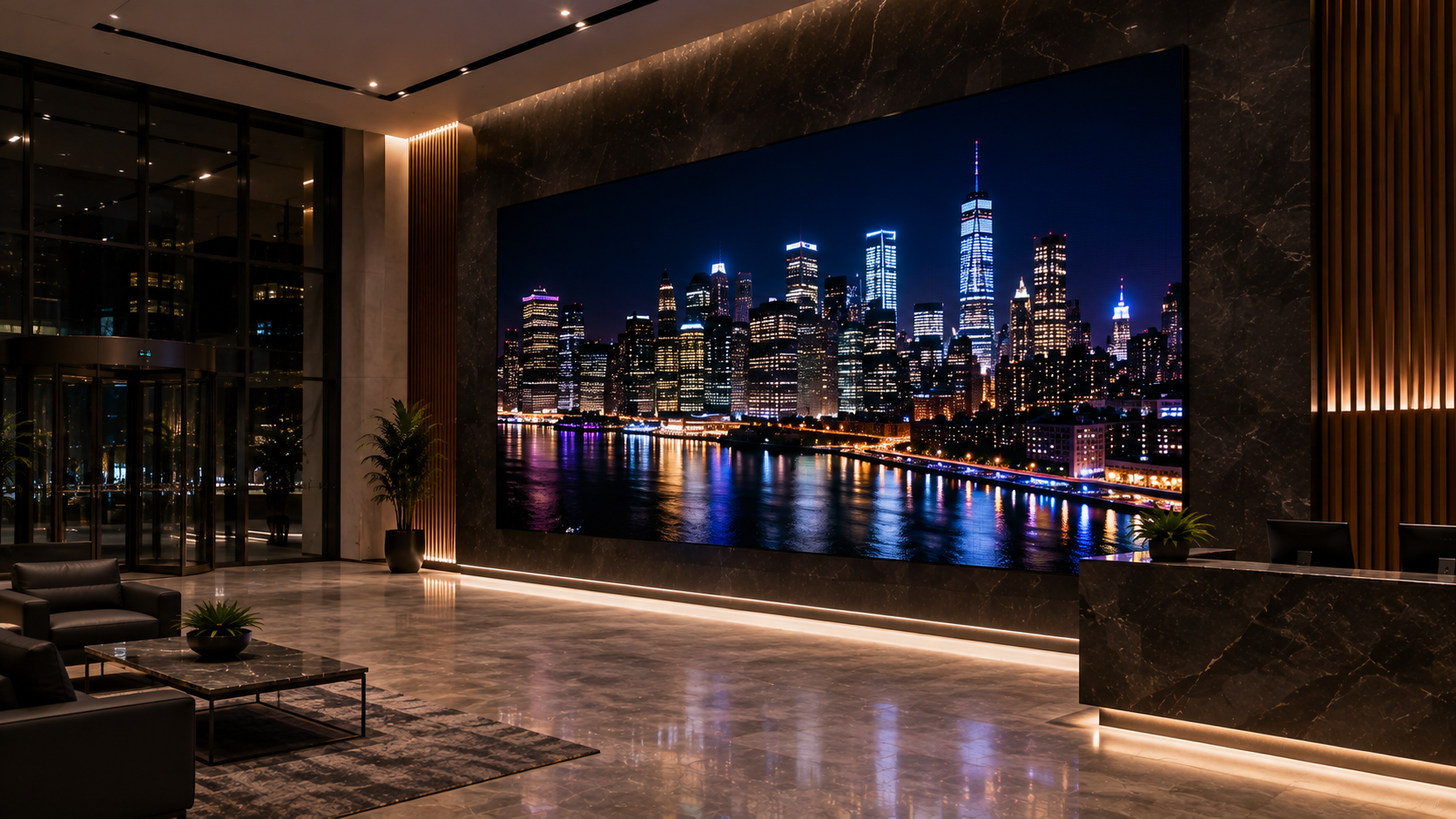
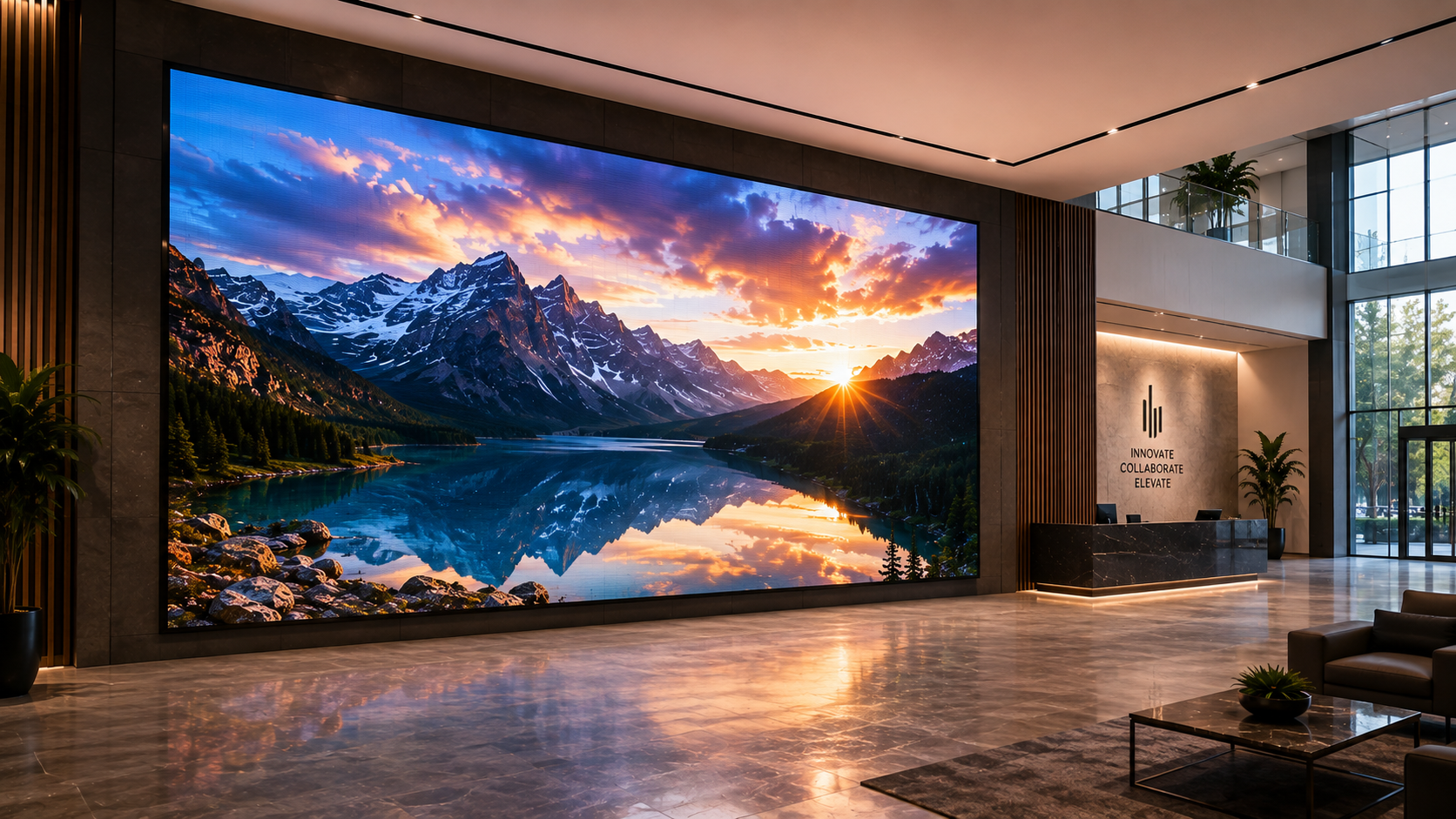
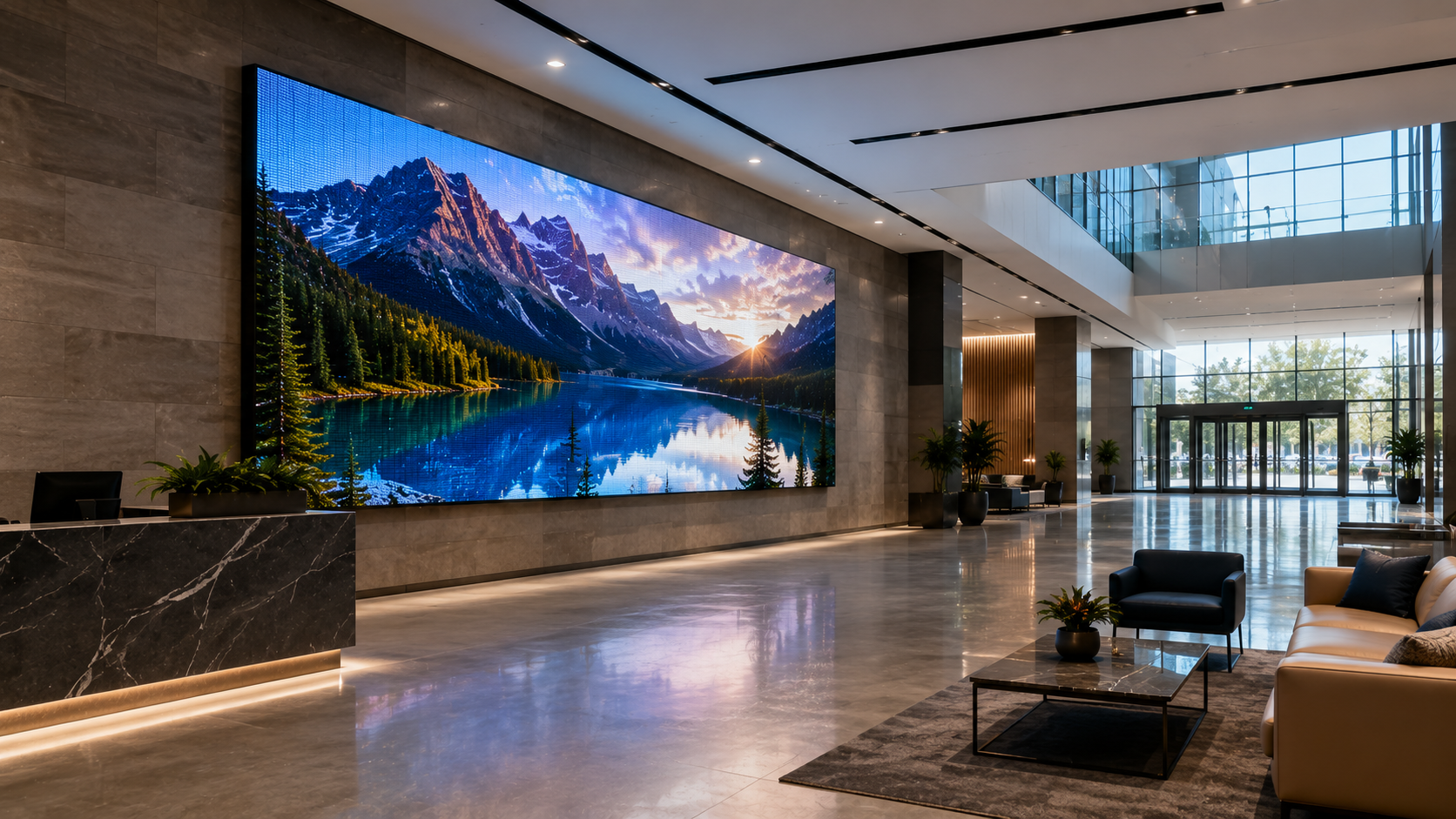
Refresh Rate for Corporate Lobbies
Corporate lobbies have also become media environments.
Companies regularly use large LED walls for:
- Brand films
- Executive presentations
- Visitor experiences
- Employee communications
- Company announcements
- Live data
- Global location information
Additionally, businesses frequently photograph these spaces for marketing.
Therefore, camera-friendly LED performance provides additional value.
A premium lobby display should look impressive when a visitor sees it directly. At the same time, it should maintain that appearance when photographed or recorded.
Refresh Rate for Broadcast Studios
Broadcast applications place much greater demands on LED technology.
Cameras can expose display limitations that aren’t visible to the naked eye.
Therefore, studio installations may require careful evaluation of:
- Refresh rate
- Scan rate
- Grayscale
- Color calibration
- Camera shutter speed
- Processor performance
- Moiré
- Pixel pitch
- Brightness
- Color temperature
Furthermore, camera testing before final deployment can help identify potential issues.
For broadcast environments, SSI can help evaluate LED specifications as part of the complete system design.
Refresh Rate for Virtual Production
Virtual production has dramatically increased the importance of high-performance LED displays.
Instead of filming actors against traditional green screens, production teams can use large LED walls to display digital environments directly behind the subject.
Consequently, the LED display becomes part of the captured image.
That means poor refresh performance can become visible immediately.
Virtual production systems may require advanced synchronization between:
- LED processors
- Cameras
- Rendering engines
- Tracking systems
- Video signals
Therefore, buyers should treat virtual production LED as a specialized application rather than a standard digital signage project.
Refresh Rate and Fast-Moving Content
Refresh performance can also affect content with rapid motion.
Examples include:
- Sports footage
- Racing
- Animated graphics
- Gaming
- Entertainment content
- Live events
When the entire LED system performs properly, fast-moving visuals appear smoother and more stable.
However, refresh rate isn’t the only factor.
Content frame rate and video processing also influence motion quality.
Therefore, businesses should evaluate the full signal chain.
Pixel Pitch Still Matters
A high refresh rate doesn’t automatically create a high-resolution image.
Pixel pitch remains one of the most important factors affecting viewing distance and perceived image detail.
For example, a P1.5 display contains LEDs positioned much closer together than a P4 display.
Therefore, the P1.5 screen generally provides better detail for close viewing.
However, both displays could potentially use high-refresh hardware.
In other words:
Pixel pitch affects spatial detail, while refresh rate affects how the display updates its light output.
Both specifications matter, but they solve different problems.
Internal SSI Link:
https://ssidisplays.com/ultimate-guide-led-video-walls-2/
Does a Higher Refresh Rate Always Mean a Better LED Display?
Not necessarily.
This is one of the most important points for commercial buyers.
A manufacturer may advertise an extremely high refresh specification. However, that number doesn’t guarantee superior overall image quality.
You should also evaluate:
- LED quality
- Driver IC quality
- Contrast
- Grayscale
- Brightness
- Color uniformity
- Processing
- Cabinet construction
- Serviceability
- Calibration
Therefore, comparing LED displays purely by their largest specification numbers can lead to poor purchasing decisions.
Instead, compare the entire system.
LED Refresh Rate and ROI
Refresh rate may sound like a highly technical specification. However, it can directly affect business value.
Consider a company that installs a large LED video wall at a major trade show.
Visitors photograph the display hundreds of times.
Influencers record videos in front of it.
The company’s marketing team films interviews beside it.
Then, sales representatives share those videos across LinkedIn, Instagram, YouTube, and other channels.
If the display looks excellent on camera, the installation continues generating value long after the trade show ends.
Conversely, visible flickering or scan lines can make professional footage unusable.
Therefore, selecting the appropriate LED system protects both the hardware investment and the content created around it.
Comparing LED Display Requirements by Application
| Application | Refresh Priority | Other Major Considerations |
| Corporate Lobby | Medium-High | Pixel pitch, brightness, design |
| Retail | Medium | Brightness, content, viewing distance |
| Trade Show | High | Camera performance, modularity |
| Broadcast Studio | Very High | Camera synchronization, color |
| Virtual Production | Very High | Processing, synchronization, color |
| Control Room | Medium | Resolution, reliability, uptime |
| Outdoor Advertising | Medium | Brightness, weather protection |
| Sports Venue | High | Motion, brightness, viewing distance |
Therefore, businesses should specify refresh performance according to the application instead of automatically purchasing the highest available rating.
Common Mistakes When Selecting LED Refresh Rate
Choosing Based on Resolution Alone
A high-resolution display can still perform poorly on camera.
Therefore, evaluate refresh performance as part of the system.
Assuming Every LED Wall Is Camera-Friendly
Commercial signage and broadcast LED displays have different performance requirements.
Consequently, tell your integrator if the screen will regularly appear on camera.
Ignoring the Video Processor
The processor plays an important role in signal quality and display performance.
Therefore, don’t invest heavily in LED hardware and then compromise on processing.
Focusing Only on the Highest Number
An impressive refresh specification doesn’t compensate for poor LEDs, weak calibration, or low-quality electronics.
Instead, evaluate overall performance.
Forgetting to Test
For mission-critical broadcast applications, testing the proposed display with the intended camera equipment can provide valuable information before deployment.
Future Trends in LED Refresh Technology
LED processing continues to advance rapidly.
Better Camera Performance
Manufacturers continue developing LED hardware specifically for broadcast and virtual production.
Higher Refresh Capabilities
Premium LED systems increasingly support extremely high refresh performance.
Improved Synchronization
Advanced processors can better coordinate cameras, content, and LED walls.
AI-Assisted Calibration
Automated tools will increasingly help optimize color, brightness, and uniformity.
Virtual Production Growth
As LED stages become more common, camera performance will remain a major area of display innovation.
Therefore, businesses investing in premium LED today should consider how their displays may be used for future video production.
Why Choose Screen Solutions International
Selecting an LED display requires more than comparing pixel pitch and price.
Screen Solutions International evaluates the complete application.
We consider:
- Viewing distance
- Refresh requirements
- Camera use
- Pixel pitch
- Brightness
- Content
- Installation environment
- Processing
- Serviceability
- Future expansion
SSI provides commercial display solutions including:
- Fine-Pitch LED Video Walls
- COB LED Displays
- SMD LED Displays
- Trade Show LED Displays
- Digital Spheres
- LED Floors
- High Bright Displays
- Interactive Displays
- Transparent OLED Displays
- Custom Experiential Displays
Most importantly, we help clients match the technology to the business objective.
Whether you’re designing a corporate lobby, broadcast studio, trade show experience, command center, museum, or large-scale experiential installation, our team can help engineer the appropriate display system.
Call 888-631-5880 to discuss your project.
Frequently Asked Questions
What is a good refresh rate for an LED display?
For many professional commercial applications, 3,840 Hz is a strong specification. However, broadcast, high-speed camera, and specialized production environments may benefit from higher-performance systems.
Is 1,920 Hz enough for an LED display?
It may be sufficient for some general signage applications. However, if cameras frequently record the display, a higher-performance system may provide better results.
Why does my LED screen flicker on camera?
The camera’s shutter timing can interact with the LED display’s refresh and scanning behavior. Therefore, adjusting camera settings or using a more camera-friendly LED system may reduce visible artifacts.
Does refresh rate affect LED resolution?
No. Pixel pitch and physical pixel count determine display resolution. Refresh rate relates to how frequently the LED system updates its light output.
What refresh rate should I use for a trade show LED wall?
Because trade show booths are frequently photographed and filmed, high-refresh commercial LED systems are generally preferable.
Is refresh rate important for a corporate lobby?
Yes, especially when the lobby frequently appears in photography, video, livestreams, or corporate marketing content.
Final Takeaway
LED display refresh rate is easy to overlook. However, it can have a major impact on commercial display performance—especially when cameras enter the environment.
For standard signage, moderate refresh performance may be sufficient. Conversely, trade shows, broadcast studios, livestream environments, and virtual production applications require greater attention to refresh rate, processing, and camera compatibility.
Most importantly, don’t evaluate refresh rate by itself.
Pixel pitch, brightness, grayscale, color calibration, processing, driver technology, content, and installation conditions all contribute to the final result.
By designing the entire system around your actual application, you can achieve better image quality, more reliable camera performance, and stronger long-term ROI.
Screen Solutions International can help you specify a commercial LED display based on how your organization will actually use it.
Contact 888-631-5880 to discuss your next LED display project.
Sources
Internal SSI Sources
- https://ssidisplays.com/
- https://ssidisplays.com/led-video-walls/
- https://ssidisplays.com/ultimate-guide-led-video-walls-2/
- https://ssidisplays.com/how-to-choose-the-right-led-display-for-your-business/
- https://ssidisplays.com/led-display-types-explained/
External Authority Sources
- https://www.avixa.org/
- https://www.smpte.org/
- https://www.infocommshow.org/
- https://digitalsignagefederation.org/
- https://www.dicolorled.com/
Suggested Internal Linking
From this article, link pixel pitch to your SSI pixel-pitch educational article.
Link LED video walls to:
https://ssidisplays.com/ultimate-guide-led-video-walls-2/
Link choosing an LED display to:
https://ssidisplays.com/how-to-choose-the-right-led-display-for-your-business/
Additionally, update the older SSI articles to link back to this article when they discuss refresh rate, video processing, cameras, broadcast environments, trade shows, or image quality. This creates a stronger educational content cluster instead of leaving each article isolated.