
Introduction
When businesses compare commercial LED displays, specifications such as pixel pitch, brightness, resolution, and refresh rate usually receive the most attention.
However, another specification can have a major impact on image quality: LED display grayscale.
Grayscale determines how smoothly an LED display reproduces different brightness levels between its darkest and brightest output. Therefore, strong grayscale performance helps create smoother gradients, better shadow detail, richer colors, and more realistic images.
This becomes especially important in corporate lobbies, museums, broadcast studios, retail environments, trade shows, control rooms, and other premium commercial applications.
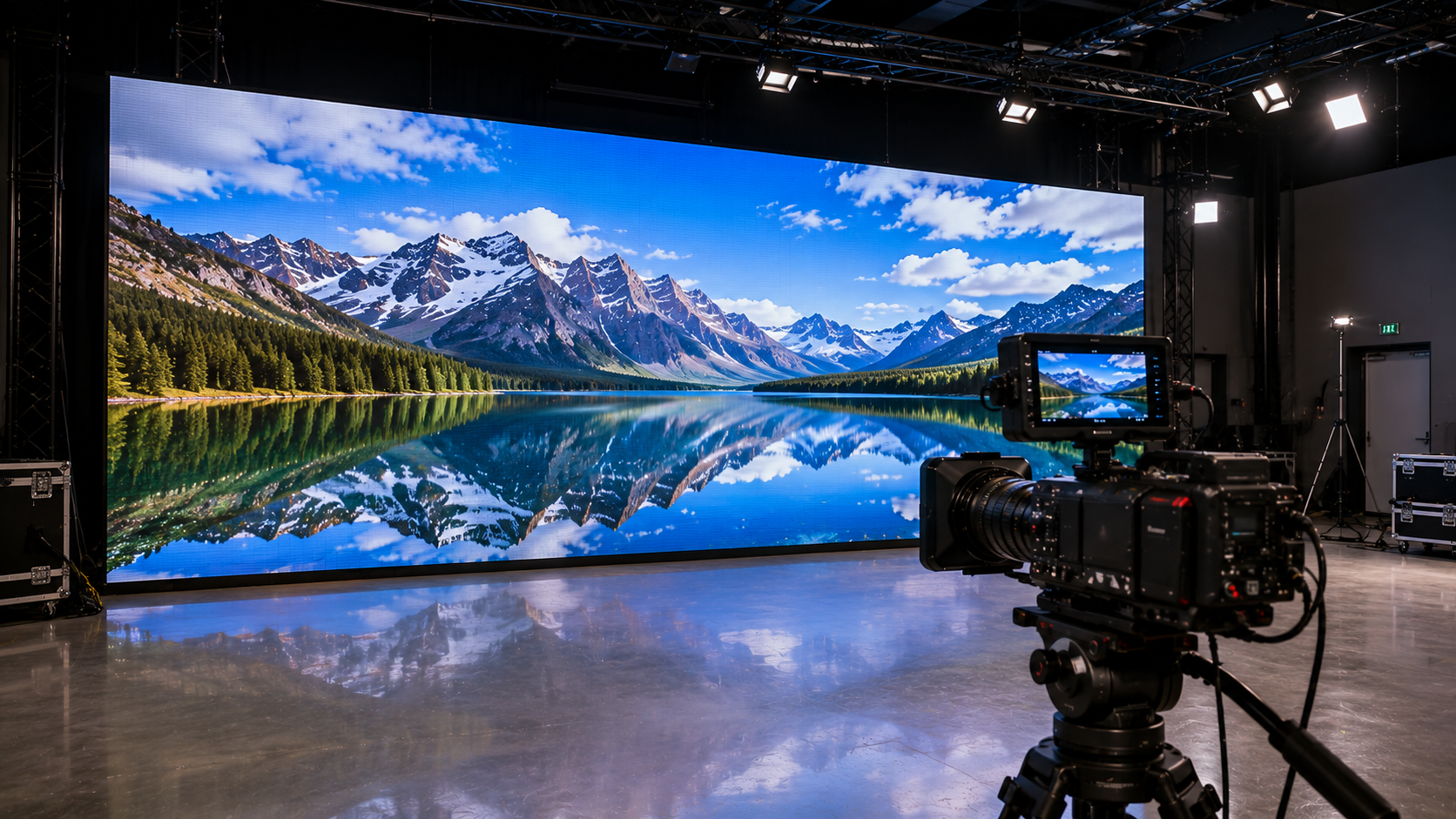
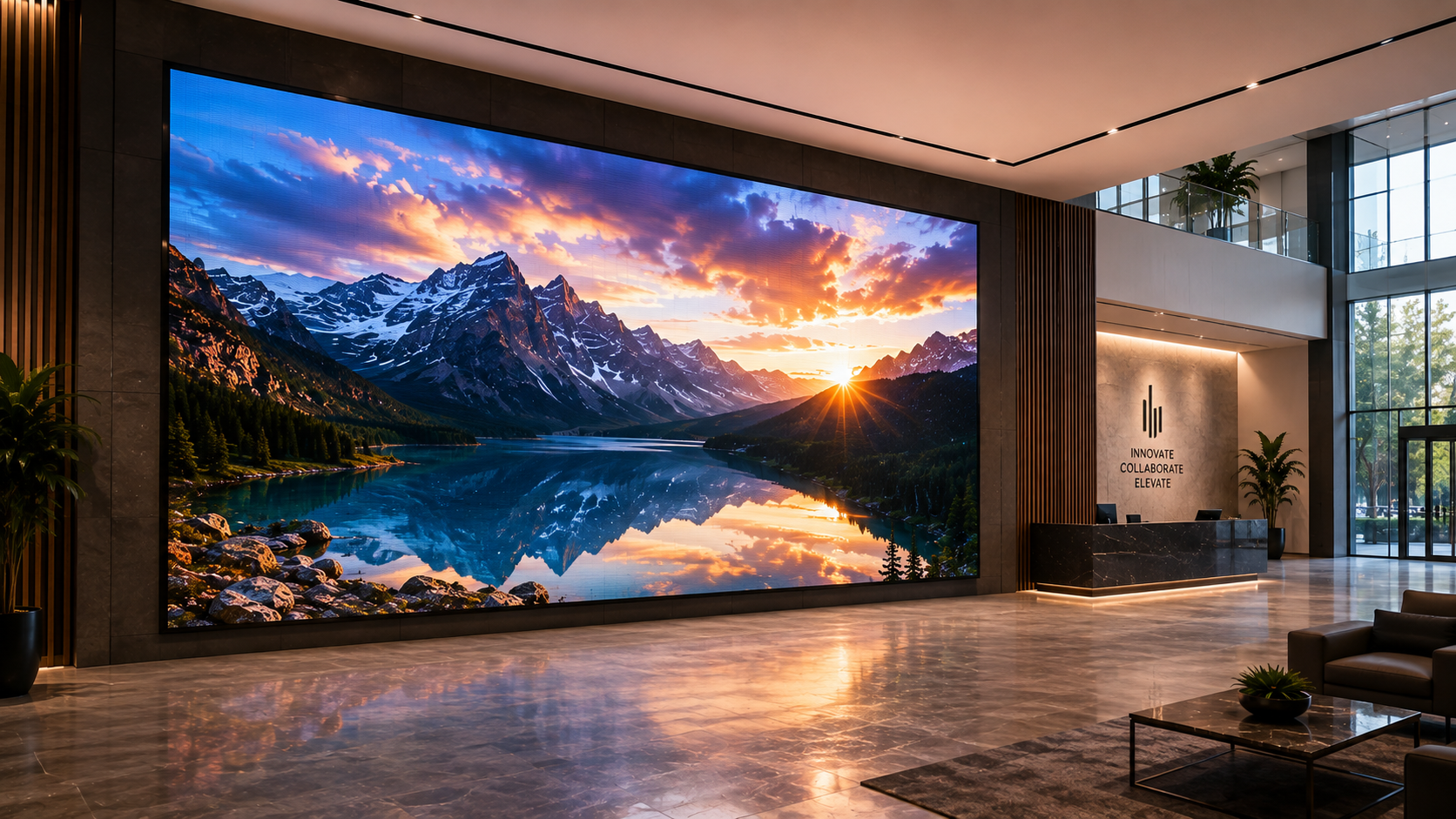
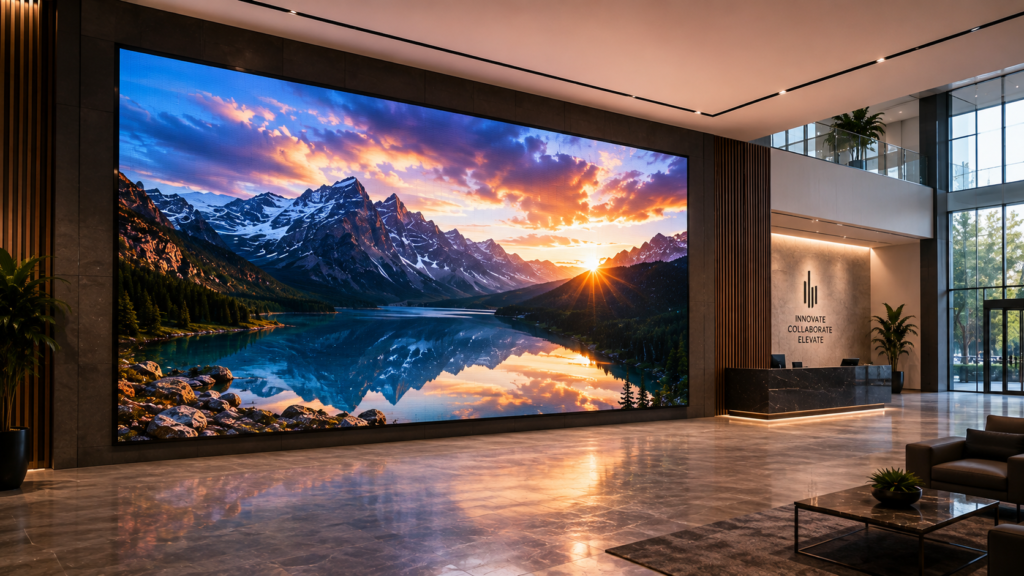
For example, imagine an LED video wall displaying a sunset. A high-quality system can reproduce the gradual transition from deep shadows to orange, red, and bright sunlight. Conversely, a display with poor grayscale performance may show visible bands between those tones.
The difference can be substantial.
At Screen Solutions International (SSI), we evaluate LED systems as complete visual platforms. Pixel pitch matters. Brightness matters. Refresh rate matters. However, grayscale, processing, calibration, and component quality also determine what your audience ultimately sees.
In this guide, we’ll explain LED display grayscale, why bit depth matters, how grayscale affects color and low-brightness performance, and what commercial buyers should consider before investing.
What Is LED Display Grayscale?
LED display grayscale describes the number of brightness levels an LED display can reproduce between minimum and maximum output.
Although the term includes “gray,” grayscale performance affects much more than black-and-white images.
Every LED pixel typically combines red, green, and blue light. By controlling the intensity of those channels, the display creates different colors.
Therefore, precise brightness control allows the display to reproduce more subtle variations in both brightness and color.
Better grayscale performance can improve:
- Shadow detail
- Color transitions
- Gradients
- Skin tones
- Dark scenes
- Photography
- Video
- Brand colors
Consequently, grayscale becomes especially important when image quality matters as much as screen size.
Understanding Bit Depth
LED grayscale specifications often use bit depth.
Common examples include:
- 8-bit
- 10-bit
- 12-bit
- 14-bit
- 16-bit
Higher bit depth can support a greater number of tonal values.
For a single channel, the theoretical number of levels follows powers of two.
| Bit Depth | Theoretical Levels per Channel |
|---|---|
| 8-bit | 256 |
| 10-bit | 1,024 |
| 12-bit | 4,096 |
| 14-bit | 16,384 |
| 16-bit | 65,536 |
However, buyers should avoid judging a display solely by the largest number on a specification sheet.
Processing architecture, driver ICs, calibration, brightness settings, content, and other system characteristics affect the visible result.
Therefore, effective real-world performance matters more than one advertised specification.
Why Grayscale Matters for Commercial LED Displays
A commercial display represents your organization every time someone sees it.
If gradients look rough, dark areas lose detail, or colors shift at lower brightness, the display may not deliver the premium experience your business expected.
Strong grayscale performance can provide several advantages.
Smoother Gradients
Gradients should transition naturally.
For example, a blue sky should move smoothly from lighter blue near the horizon to deeper tones above.
Poor tonal reproduction can create visible steps between colors. This effect is commonly called banding.
Better grayscale control helps reduce those visible transitions.
Better Shadow Detail
Dark content can be particularly challenging.
Premium LED processing can preserve subtle details in shadows instead of turning large portions of an image into flat black areas.
As a result, photographs and cinematic content look more natural.
More Accurate Colors
Fine brightness control across red, green, and blue channels helps reproduce subtle color differences.
Therefore, premium grayscale performance can improve brand presentations, digital artwork, product photography, and other color-sensitive content.
What Is Color Banding?
Color banding occurs when a display cannot reproduce a smooth tonal transition.
Instead of a continuous gradient, viewers see visible bands or steps.
You may notice banding in:
- Sunsets
- Blue skies
- Dark backgrounds
- Spotlights
- Smoke
- Shadows
- Computer-generated graphics
For basic signage, slight banding may not create a major problem.
However, in a luxury corporate lobby, museum, broadcast studio, or premium retail environment, those imperfections become much more noticeable.
Consequently, buyers should consider grayscale when evaluating high-end LED systems.
Why Low-Brightness Performance Matters
One of the most important tests of LED quality happens when you reduce brightness.
Indoor LED displays often don’t need to operate at maximum output.
For example, a corporate lobby may look excellent at a moderate brightness level. Likewise, a museum may deliberately use lower brightness to match exhibit lighting.
However, reducing brightness can expose weaknesses in some LED systems.
Poor-quality systems may experience:
- Lost grayscale
- Color shifts
- Uneven dark tones
- Reduced detail
- Visible banding
A well-engineered LED system should maintain strong visual performance even when brightness decreases.
Therefore, buyers should evaluate low-brightness grayscale performance, not simply maximum brightness.
Grayscale vs. Brightness
Brightness and grayscale are different specifications.
Brightness tells you how much light the display can produce.
Grayscale tells you how precisely the system can control tonal levels.
For example, an outdoor LED billboard may need extremely high brightness to overcome sunlight.
Meanwhile, a museum display may operate at much lower brightness but require exceptional tonal detail.
Therefore, a brighter display isn’t automatically a better-looking display.
Instead, the correct system balances:
- Brightness
- Contrast
- Grayscale
- Color
- Pixel pitch
- Processing
For more information about LED brightness, link this section to your SSI LED Display Brightness Guide.
Grayscale vs. Contrast Ratio
Contrast describes the difference between the brightest and darkest portions of an image.
Grayscale describes the tonal steps between those extremes.
Both work together.
Strong contrast without smooth grayscale may produce dramatic blacks and whites but poor transitions between them.
Conversely, good grayscale with weak black levels may still produce a washed-out image.
Therefore, premium LED image quality requires both strong contrast and accurate tonal reproduction.
Grayscale and COB LED Technology
COB, or Chip-on-Board, has become increasingly important in fine-pitch commercial LED applications.
COB technology can provide advantages such as:
- Fine pixel pitches
- Strong physical protection
- Improved surface durability
- Excellent contrast potential
- Premium close-viewing performance
However, COB alone doesn’t guarantee exceptional grayscale.
Driver technology, processing, calibration, and manufacturing quality still matter.
Therefore, commercial buyers should evaluate the complete COB display rather than assuming every COB product delivers identical image quality.
Internal SSI Link:
https://ssidisplays.com/cob-vs-smd-led-displays/
Grayscale and SMD LED Displays
SMD, or Surface-Mounted Device, remains widely used throughout the commercial LED industry.
Quality SMD systems can deliver excellent:
- Color
- Brightness
- Grayscale
- Refresh performance
- Reliability
SMD remains appropriate for many indoor, outdoor, trade show, retail, corporate, and entertainment applications.
Therefore, choosing between COB and SMD should depend on the application rather than a single specification.
Why Grayscale Matters in Corporate Lobbies
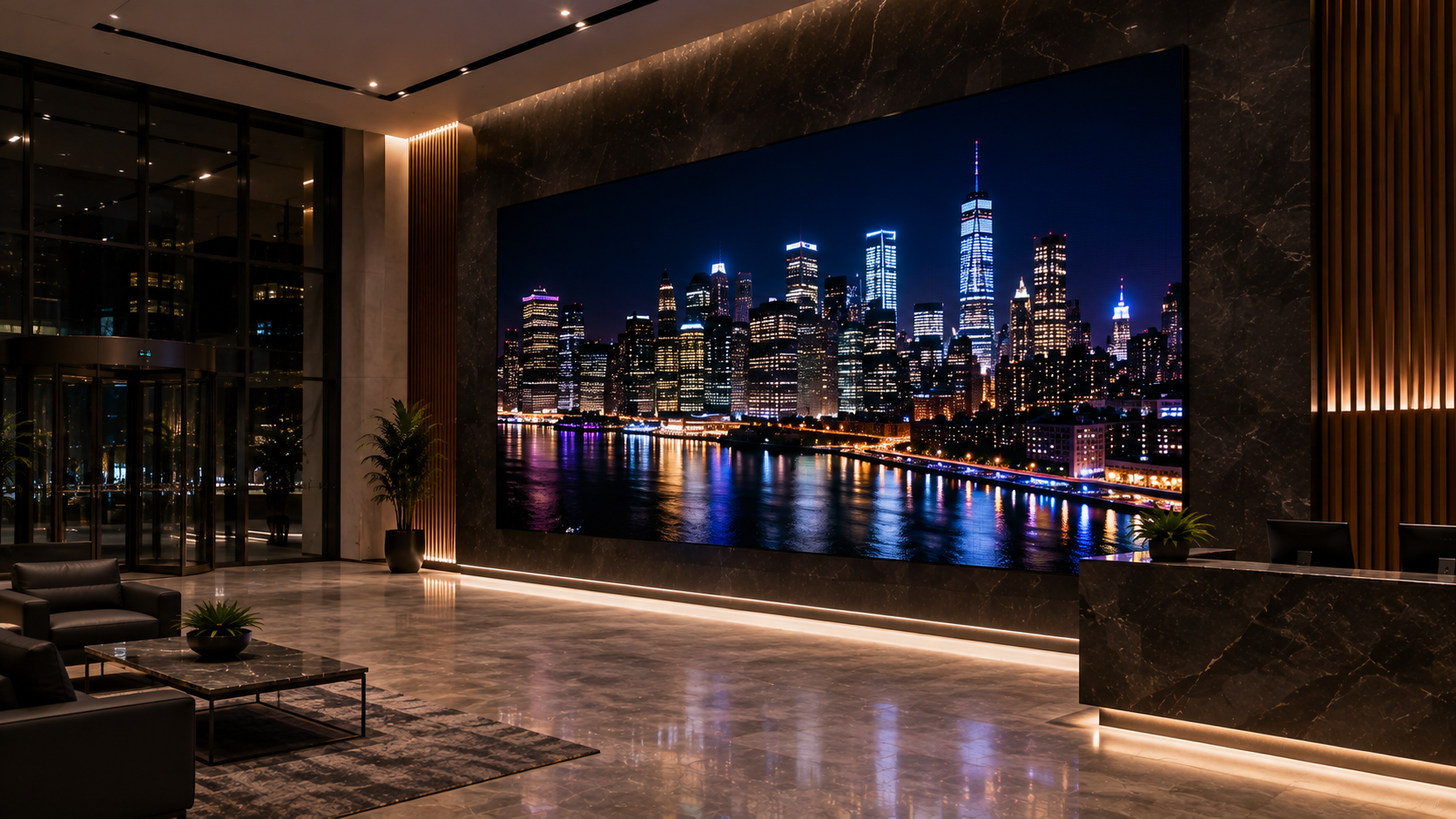
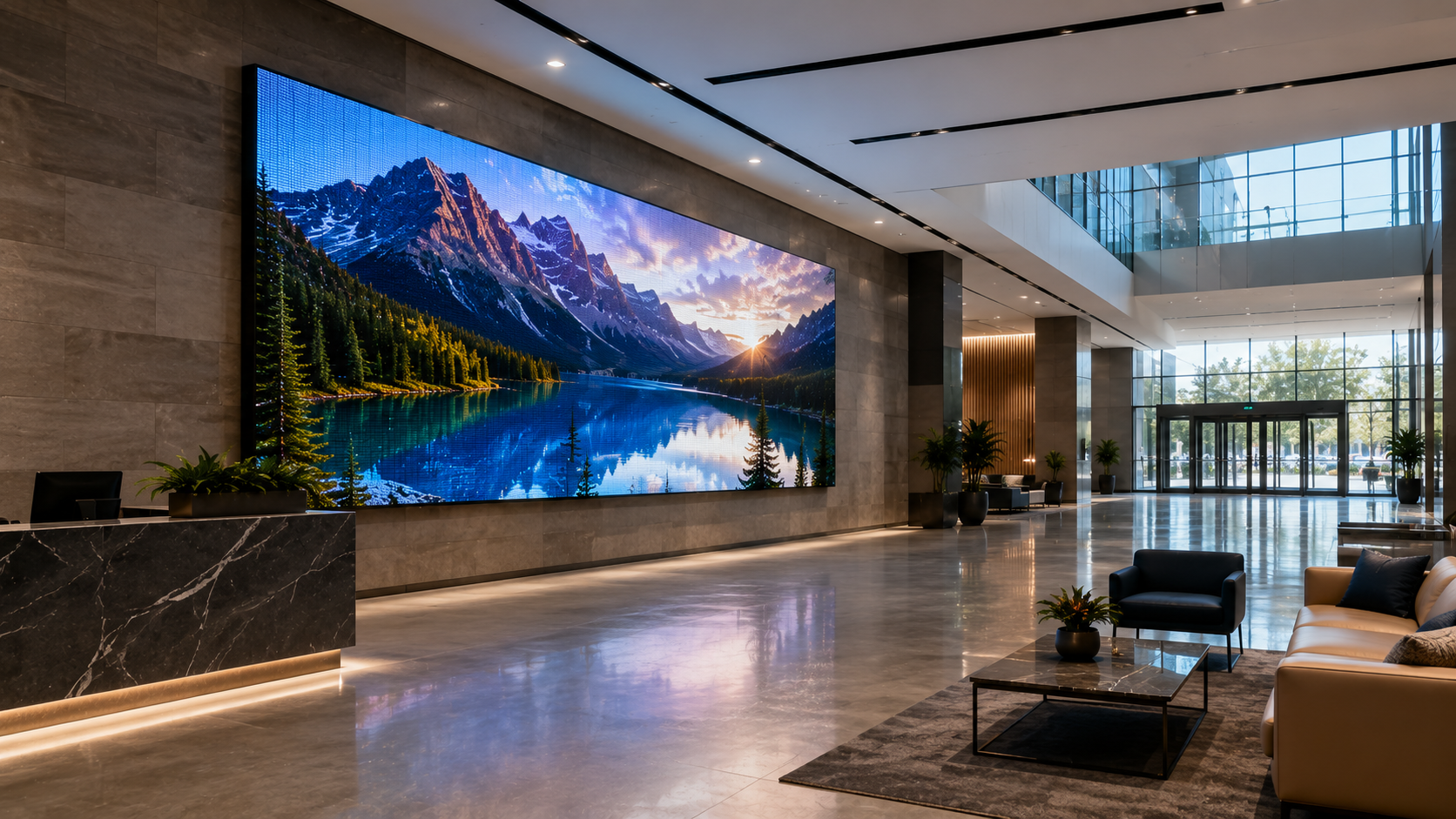
Corporate lobby LED walls often display highly polished content.
Examples include:
- Brand films
- Product photography
- Architectural imagery
- Landscapes
- Corporate storytelling
- Digital art
- Executive messaging
These applications frequently include subtle gradients and cinematic footage.
Consequently, better grayscale helps the display feel more refined.
Furthermore, corporate lobbies often use controlled lighting. Viewers may also approach the screen closely.
Therefore, image-quality imperfections can become easier to notice.
Internal SSI Link:
https://ssidisplays.com/ultimate-guide-led-video-walls-2/
Why Museums Need Strong Grayscale Performance
Museums frequently display visually demanding content.
For example:
- Historical photography
- Fine art
- Space imagery
- Scientific visualization
- Archival video
- Digital reconstructions
In these environments, subtle image details matter.
A photograph may contain information hidden within shadows. Likewise, digital artwork may depend on precise color transitions.
Therefore, high-quality processing and grayscale performance can significantly improve the visitor experience.
Grayscale for Retail Displays
Retailers use LED technology to sell products and communicate brand identity.
Luxury brands, automotive manufacturers, fashion companies, and technology retailers often rely on premium photography.
Poor tonal reproduction can make products look less realistic.
Conversely, strong grayscale helps maintain:
- Material textures
- Fabric details
- Product contours
- Reflections
- Shadow depth
- Color accuracy
As a result, the display presents merchandise more effectively.
That can support a stronger customer experience and, ultimately, greater marketing value.
Grayscale for Broadcast and Cameras
Broadcast environments create another challenge.
A display that looks acceptable to the human eye may behave differently on camera.
Therefore, broadcast LED systems should consider:
- Grayscale
- Refresh rate
- Scan rate
- Camera shutter
- Color calibration
- Brightness
- Moiré
- Processing
High-quality grayscale becomes particularly valuable in darker scenes.
Furthermore, camera systems can reveal tonal inconsistencies that casual viewers may overlook.
If your display will regularly appear on camera, link this section to the SSI article about LED Display Refresh Rate.
LED Grayscale for Trade Shows
Trade show exhibitors increasingly use high-resolution LED walls as central booth attractions.
However, these displays now serve two audiences.
First, they attract visitors walking through the exhibit hall.
Second, they appear in photographs and videos shared online.
Consequently, image quality can affect both physical and digital engagement.
Smooth gradients, strong contrast, and realistic color can make booth content appear more premium.
Therefore, grayscale deserves consideration when selecting trade show LED technology.
Comparing Basic and Premium LED Image Performance
| Feature | Basic Commercial LED | Premium Commercial LED |
|---|---|---|
| Gradient Smoothness | Good | Excellent |
| Low-Brightness Detail | Moderate | Excellent |
| Shadow Reproduction | Moderate | High |
| Color Precision | Good | Higher |
| Camera Applications | Application dependent | Better suited when properly specified |
| Premium Content | Acceptable | Strong |
| Fine Art / Photography | Limited to Good | Excellent |
These descriptions remain general because actual performance varies by manufacturer, product line, processing, and calibration.
Therefore, request application-specific specifications and testing when image quality is mission-critical.
Content Quality Still Matters
An expensive LED wall cannot improve poorly prepared content automatically.
For the best results, content creators should consider:
- Correct resolution
- Appropriate bit depth
- Proper compression
- Color management
- Aspect ratio
- Brightness
- Contrast
- Source quality
Highly compressed videos may contain banding before they ever reach the LED processor.
Consequently, the entire content pipeline matters.
A premium display paired with premium source material will generally produce the strongest results.
Business Benefits of Better Image Quality
Grayscale may sound highly technical. However, it connects directly to business outcomes.
Stronger Brand Presentation
Premium image quality helps communicate professionalism.
Better Customer Experiences
Natural-looking content creates a more immersive environment.
More Effective Product Presentation
Accurate tones and colors help products appear closer to their intended appearance.
Better Photography and Video
Camera-friendly displays can increase the usable marketing content generated around an installation.
Longer Useful Life
A display with stronger image performance may remain visually competitive longer as content standards continue improving.
Therefore, image quality can contribute to long-term ROI.
Common Mistakes When Evaluating LED Grayscale
Comparing Bit Depth Alone
A higher number doesn’t automatically guarantee a better display.
Evaluate the entire processing chain.
Testing Only at Maximum Brightness
Indoor displays frequently operate below maximum brightness.
Therefore, evaluate image quality at realistic operating levels.
Using Only Bright Test Content
Bright demo reels can hide poor shadow performance.
Instead, test:
- Dark scenes
- Skin tones
- Gray gradients
- Blue skies
- Shadows
- Subtle colors
Ignoring Source Content
Poor source files can make excellent displays look bad.
Therefore, use high-quality test content.
Buying Without Seeing Real-World Performance
When image quality is critical, request samples, demonstrations, or testing whenever practical.
Future Trends in LED Grayscale and Image Quality
LED display processing continues to improve rapidly.
Higher Bit-Depth Processing
Advanced systems continue increasing internal precision.
Better Driver ICs
Improved drivers provide finer control over LED output.
AI-Assisted Calibration
Automated systems can help identify and correct color and brightness inconsistencies.
HDR Content
High Dynamic Range content increases demand for strong highlight and shadow reproduction.
MicroLED and Fine-Pitch COB
New display technologies continue pushing image quality closer to premium flat-panel performance while retaining LED’s modular advantages.
As a result, commercial LED walls will continue becoming more visually sophisticated.
Why Choose Screen Solutions International
A commercial LED display shouldn’t be selected by one specification.
Screen Solutions International evaluates the entire application.
We consider:
- Viewing distance
- Pixel pitch
- Grayscale
- Brightness
- Refresh rate
- Content
- Camera use
- Environment
- Processing
- Installation
- Future requirements
SSI provides:
- Fine-Pitch LED Video Walls
- COB LED Displays
- SMD LED Displays
- Corporate Lobby Displays
- Trade Show LED Displays
- High Bright Displays
- LED Floors
- Digital Spheres
- Interactive Displays
- Transparent OLED Displays
- Custom Experiential Displays
Our goal is to create a display that doesn’t simply look impressive on a specification sheet.
It needs to look impressive in your actual space.
For commercial LED display planning, contact Screen Solutions International at 888-631-5880.
Frequently Asked Questions
What is LED display grayscale?
LED display grayscale describes the number and quality of brightness levels a display can reproduce between its darkest and brightest output.
Is higher bit depth better?
Higher bit depth can support more tonal levels. However, processing quality, driver technology, calibration, and content also affect real-world performance.
Why do I see bands in LED gradients?
Visible bands may result from limited tonal information, poor processing, content compression, or other parts of the signal chain.
Does grayscale affect color?
Yes. Because LED displays create colors by controlling red, green, and blue intensity, precise tonal control can improve subtle color reproduction.
Why does grayscale matter at low brightness?
Some LED systems lose tonal detail when brightness decreases. Therefore, strong low-brightness performance becomes particularly important indoors.
Does COB have better grayscale than SMD?
COB can provide excellent image quality, especially in premium fine-pitch applications. However, COB alone doesn’t determine grayscale performance. Processing, drivers, calibration, and product quality remain important.
Final Takeaway
LED display grayscale may not receive as much attention as pixel pitch or brightness. Nevertheless, it can have a significant effect on the quality of the finished image.
Strong grayscale helps produce smoother gradients, deeper shadow detail, more natural colors, and better low-brightness performance.
Therefore, businesses investing in premium corporate lobbies, museums, retail experiences, broadcast environments, trade show displays, and other image-critical applications should evaluate grayscale as part of the buying process.
Most importantly, don’t judge an LED wall by one specification.
Pixel pitch, brightness, refresh rate, contrast, grayscale, processing, calibration, content, and component quality all work together.
Screen Solutions International can help you evaluate those factors and design an LED system around your actual application.
Contact 888-631-5880 to discuss your project.
Sources
Internal SSI Links
- https://ssidisplays.com/
- https://ssidisplays.com/ultimate-guide-led-video-walls-2/
- https://ssidisplays.com/cob-vs-smd-led-displays/
- https://ssidisplays.com/led-display-types-explained/
- https://ssidisplays.com/how-to-choose-the-right-led-display-for-your-business/
External Authority Sources
- https://www.avixa.org/
- https://www.smpte.org/
- https://www.infocommshow.org/
- https://digitalsignagefederation.org/
- https://www.energy.gov/
Suggested Internal Linking
In this article, link COB vs. SMD LED Displays to:
https://ssidisplays.com/cob-vs-smd-led-displays/
Link LED video walls to:
https://ssidisplays.com/ultimate-guide-led-video-walls-2/
Link choosing the right LED display to:
https://ssidisplays.com/how-to-choose-the-right-led-display-for-your-business/