
Why LED Video Walls Are Replacing Traditional Digital Signage
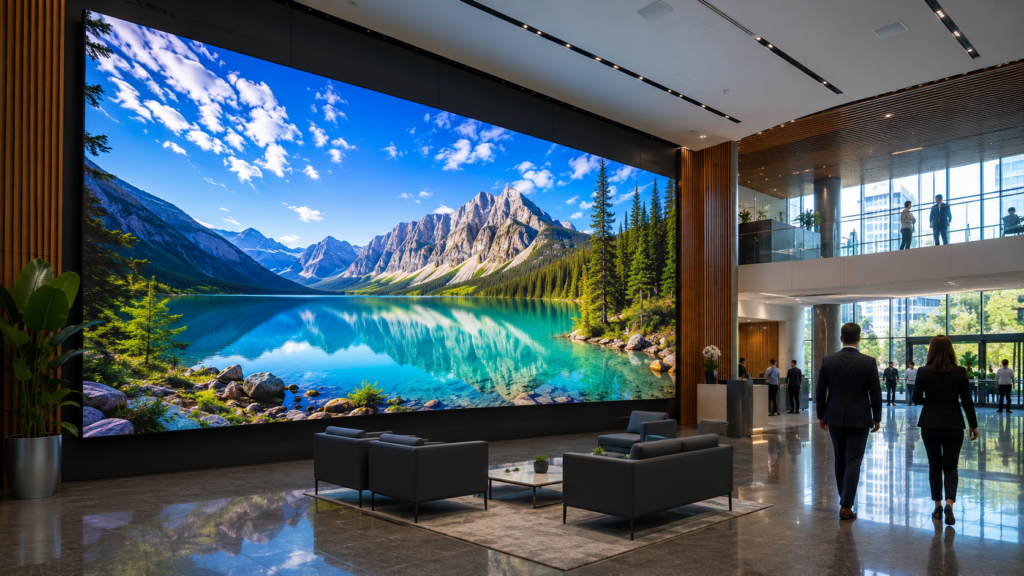
Businesses are constantly searching for more effective ways to capture attention, communicate messages, and create memorable customer experiences. While traditional digital signage remains an important communication tool, many organizations are now upgrading to LED video walls to achieve greater visual impact and flexibility.
As display technology continues to evolve, LED video walls have become more accessible, more reliable, and more cost-effective than ever before. Consequently, businesses across retail, corporate, education, entertainment, hospitality, and public sectors are investing heavily in LED display technology.
Furthermore, modern LED video walls provide benefits that traditional displays often cannot match. From seamless imagery to virtually unlimited sizing, LED technology is helping organizations transform how they communicate with visitors, customers, and employees.
What Is an LED Video Wall?
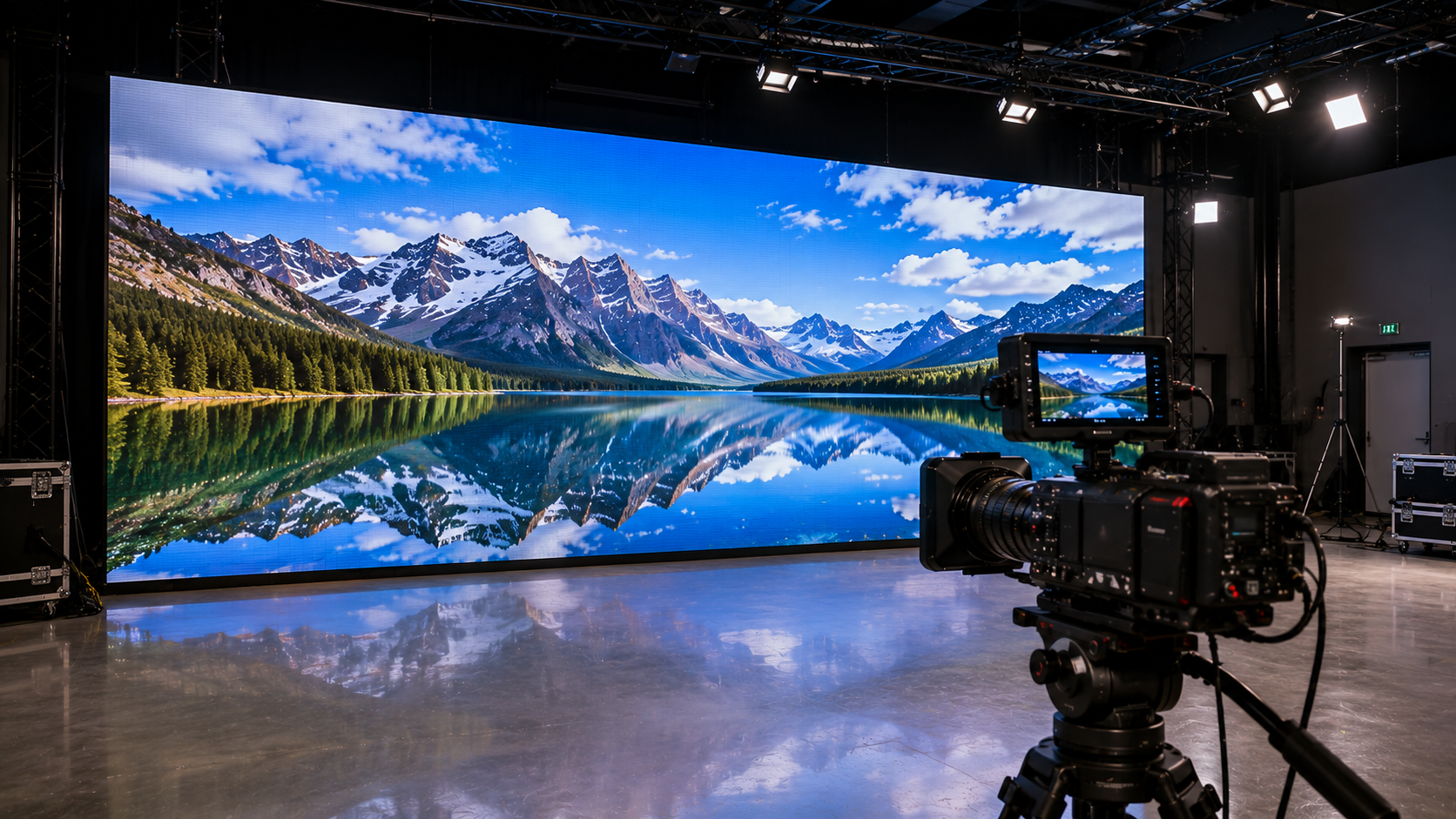
An LED video wall consists of multiple LED display cabinets that work together to form a single large-format digital canvas.
Unlike traditional LCD video walls, LED systems do not require bezels between screens. As a result, viewers experience seamless content without visible gaps interrupting the image.
Additionally, LED video walls can be customized into a wide variety of sizes and shapes, allowing organizations to create display solutions that fit their specific environment.
Common applications include:
- Corporate lobbies
- Retail stores
- Airports
- Museums
- Universities
- Sports venues
- Hotels
- Trade show exhibits
- Experience centers
Because of their flexibility, LED video walls have become one of the most versatile display technologies available today.
Why Traditional Digital Signage Has Limitations
Traditional digital signage still serves many applications effectively. However, it also has several limitations.
For example, LCD displays often have:
- Visible bezels
- Limited sizing options
- Lower brightness capabilities
- Fixed form factors
- Reduced scalability
Furthermore, as organizations attempt to create larger displays, these limitations become more noticeable.
Consequently, businesses looking to create a premium experience often seek alternative technologies that deliver a more immersive presentation.
The Advantages of LED Video Walls
LED video walls solve many of the challenges associated with traditional digital signage.
Seamless Visual Experience
Perhaps the most obvious advantage is the absence of bezels.
Because LED cabinets connect seamlessly, viewers see one continuous image rather than multiple screens joined together.
As a result, content appears cleaner, more professional, and more immersive.
Superior Brightness
LED displays can achieve significantly higher brightness levels than many traditional displays.
Therefore, they remain visible even in brightly lit environments such as:
- Retail storefronts
- Airports
- Convention centers
- Corporate lobbies
- Public spaces
Additionally, high brightness improves content visibility throughout the day.
Unlimited Sizing Flexibility
Unlike standard displays that come in fixed sizes, LED video walls can be built to virtually any dimension.
For example, organizations can create:
- Small feature walls
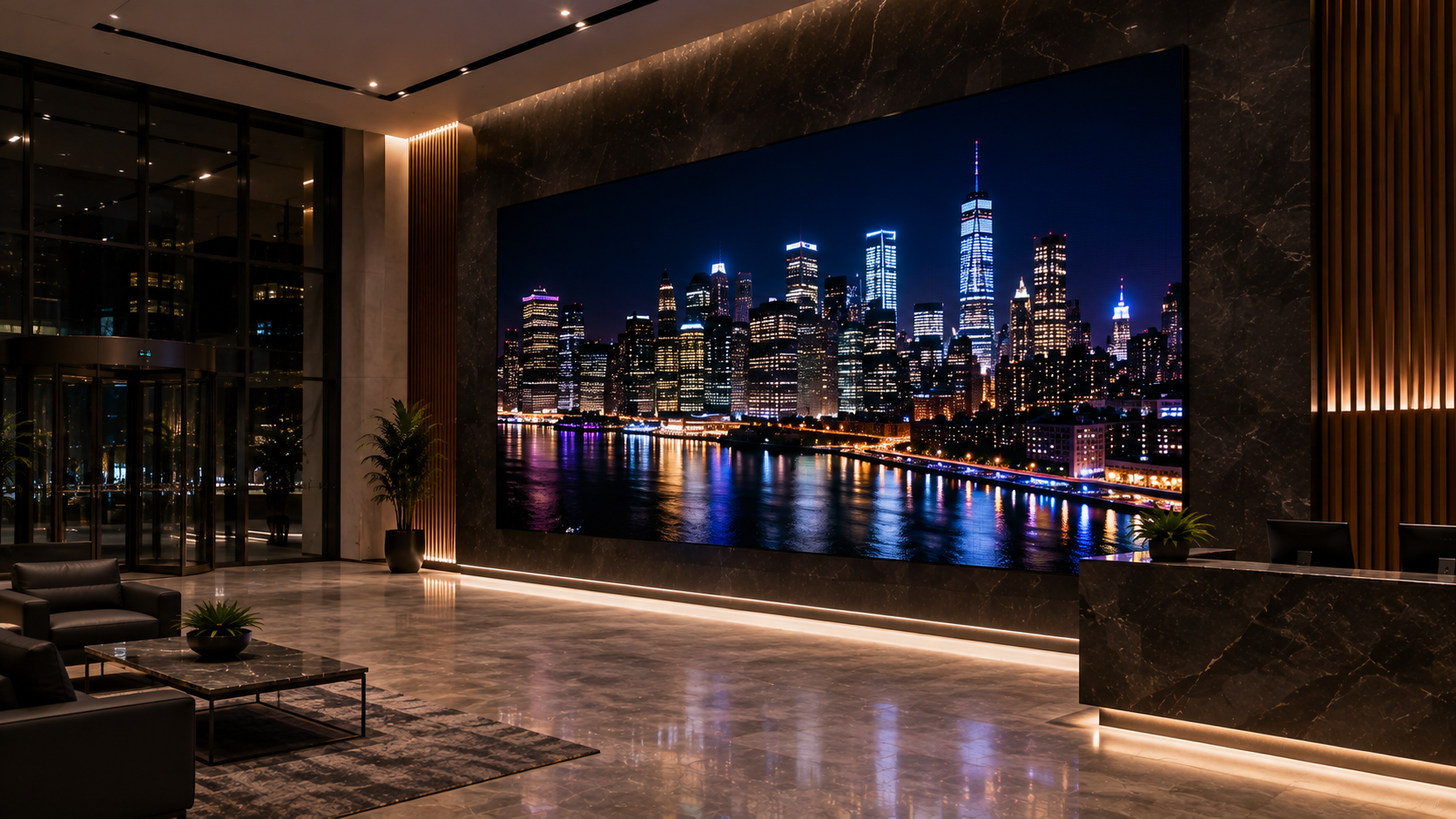
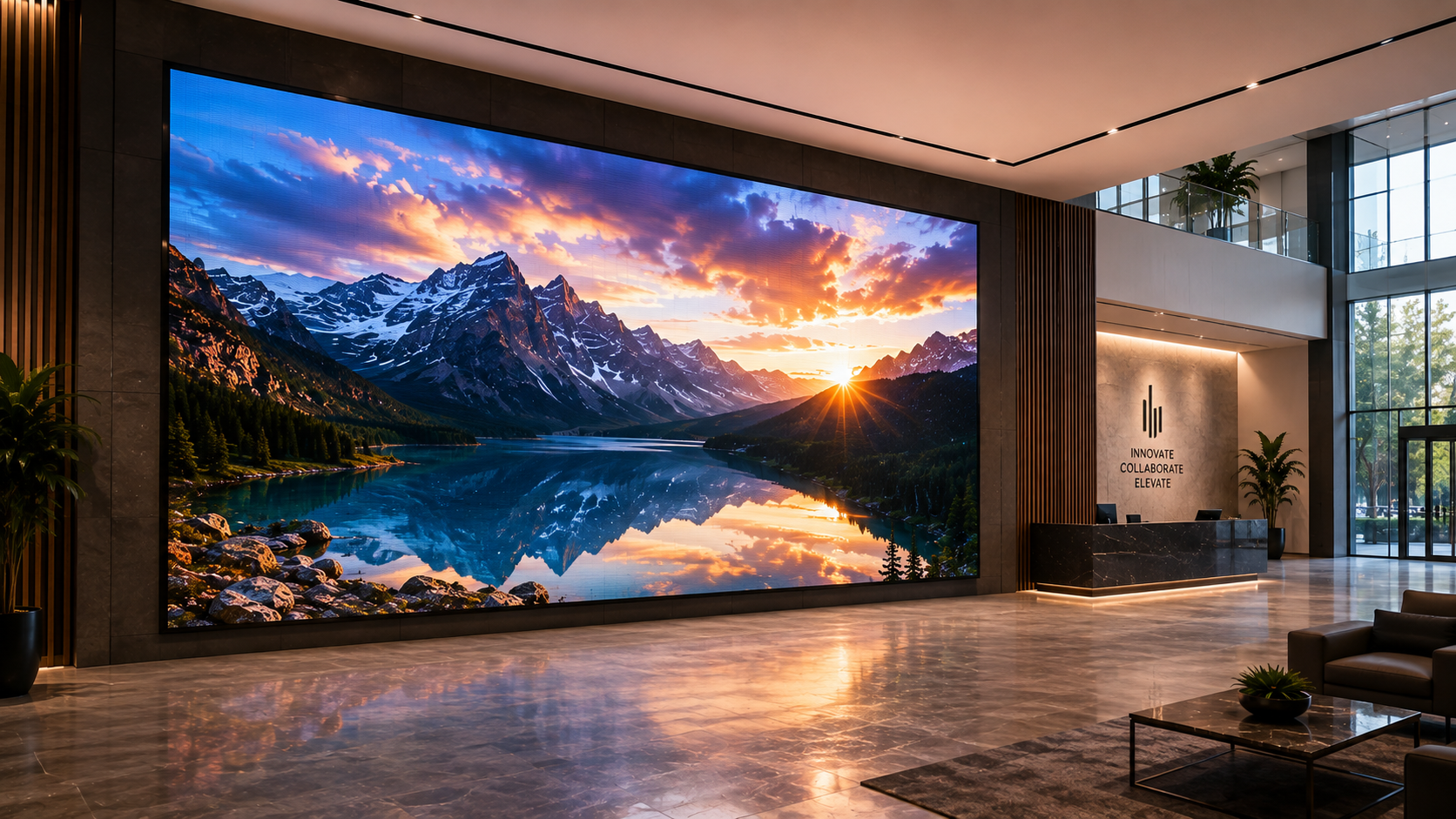
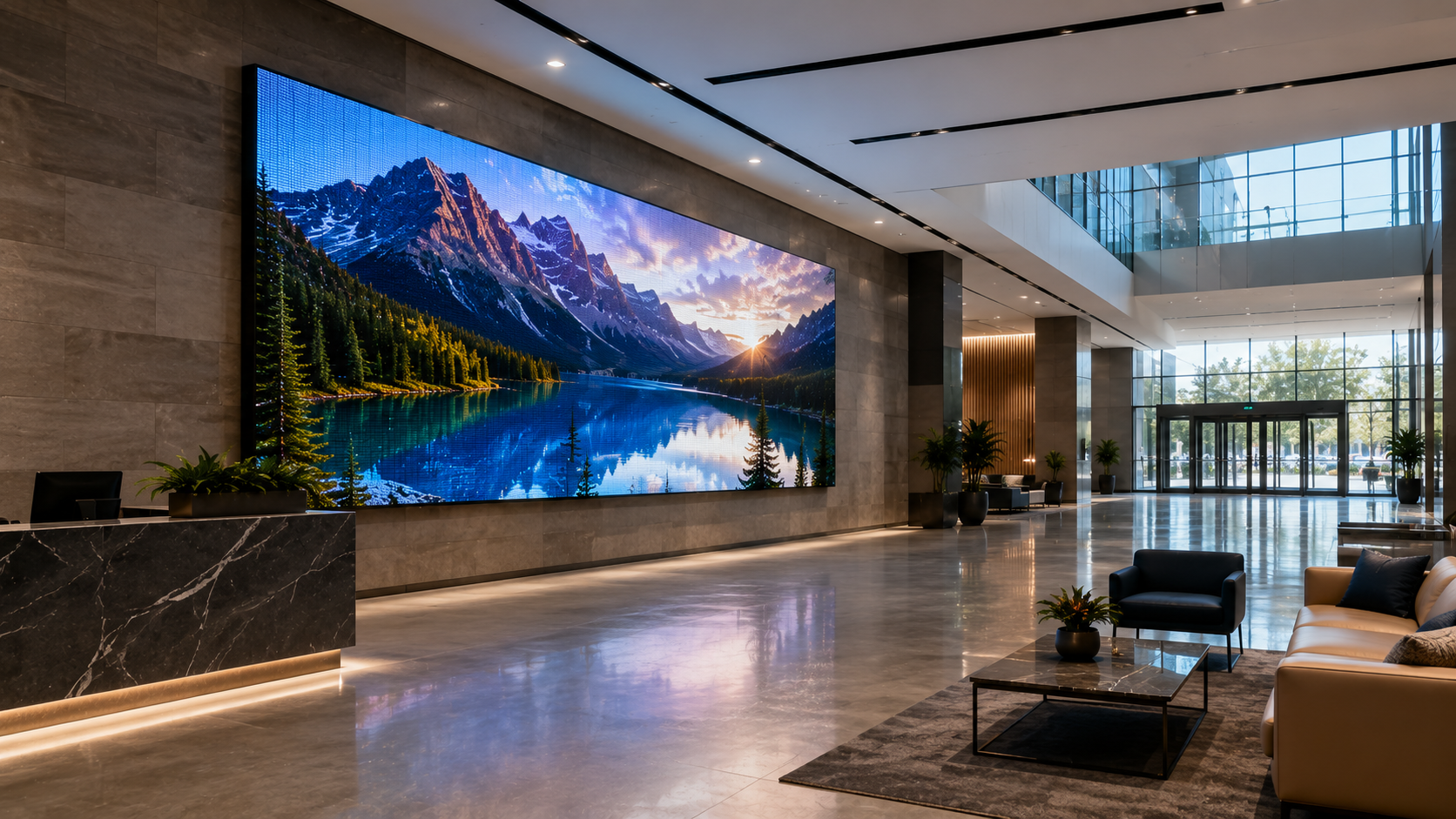
- Large lobby displays
- Curved video walls
- LED columns
- Cylindrical displays
- Massive architectural installations
Consequently, businesses can tailor the display to the space rather than designing around screen limitations.
LED Video Walls Create Stronger First Impressions
First impressions matter.
Whether a customer enters a retail store, corporate headquarters, museum, or hotel, the visual environment immediately influences perception.
Because LED video walls deliver larger-than-life visuals, they help organizations communicate innovation, professionalism, and brand strength.
Furthermore, dynamic content can continuously evolve throughout the day, creating an environment that feels active and engaging.
As a result, many businesses view LED video walls as both communication tools and architectural features.
LED Video Walls for Retail Stores
Retail remains one of the fastest-growing markets for LED technology.
Not only do LED video walls attract attention, but they also influence purchasing behavior.
Common retail applications include:
Product Promotions
Retailers can highlight featured products, promotions, and seasonal campaigns using high-impact visuals.
Storefront Displays
Large LED displays help attract foot traffic while maintaining visibility from long distances.
Brand Storytelling
Additionally, LED video walls allow brands to tell compelling visual stories that create emotional connections with customers.
Consequently, retailers can improve both engagement and brand recall.
LED Video Walls for Corporate Environments
Corporate facilities increasingly use LED video walls to modernize communication.
Applications often include:
- Executive briefing centers
- Corporate lobbies
- Innovation centers
- Conference rooms
- Employee communication systems
Furthermore, LED video walls help organizations present information more effectively while reinforcing a technology-forward image.
Because many clients and investors visit corporate facilities, a high-quality display system can help create a lasting impression.
LED Video Walls for Museums and Visitor Centers
Museums continually seek new ways to educate and engage visitors.
Therefore, many institutions now incorporate LED video walls into exhibits and visitor experiences.
Applications include:
- Digital timelines
- Scientific visualizations
- Historical storytelling
- Interactive environments
- Immersive exhibit spaces
Moreover, museums can update digital content without modifying the physical exhibit.
As a result, exhibits remain fresh and relevant while reducing long-term update costs.
LED Video Walls vs LCD Video Walls
| Feature | LED Video Wall | LCD Video Wall |
|---|---|---|
| Seamless Image | Yes | No |
| Visible Bezels | No | Yes |
| Brightness | Higher | Lower |
| Scalability | Excellent | Limited |
| Custom Shapes | Yes | Limited |
| Long-Term Impact | High | Moderate |
| Architectural Integration | Excellent | Moderate |
Although LCD video walls remain suitable for some applications, LED technology generally offers greater flexibility and visual impact.
Therefore, many organizations now view LED displays as the long-term solution.
Common Mistakes When Selecting an LED Video Wall
Many buyers focus exclusively on screen size.
However, several other factors deserve attention.
Common mistakes include:
- Ignoring viewing distance
- Selecting the wrong pixel pitch
- Underestimating power requirements
- Focusing only on upfront cost
- Neglecting content strategy
- Choosing displays without future scalability
Consequently, organizations should evaluate both technical requirements and long-term objectives before selecting a system.
Future Trends in LED Video Walls
LED technology continues to evolve rapidly.
In the coming years, businesses can expect:
- Smaller pixel pitches
- Improved energy efficiency
- Interactive integrations
- AI-powered content systems
- Curved and architectural LED displays
- Greater integration with immersive technologies
Furthermore, LED video walls will increasingly work alongside technologies such as transparent OLED displays, digital spheres, interactive kiosks, and LED floors.
As a result, organizations will have more opportunities to create fully immersive environments.
FAQ
Are LED video walls better than LCD displays?
In many commercial environments, yes. LED video walls provide seamless imagery, greater brightness, and more flexible sizing.
How long do LED video walls last?
Most commercial LED displays are designed for tens of thousands of operating hours when properly maintained.
Can LED video walls be used indoors and outdoors?
Yes. However, outdoor displays require higher brightness levels and weather-resistant construction.
What industries use LED video walls?
Retail, corporate, museums, education, healthcare, hospitality, transportation, sports, and entertainment industries all utilize LED technology.
Why Choose Screen Solutions International
Screen Solutions International helps organizations design and deploy advanced LED display solutions for virtually any environment.
SSI solutions include:
- LED Video Walls
- Digital Signage Systems
- Digital Spheres
- Transparent OLED Displays
- Interactive Kiosks
- LED Floors
- Custom Experiential Displays
Additionally, our team provides design consultation, technology selection, installation support, and long-term project guidance to help clients maximize the value of their investment.
Final Takeaway
LED video walls are rapidly replacing traditional digital signage because they deliver greater visual impact, improved flexibility, and stronger engagement. Furthermore, organizations can customize LED displays to fit almost any environment while maintaining a seamless viewing experience.
As businesses continue competing for attention, LED video walls provide a powerful way to communicate information, strengthen branding, and create memorable customer experiences. Ultimately, organizations that invest in LED technology today position themselves to create more immersive and effective environments tomorrow.
Sources
Internal SSI Links
- https://ssidisplays.com/
- https://ssidisplays.com/led-video-walls/
- https://ssidisplays.com/digital-signage/
- https://ssidisplays.com/transparent-oled-displays/
External Authority Sources