
Introduction
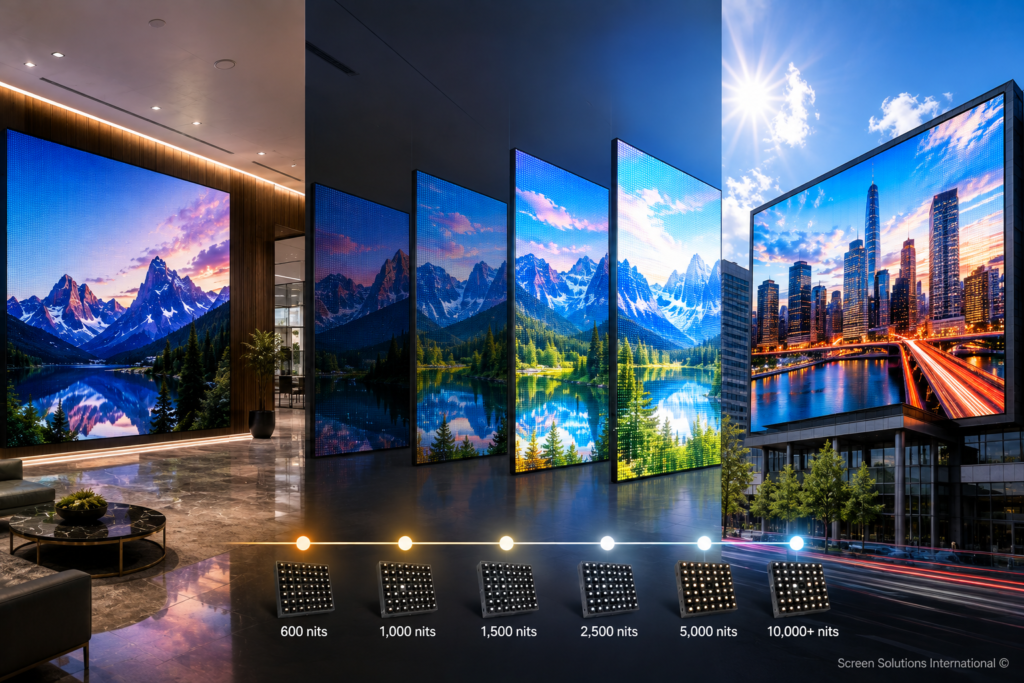
When businesses begin shopping for an LED display, one of the first specifications they notice is brightness, which is measured in nits.
Many buyers assume that a higher brightness rating automatically means a better display. While brightness is certainly important, more isn’t always better. In fact, choosing an LED display that’s too bright for your environment can increase energy consumption, reduce efficiency, and even create an uncomfortable viewing experience.
Instead, the ideal brightness depends on where the display will be installed, how much ambient light it receives, and how far away people will view it.
Whether you’re planning a corporate lobby video wall, an outdoor digital billboard, a retail storefront display, or a museum exhibit, selecting the correct brightness ensures your content remains vibrant while maximizing the lifespan of your investment.
At Screen Solutions International (SSI), we help businesses match LED brightness to the application—not simply the highest specification. This approach improves image quality, reduces operating costs, and delivers a better overall experience.
In this guide, we’ll explain what nits are, why brightness matters, and how to choose the right LED display for your environment.
What Are Nits?
A nit is the standard unit used to measure display brightness.
More specifically, one nit equals one candela per square meter (cd/m²).
The higher the nit rating, the brighter the display.
For example:
- 600 nits is suitable for many indoor environments.
- 1,500 nits provides excellent visibility in bright indoor spaces.
- 5,000–10,000+ nits is common for outdoor LED displays that must compete with direct sunlight.
Consequently, understanding nits helps buyers compare displays more accurately.
Why Brightness Matters
Brightness directly affects how well people can see your content.
If the display is too dim:
- Images appear washed out.
- Colors lose vibrancy.
- Text becomes difficult to read.
- Content disappears in bright environments.
Conversely, if the display is unnecessarily bright:
- Energy consumption increases.
- Operating temperatures rise.
- Eye fatigue may occur indoors.
- Operating costs increase.
Therefore, matching brightness to the environment provides the best balance of performance, efficiency, and longevity.
Typical LED Brightness Levels
Different environments require different brightness levels.
The table below provides general recommendations.
| Application | Typical Brightness |
|---|---|
| Executive Boardrooms | 600–800 nits |
| Corporate Lobbies | 800–1,200 nits |
| Museums | 600–1,000 nits |
| Retail Stores | 800–1,500 nits |
| Airports | 1,000–2,000 nits |
| Storefront Windows | 2,500–4,000 nits |
| Outdoor Signage | 5,000–7,000 nits |
| Stadium Displays | 6,000–10,000+ nits |
These ranges vary depending on ambient lighting, display placement, and viewing conditions.
Indoor LED Display Brightness
Indoor environments rarely require extreme brightness.
Most commercial indoor LED displays perform exceptionally well between:
- 600 nits
- 800 nits
- 1,200 nits
- 1,500 nits
These levels provide vibrant images without overwhelming viewers.
Common indoor applications include:
- Executive boardrooms
- Corporate headquarters
- Retail stores
- Museums
- Universities
- Churches
- Visitor centers
Internal SSI Link:
https://ssidisplays.com/led-video-walls/
Outdoor LED Display Brightness
Outdoor environments present a completely different challenge.
Direct sunlight dramatically reduces display visibility.
Therefore, outdoor LED displays must produce significantly more light.
Typical outdoor brightness ranges include:
- 5,000 nits
- 6,500 nits
- 8,000 nits
- 10,000+ nits
These higher brightness levels ensure content remains visible throughout the day—even under bright sunshine.
Internal SSI Link:
https://ssidisplays.com/high-bright-displays/
Ambient Light Makes a Big Difference
Not every installation receives the same amount of light.
For example:
Low Ambient Light
- Boardrooms
- Conference rooms
- Auditoriums
Lower brightness is usually sufficient.
Moderate Ambient Light
- Corporate lobbies
- Shopping malls
- Museums
- Retail stores
Moderate brightness provides excellent visibility.
High Ambient Light
- Glass storefronts
- Airports
- Atriums
Higher brightness helps overcome natural light.
Direct Sunlight
- Outdoor advertising
- Stadiums
- Building exteriors
Maximum brightness becomes essential.
Brightness vs. Image Quality
Many buyers mistakenly believe brightness alone determines image quality.
In reality, image quality depends on several factors working together.
These include:
- Pixel pitch
- Contrast ratio
- Color calibration
- Refresh rate
- Viewing angle
- Content quality
- Brightness
Consequently, a properly calibrated display with moderate brightness often looks better than an overly bright display with poor calibration.
Automatic Brightness Adjustment
Modern commercial LED displays frequently include automatic brightness sensors.
These sensors continuously monitor ambient light levels.
As lighting changes throughout the day, the display automatically adjusts brightness.
Benefits include:
- Lower energy consumption
- Improved image quality
- Reduced eye strain
- Longer LED lifespan
- Lower operating costs
Because brightness changes dynamically, businesses enjoy consistent performance regardless of environmental conditions.
Brightness and Energy Consumption
Higher brightness requires more electrical power.
Consequently, displays operating continuously at maximum brightness consume more energy.
Businesses can reduce operating costs by:
- Matching brightness to the environment
- Using automatic brightness sensors
- Scheduling operating hours
- Optimizing content
These strategies improve both efficiency and long-term ROI.
Common Applications by Brightness
Corporate Headquarters
Most corporate installations perform well between 800 and 1,200 nits.
Retail
Retail environments often require 1,000–1,500 nits, particularly near storefront windows.
Museums
Museums generally prioritize image quality over brightness.
Displays between 600 and 1,000 nits typically perform exceptionally well.
Airports
Transportation facilities often require brighter displays because of large windows and extensive ambient lighting.
Outdoor Advertising
Outdoor billboards and digital signage require the highest brightness levels available.
LED Brightness vs. LCD Displays
| Feature | Commercial LED | Commercial LCD |
|---|---|---|
| Indoor Brightness | Excellent | Good |
| Outdoor Brightness | Excellent | Limited |
| Sunlight Visibility | Outstanding | Moderate |
| Scalability | Unlimited | Limited |
| Image Uniformity | Excellent | Good |
As a result, LED displays increasingly replace LCD technology in high-brightness commercial environments.
Common Mistakes When Choosing Brightness
Buying Maximum Brightness for Indoor Use
Brighter isn’t always better.
Excessive brightness may reduce comfort while increasing energy costs.
Ignoring Ambient Lighting
Always evaluate the lighting conditions where the display will operate.
Forgetting About Energy Consumption
Brightness directly impacts operating costs.
Therefore, selecting only the brightness you actually need improves long-term efficiency.
Choosing Brightness Before Pixel Pitch
Image clarity depends more heavily on pixel pitch than brightness.
Consequently, both specifications should be evaluated together.
Future Trends in LED Brightness
LED technology continues improving rapidly.
Several innovations are shaping the future.
More Efficient LEDs
Manufacturers continue increasing brightness while reducing power consumption.
AI Brightness Optimization
Artificial intelligence increasingly adjusts brightness automatically based on weather, occupancy, and lighting.
Better HDR Performance
High Dynamic Range technology continues improving image realism.
Smarter Display Management
Cloud-based monitoring helps optimize brightness remotely.
Sustainability
Future displays will continue reducing energy usage while maintaining exceptional visibility.
Why Choose Screen Solutions International
Selecting the proper brightness requires understanding more than specifications.
Screen Solutions International evaluates your:
- Environment
- Viewing distance
- Ambient lighting
- Content
- Business goals
- Long-term operating costs
SSI provides:
- Fine-Pitch LED Video Walls
- High Bright Displays
- Outdoor LED Displays
- Transparent OLED Displays
- Interactive Displays
- Digital Spheres
- Custom Experiential Displays
Whether you’re installing an executive boardroom display, a retail storefront, an airport information screen, or a massive outdoor billboard, SSI designs systems that deliver exceptional visibility while maximizing efficiency.
Call 888-631-5880 to discuss your project.
Frequently Asked Questions
What are nits?
Nits measure display brightness. One nit equals one candela per square meter.
How bright should an indoor LED display be?
Most indoor commercial applications perform well between 600 and 1,500 nits.
How bright should an outdoor LED display be?
Outdoor displays typically require 5,000–10,000+ nits to remain visible in direct sunlight.
Does higher brightness use more electricity?
Yes. Brighter displays generally consume more power.
Can LED displays adjust brightness automatically?
Yes. Many commercial LED displays include ambient light sensors that automatically adjust brightness throughout the day.
Final Takeaway
Brightness is one of the most important specifications when selecting a commercial LED display. However, the goal isn’t to purchase the brightest display available—it’s to choose the brightness level that best matches your environment.
By considering ambient lighting, viewing distance, energy efficiency, and content requirements, businesses can select an LED display that delivers exceptional image quality while minimizing operating costs.
Whether you’re installing a corporate video wall, a retail display, a museum exhibit, or an outdoor digital billboard, Screen Solutions International can help you select the ideal brightness for your application.
Contact 888-631-5880 today to begin planning your LED display project.
Sources
Internal SSI Sources
- https://ssidisplays.com/
- https://ssidisplays.com/led-video-walls/
- https://ssidisplays.com/high-bright-displays/
- https://ssidisplays.com/interactive-display-solutions/
- https://ssidisplays.com/contact-us/
External Authority Sources
- https://www.avixa.org
- https://digitalsignagefederation.org
- https://www.infocommshow.org
- https://www.energy.gov
- https://www.energystar.gov
- https://www.dicolorled.com/blog/
Continue Learning
- What Is Pixel Pitch? The Complete LED Video Wall Guide
- COB vs. SMD LED Displays: Which Technology Is Right for Your Project?
- Indoor vs. Outdoor LED Displays: Which One Is Right for Your Project?
- How to Choose the Right LED Display for Your Business
- The Ultimate Guide to LED Video Walls