
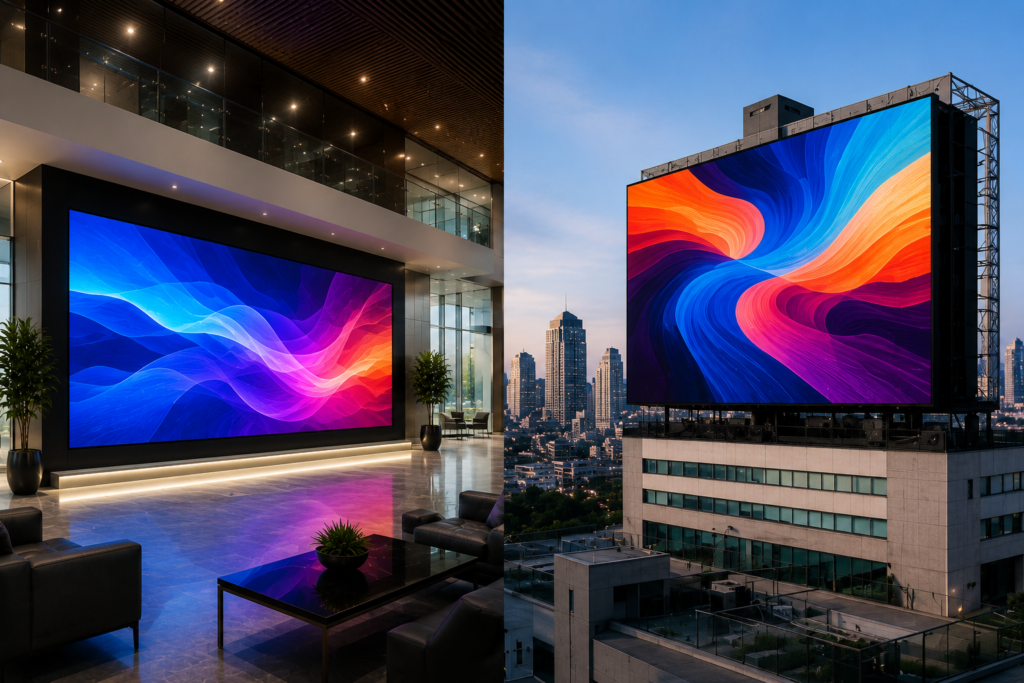
Introduction
LED displays have become one of the most versatile visual communication tools available today. Businesses use them to enhance customer experiences, improve internal communications, advertise products, and create immersive environments that leave lasting impressions.
However, before investing in an LED display, one of the most important decisions you’ll make is whether you need an indoor LED display or an outdoor LED display.
Although both technologies use LED panels to create stunning visuals, they are engineered for very different environments. Consequently, choosing the wrong type of display can result in poor image quality, unnecessary maintenance costs, reduced lifespan, or even complete system failure.
Whether you’re planning a corporate lobby video wall, retail storefront display, digital billboard, sports venue, museum exhibit, or trade show installation, understanding the differences between indoor and outdoor LED displays will help you make a smarter investment.
At Screen Solutions International (SSI), we design custom LED display systems for virtually every commercial application. Rather than recommending a one-size-fits-all solution, we evaluate your environment, audience, viewing distance, and business objectives to recommend the right technology for your project.
In this guide, we’ll compare indoor and outdoor LED displays, explain their advantages, and help you determine which solution best fits your needs.
What Is an Indoor LED Display?
Indoor LED displays are designed for climate-controlled environments where viewers are typically much closer to the screen.
Because indoor applications often require high-resolution graphics, detailed presentations, and close viewing distances, these displays generally feature much smaller pixel pitches.
Common indoor LED applications include:
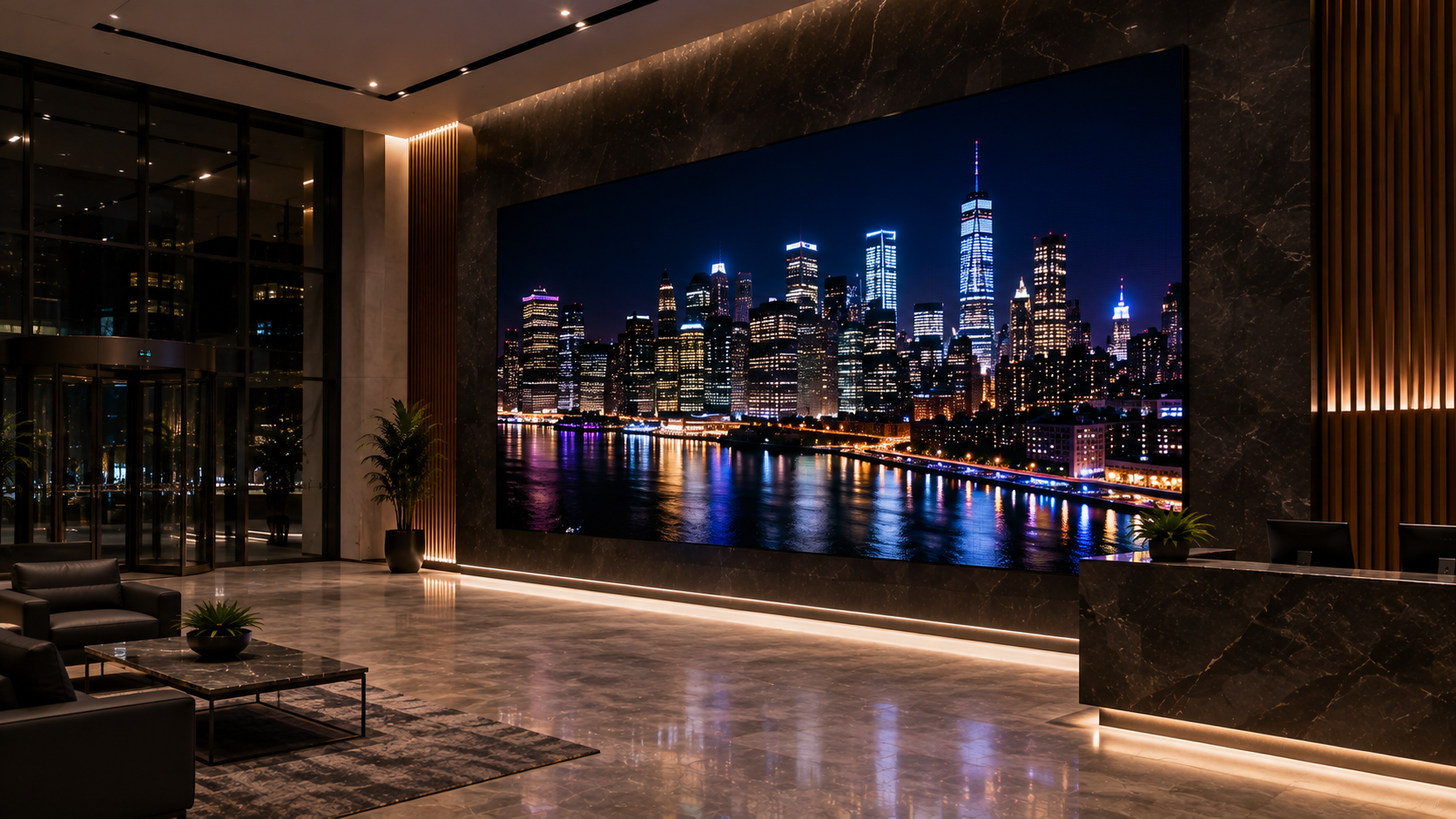
- Corporate lobbies
- Executive boardrooms
- Conference centers
- Museums
- Universities
- Churches
- Retail stores
- Visitor centers
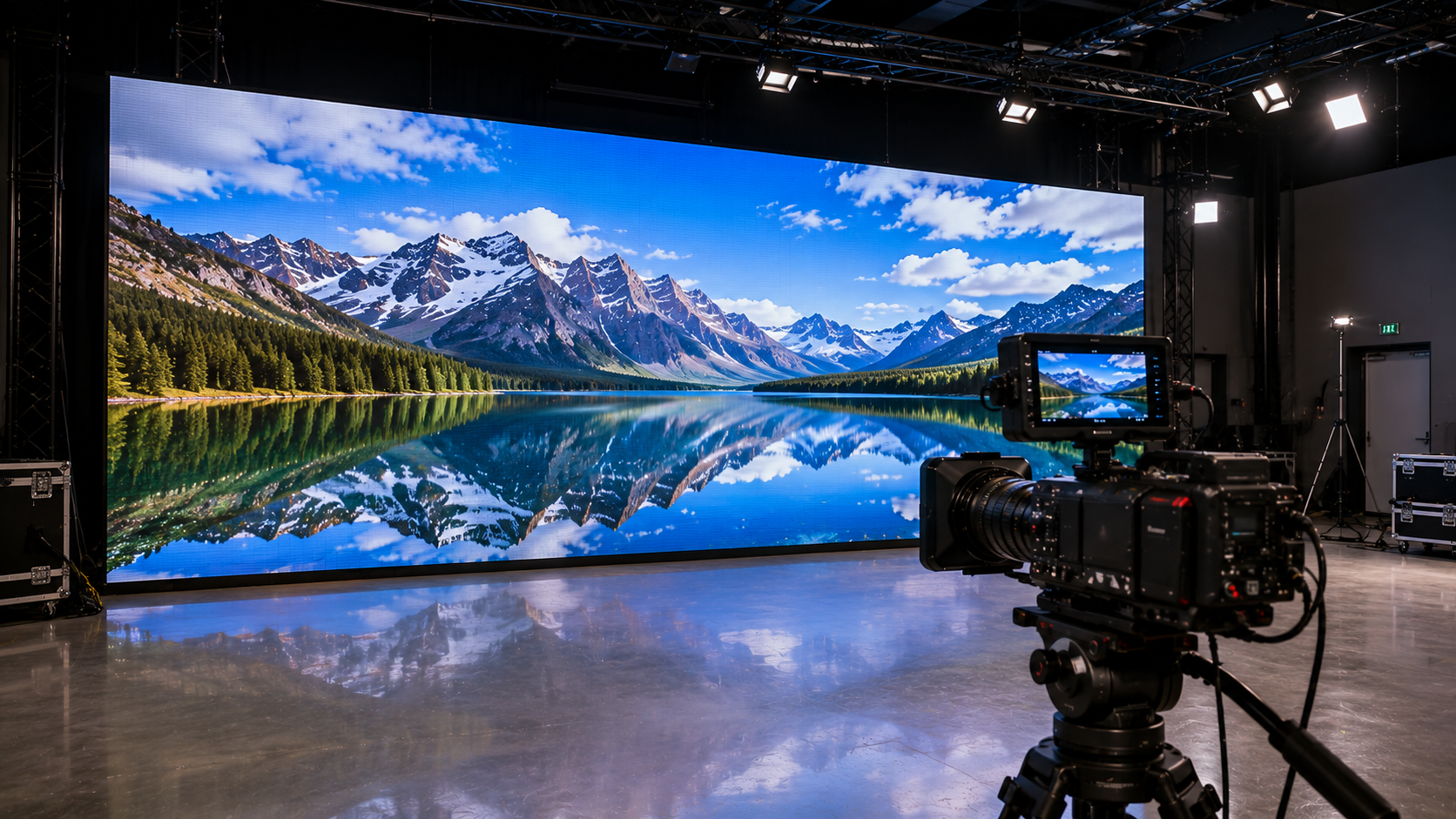
- Broadcast studios
- Trade show exhibits
As a result, indoor LED displays prioritize image quality, fine detail, and seamless presentation over extreme brightness.
Internal SSI Link:
https://ssidisplays.com/led-video-walls/
What Is an Outdoor LED Display?
Outdoor LED displays are engineered to perform in harsh environmental conditions.
Unlike indoor displays, outdoor LED systems must withstand:
- Rain
- Snow
- Wind
- Dust
- Direct sunlight
- Extreme temperatures
- Humidity
Consequently, outdoor displays feature weather-resistant cabinets, higher brightness levels, and larger pixel pitches designed for longer viewing distances.
Typical outdoor applications include:
- Digital billboards
- Stadium scoreboards
- Building signage
- Transportation hubs
- Outdoor shopping centers
- Entertainment venues
- Municipal information displays
- Drive-through messaging
- Outdoor event stages
Because these displays remain visible in full daylight, they often produce brightness levels between 5,000 and 10,000+ nits.
Indoor vs. Outdoor LED Displays: Key Differences
Although both technologies rely on LED modules, several important differences separate them.
| Feature | Indoor LED Displays | Outdoor LED Displays |
|---|---|---|
| Brightness | 600–1,500 Nits | 5,000–10,000+ Nits |
| Weather Protection | No | IP65+ Rated |
| Viewing Distance | Close | Medium to Long |
| Pixel Pitch | Fine | Medium to Large |
| Cabinet Construction | Lightweight | Weatherproof |
| Environmental Protection | Climate Controlled | Rain, Dust, UV, Temperature |
| Typical Applications | Corporate, Retail, Museums | Billboards, Stadiums, Outdoor Advertising |
Understanding these differences helps ensure the display performs reliably while delivering the best possible viewing experience.
Brightness: One of the Biggest Differences
Brightness is often the first specification buyers notice.
However, more brightness isn’t always better.
Indoor displays typically operate between 600 and 1,500 nits, which provides excellent visibility inside offices, retail stores, and conference rooms.
Conversely, outdoor displays require significantly more brightness because they compete with direct sunlight.
As a result, commercial outdoor LED displays commonly produce 5,000 to over 10,000 nits.
Using an indoor display outdoors would make the content difficult—or even impossible—to see during the day.
Likewise, installing an outdoor display inside may create excessive brightness that causes eye fatigue and unnecessary power consumption.
Weather Resistance Matters
Perhaps the most obvious difference between indoor and outdoor LED displays is environmental protection.
Outdoor displays must survive year-round exposure to changing weather conditions.
Therefore, manufacturers design them with:
- Waterproof cabinets
- Sealed electronics
- Corrosion-resistant materials
- Advanced cooling systems
- UV-resistant finishes
Most commercial outdoor LED displays carry an IP65 or higher protection rating.
Indoor displays, on the other hand, rely on controlled environments and therefore do not require the same level of environmental protection.
Consequently, they can be lighter, thinner, and more cost-effective.
Pixel Pitch and Viewing Distance
Viewing distance plays a major role when selecting an LED display.
Indoor viewers often stand only a few feet away.
Therefore, indoor displays commonly use:
- P0.9
- P1.2
- P1.5
- P1.9
- P2.5
These fine-pitch displays produce crisp text, smooth graphics, and exceptional detail.
Outdoor displays are typically viewed from much farther away.
Consequently, they often use:
- P4
- P6
- P8
- P10
Larger pixel pitches reduce costs while maintaining excellent image quality at longer distances.
If you’d like to learn more about pixel pitch, read our guide:
What Is Pixel Pitch? The Complete LED Video Wall Guide
Common Indoor LED Applications
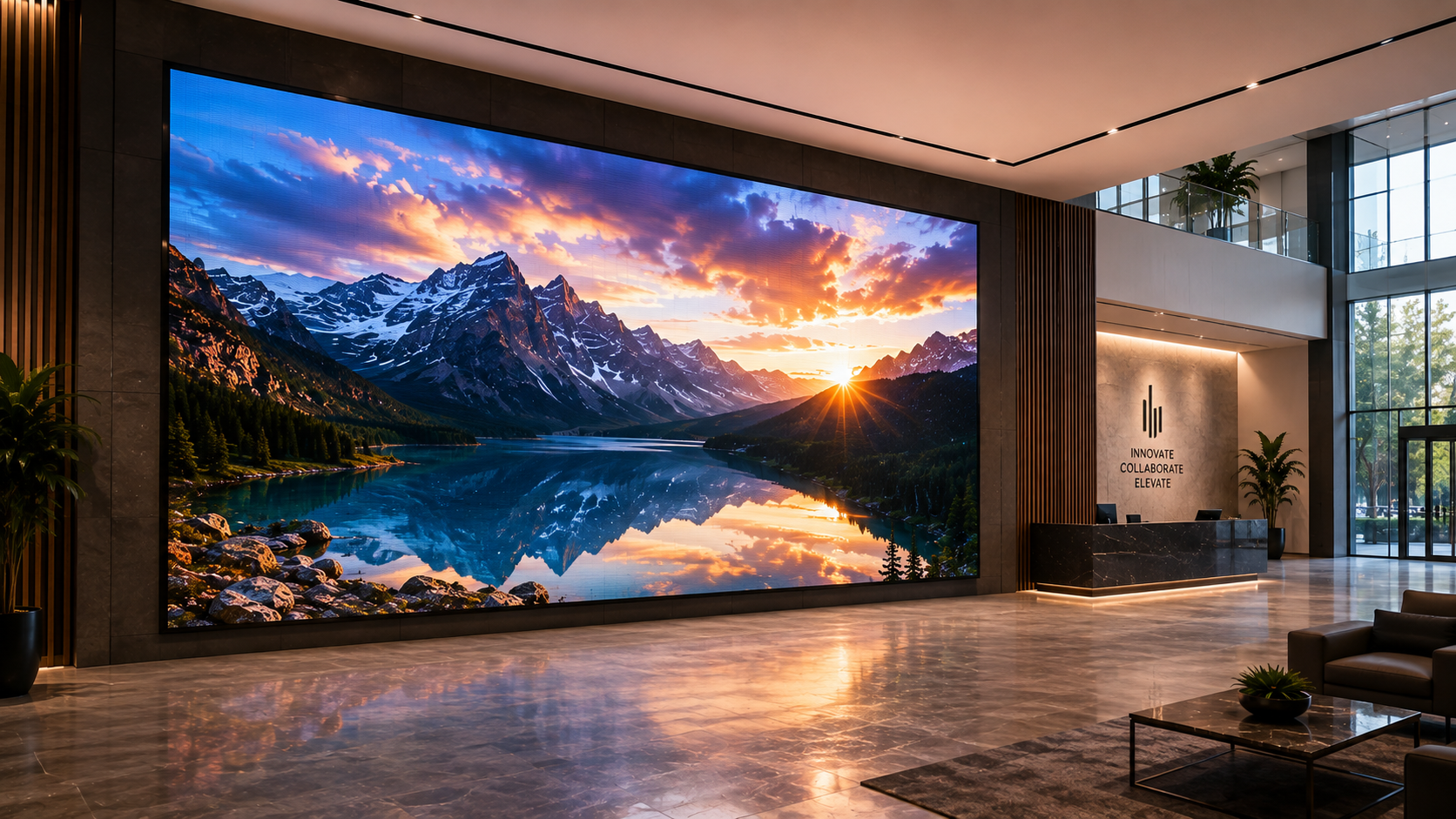
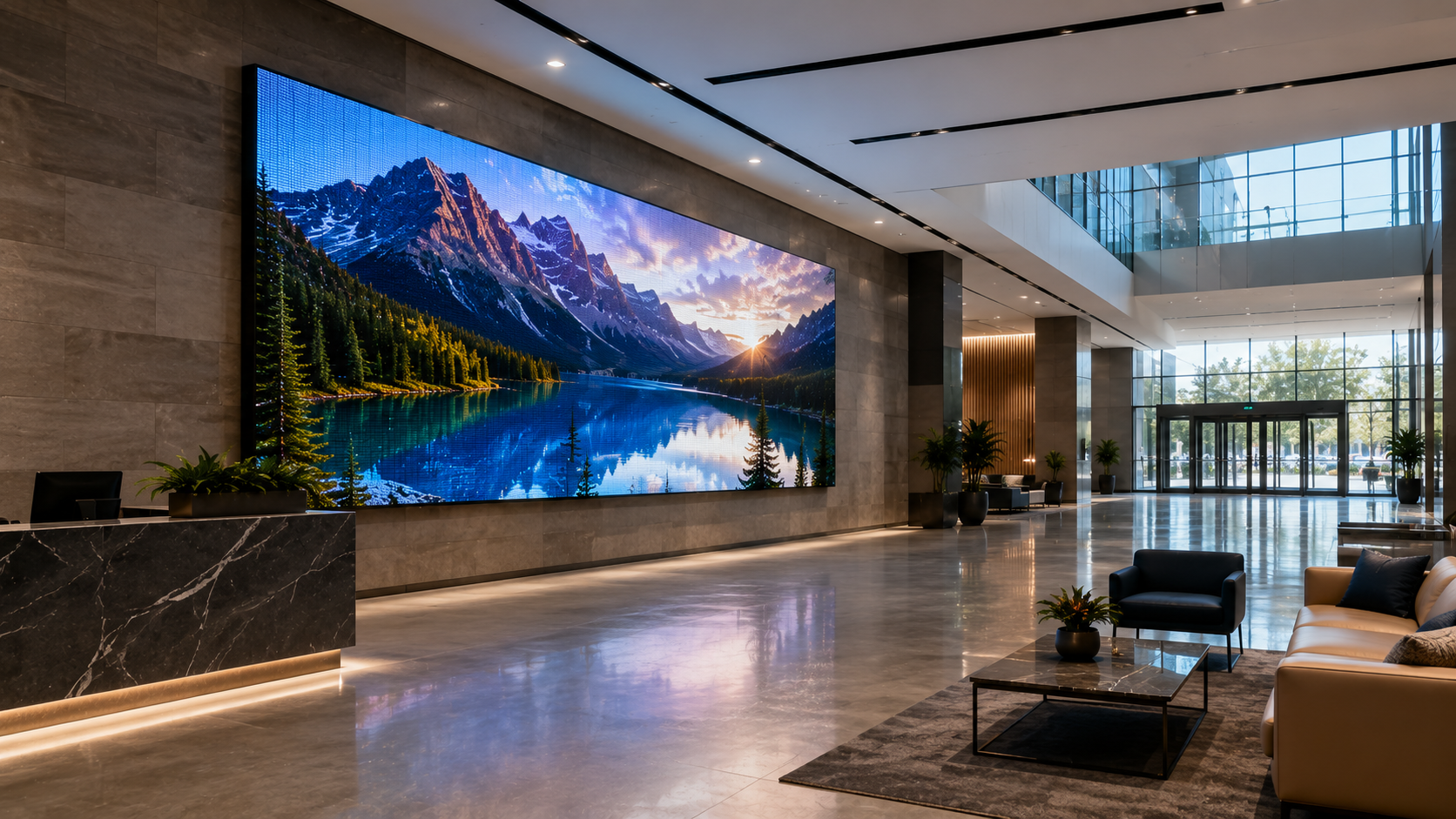
Corporate Lobbies
A large LED video wall immediately creates a premium first impression while reinforcing company branding.
Executive Boardrooms
Fine-pitch LED displays deliver exceptional presentation quality for meetings, video conferencing, and collaboration.
Museums
Museums use LED displays to create immersive exhibits that educate and engage visitors.
Retail Stores
Retailers use LED walls to promote products, highlight seasonal campaigns, and increase customer engagement.
Trade Shows
Indoor LED displays attract visitors while showcasing products through dynamic content.
Internal SSI Link:
https://ssidisplays.com/interactive-display-solutions/
Common Outdoor LED Applications
Digital Billboards
Outdoor advertising remains one of the most recognizable LED applications.
Stadiums and Arenas
Sports venues rely on high-brightness LED displays for scoreboards, instant replays, and fan engagement.
Transportation Facilities
Airports, train stations, and bus terminals use outdoor LED displays for passenger information and wayfinding.
Retail Centers
Shopping centers use outdoor LED displays to advertise promotions and direct customer traffic.
Public Spaces
Cities increasingly use outdoor LED technology for emergency notifications, event schedules, and community messaging.
Internal SSI Link:
https://ssidisplays.com/high-bright-displays/
Indoor vs. Outdoor Installation Considerations
Installing an LED display involves much more than mounting cabinets to a wall.
Indoor installations often require:
- Structural mounting systems
- Power distribution
- Data cabling
- Ventilation
- Content management integration
Outdoor installations require all of the above plus:
- Waterproof connections
- Wind-load engineering
- Drainage planning
- Lightning protection
- Environmental sealing
- Temperature management
Therefore, professional engineering remains essential for successful installations.
Business Benefits and ROI
Regardless of the environment, LED displays deliver measurable business value.
Increased Visibility
Dynamic digital content naturally captures attention more effectively than static signage.
Better Customer Engagement
Moving images, animations, and video encourage visitors to spend more time interacting with your brand.
Flexible Content Management
Marketing teams can update campaigns instantly without replacing printed graphics.
Long Operational Life
Commercial LED displays often provide more than 100,000 hours of operation.
Consequently, businesses enjoy years of reliable performance.
Common Mistakes When Choosing an LED Display
Choosing an Indoor Display for Outdoor Use
Indoor displays are not designed to withstand weather or direct sunlight.
Buying More Brightness Than Necessary
Excessive brightness indoors increases energy consumption without improving image quality.
Ignoring Viewing Distance
Selecting the wrong pixel pitch can reduce image quality or unnecessarily increase project costs.
Underestimating Installation Requirements
Large LED systems require proper engineering, structural support, and electrical planning.
Therefore, early consultation with experienced professionals is highly recommended.
Future Trends in LED Display Technology
LED technology continues advancing rapidly.
Several innovations are shaping the future of both indoor and outdoor displays.
Smaller Pixel Pitches
Manufacturers continue improving image quality for close-viewing environments.
More Energy-Efficient LEDs
New display technologies consume less power while producing brighter images.
AI-Based Display Management
Artificial intelligence increasingly automates calibration, diagnostics, and brightness adjustment.
Interactive Experiences
Touch, gesture recognition, and real-time content personalization continue expanding across commercial environments.
Smarter Outdoor Displays
Future outdoor systems will increasingly integrate with smart cities, IoT infrastructure, and real-time analytics.
Why Choose Screen Solutions International
Choosing between indoor and outdoor LED displays requires careful planning.
At Screen Solutions International, we help organizations evaluate every aspect of their project, including viewing distance, environmental conditions, content strategy, structural requirements, and long-term maintenance.
SSI provides:
- Indoor LED Video Walls
- Outdoor LED Displays
- Fine-Pitch LED Systems
- High Bright Displays
- Interactive Displays
- Transparent OLED Displays
- Digital Spheres
- Trade Show LED Displays
- Custom Experiential Display Solutions
From concept through installation, our team delivers turnkey LED systems designed for exceptional performance and long-term value.
Whether you’re upgrading a corporate headquarters, building a retail flagship, designing a museum exhibit, or installing a large outdoor display, SSI has the experience to help you succeed.
Call 888-631-5880 to discuss your project.
Frequently Asked Questions
Can an indoor LED display be used outdoors?
No. Indoor displays are not weatherproof and typically do not provide enough brightness for outdoor environments.
Are outdoor LED displays waterproof?
Yes. Most commercial outdoor LED displays feature IP65 or higher weather protection.
Which display is brighter?
Outdoor LED displays are significantly brighter because they must remain visible in direct sunlight.
Are indoor LED displays more detailed?
Generally, yes. Indoor displays often use smaller pixel pitches that provide higher image quality for close viewing.
Which type of display lasts longer?
Both indoor and outdoor commercial LED displays typically provide approximately 100,000 hours of operation when properly maintained.
Final Takeaway
Choosing between an indoor and outdoor LED display is one of the most important decisions in any LED project. While both technologies deliver exceptional visual performance, each is engineered for a specific environment and set of operating conditions.
By evaluating factors such as brightness, pixel pitch, viewing distance, weather exposure, and installation requirements, businesses can select the solution that provides the best performance and long-term value.
Whether you’re creating a stunning corporate lobby, a retail storefront, a museum exhibit, or a large outdoor advertising display, Screen Solutions International can help you design a system that meets your goals and exceeds your expectations.
Contact 888-631-5880 today to speak with one of our LED display specialists.
Sources
Internal SSI Sources
- https://ssidisplays.com/
- https://ssidisplays.com/led-video-walls/
- https://ssidisplays.com/high-bright-displays/
- https://ssidisplays.com/interactive-display-solutions/
- https://ssidisplays.com/contact-us/
External Authority Sources
- https://www.avixa.org
- https://www.infocommshow.org
- https://digitalsignagefederation.org
- https://www.energy.gov
- https://www.nist.gov
- https://www.dicolorled.com/blog/
Continue Learning
- What Is Pixel Pitch? The Complete LED Video Wall Guide
- COB vs. SMD LED Displays: Which Technology Is Right for Your Project?
- The Ultimate Guide to LED Video Walls
- How Bright Should an LED Display Be? (Coming Soon)