
Indoor LED Displays: How Businesses Create High-Impact Visual Experiences
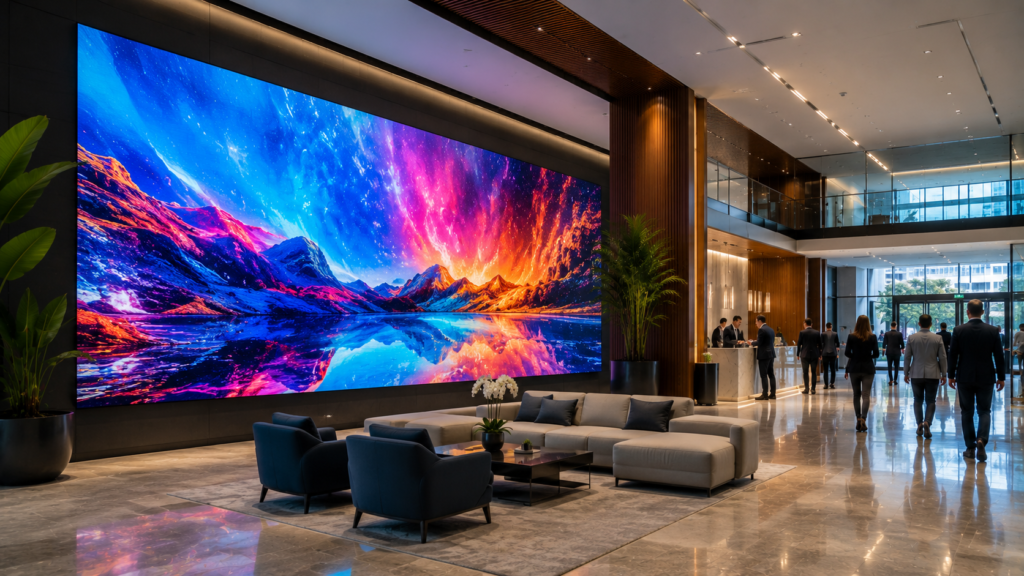
Indoor LED displays have become one of the most effective ways for businesses to communicate, advertise, educate, and engage audiences. Because modern customers and visitors expect more dynamic visual environments, organizations now need display technology that does more than simply show information.
As a result, indoor LED displays are increasingly used in corporate lobbies, retail stores, museums, universities, airports, hospitality spaces, and entertainment venues. Unlike standard screens, LED displays can scale to fit a wide range of architectural environments. Furthermore, they provide bright, seamless, and visually impressive content that helps organizations create stronger first impressions.
Because indoor environments usually have controlled lighting, businesses can also use finer pixel pitch LED displays for crisp, close-viewing image quality. Therefore, indoor LED technology is especially valuable when the audience needs to view content from a short distance.
What Is an Indoor LED Display?
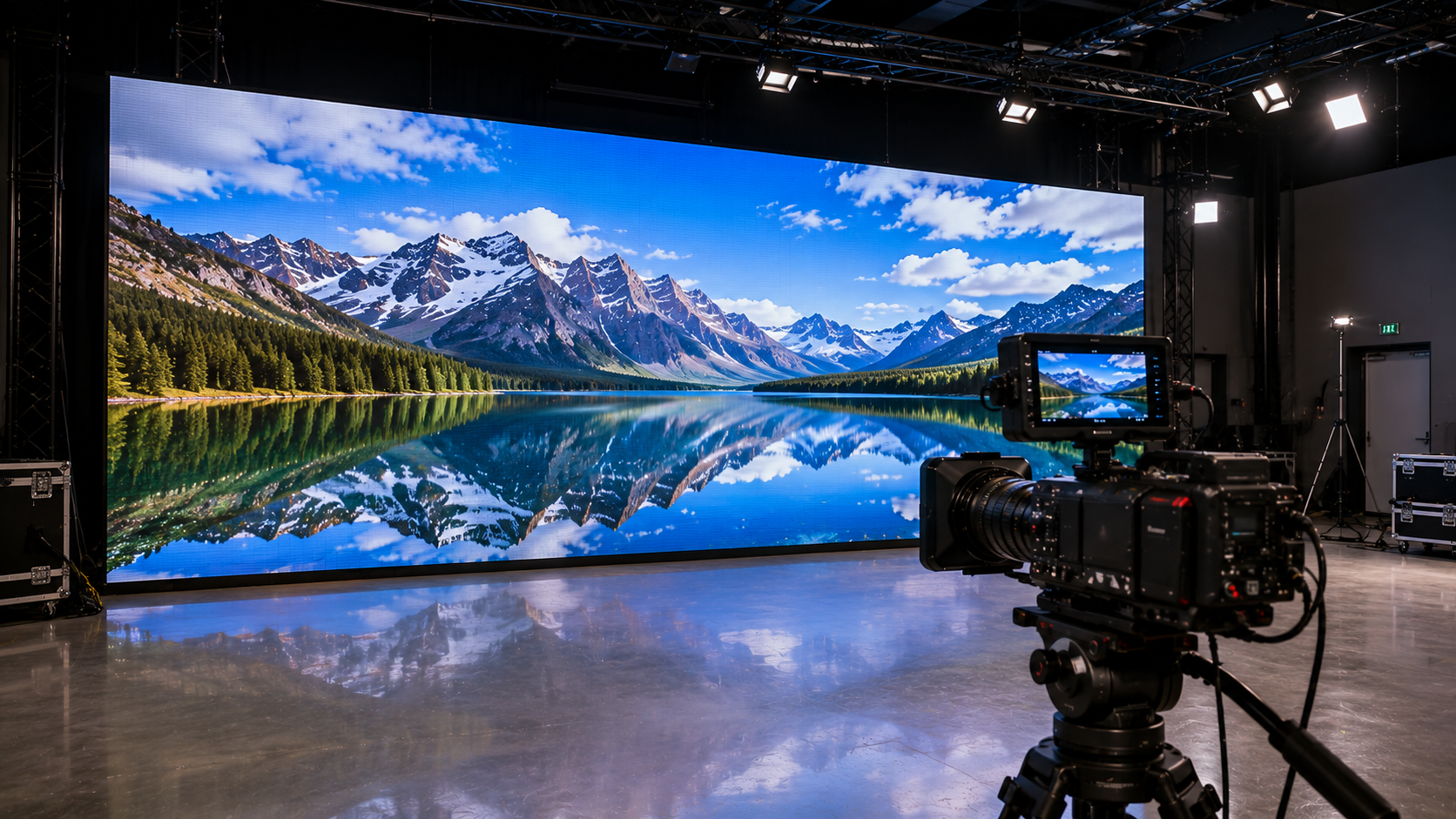
An indoor LED display is a direct-view LED screen designed for interior environments. Instead of using a traditional LCD panel, an LED display uses individual light-emitting diodes to create bright, vivid digital content.
Indoor LED displays are commonly used for:
- Corporate lobby video walls
- Retail display walls
- Museum exhibits
- University signage
- Airport information displays
- Trade show booths
- Command centers
- Hospitality environments
- Houses of worship
- Experience centers
Because LED displays use modular panels, they can be built in many sizes and shapes. As a result, businesses can create anything from a small digital feature wall to a massive immersive display environment.
Why Indoor LED Displays Are Growing in Popularity
Indoor LED displays continue to gain popularity because they offer strong visual performance and long-term flexibility.
Unlike printed graphics, digital content can change instantly. Additionally, unlike standard flat-panel displays, LED systems can scale beyond traditional screen sizes. Consequently, businesses can use indoor LED displays to create larger, more memorable visual experiences.
Key benefits include:
- Seamless large-format visuals
- High brightness
- Flexible sizing
- Strong color performance
- Long-term content flexibility
- Premium appearance
- High audience engagement
Furthermore, indoor LED displays help organizations communicate information in a way that feels modern, professional, and visually compelling.
Indoor LED Displays for Corporate Lobbies
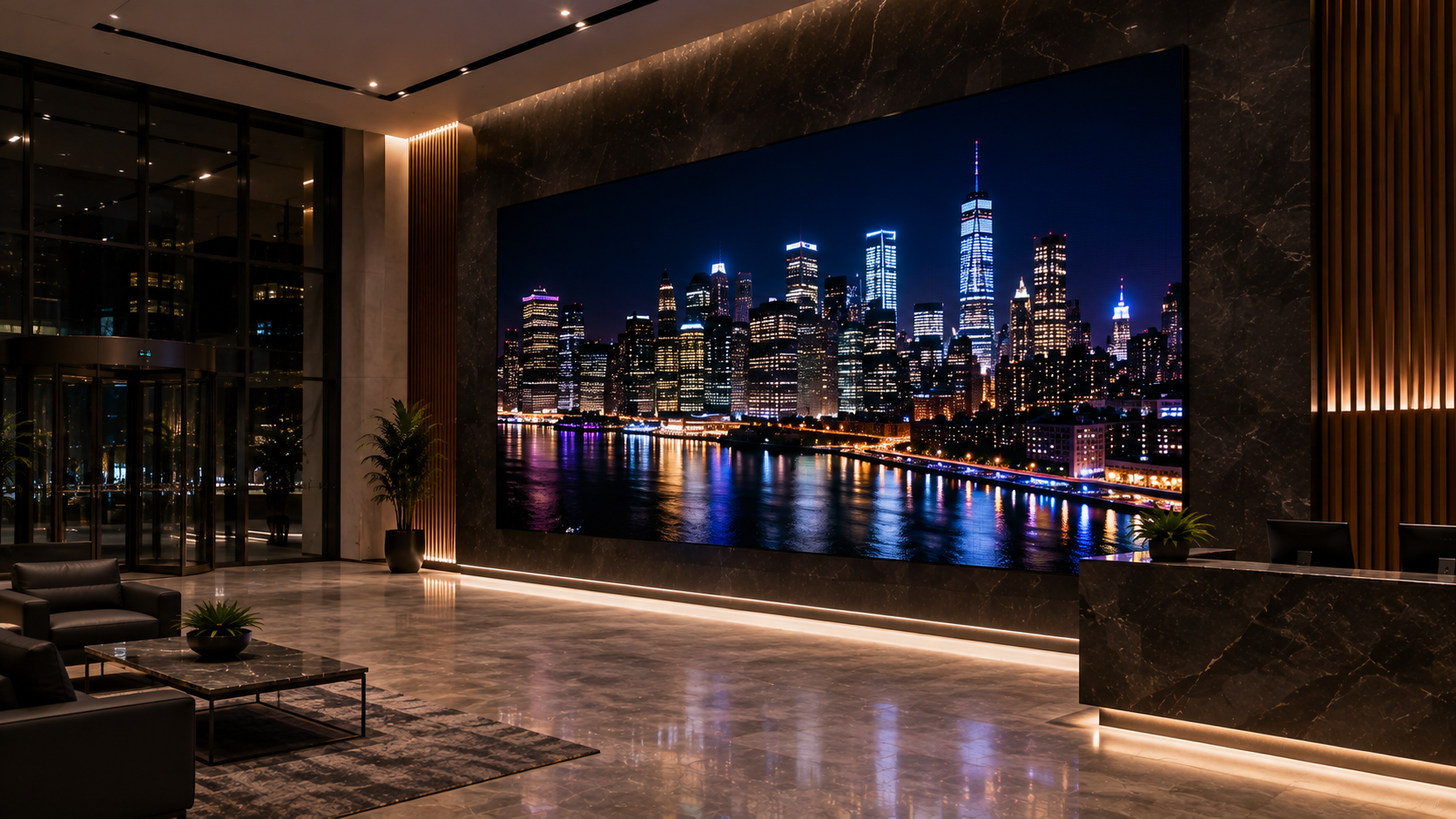
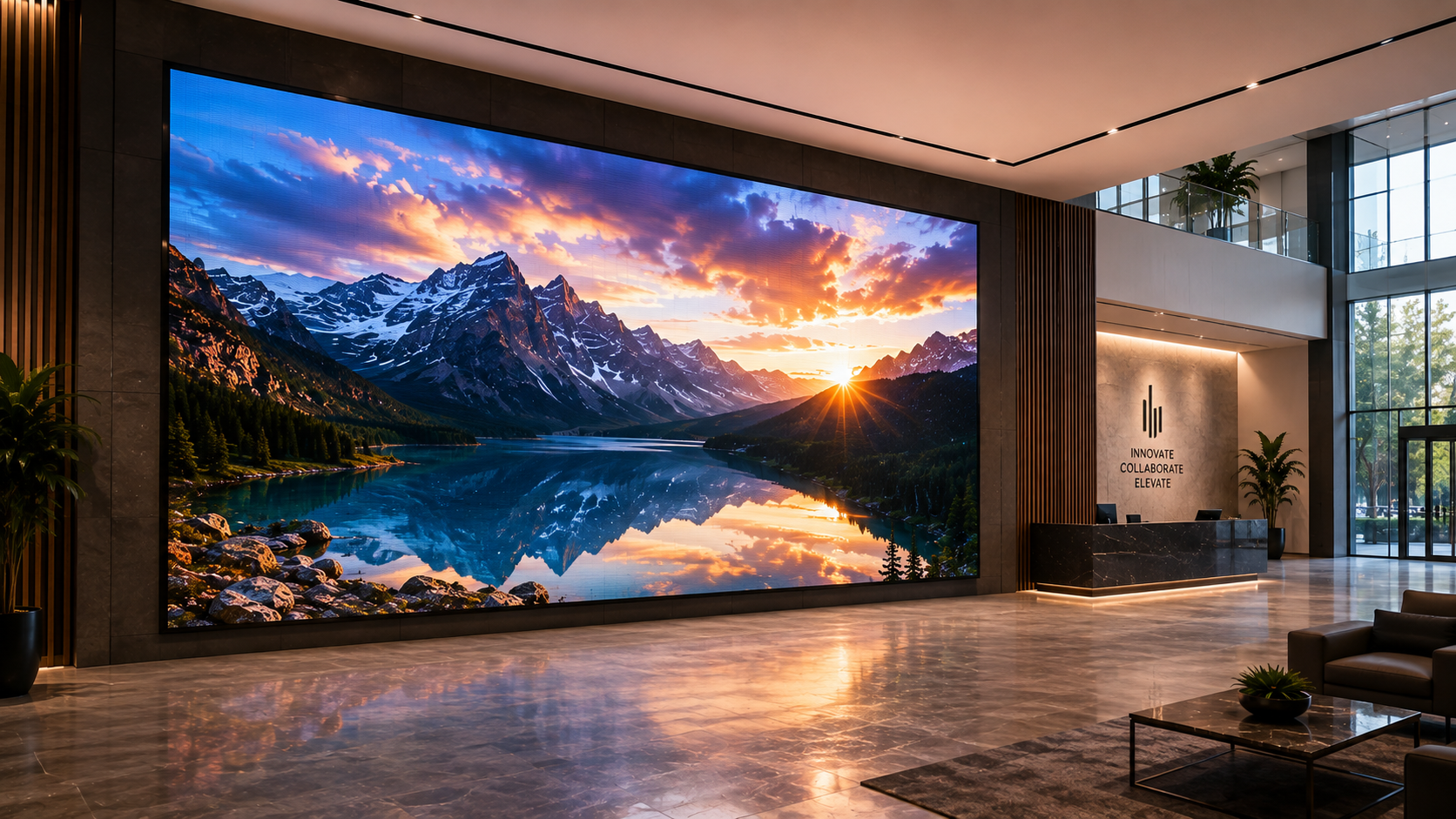
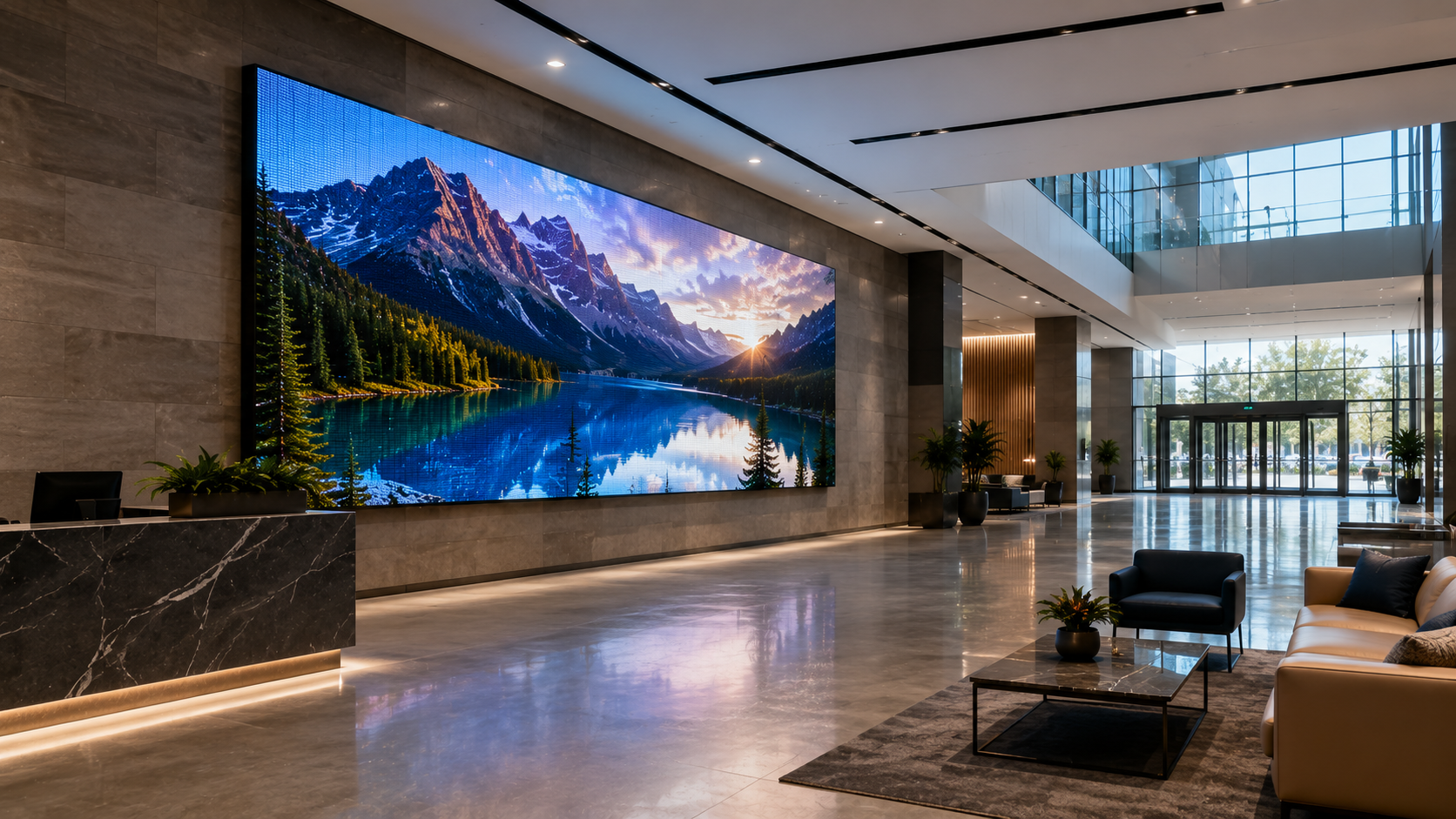
Corporate lobbies often create the first impression of a company. Therefore, many organizations use indoor LED displays to communicate innovation, professionalism, and brand strength.
Common lobby applications include:
- Welcome messaging
- Brand storytelling
- Company videos
- Global office maps
- Investor presentations
- Product showcases
- Real-time dashboards
Because LED displays can fill large architectural spaces, they often become a visual centerpiece. Moreover, they help transform a standard lobby into a more immersive brand environment.
As a result, visitors, employees, customers, and partners experience the company in a more memorable way.
Indoor LED Displays for Retail Stores
Retailers use indoor LED displays to attract attention, promote products, and improve customer engagement. Because shoppers often make decisions quickly, strong visual content can influence how they move through a store.
Retail applications include:
Product Promotions
LED displays can highlight featured products, limited-time offers, and seasonal campaigns.
Brand Storytelling
Retailers can use large-format visuals to communicate lifestyle, quality, and product value.
In-Store Navigation
Digital content can also guide customers toward departments, checkout areas, or featured displays.
Additionally, retailers can update content quickly without printing new signage. Therefore, indoor LED displays help stores stay flexible, timely, and visually fresh.
Indoor LED Displays for Museums
Museums increasingly use indoor LED displays to improve storytelling and visitor engagement. Because digital content can explain complex topics visually, LED displays help make exhibits more accessible.
Museum applications include:
- Digital timelines
- Scientific visualizations
- Historical storytelling
- Immersive exhibit backdrops
- Interactive learning environments
- Large-format video content
Furthermore, museums can refresh digital content without rebuilding physical exhibits. As a result, institutions can extend the life of exhibits while keeping visitor experiences current.
Indoor LED Displays for Universities
Universities and schools use indoor LED displays to improve communication across campus. Because information changes frequently, digital signage offers a practical and flexible solution.
Applications include:
- Campus announcements
- Event schedules
- Athletic highlights
- Donor recognition
- Wayfinding
- Emergency messaging
- Student engagement displays
Additionally, LED displays can create strong visual environments in athletic facilities, student centers, lecture halls, and admissions areas. Consequently, schools can improve communication while also strengthening campus identity.
Indoor LED Displays for Airports and Transportation
Airports and transportation hubs need clear, reliable communication systems. Therefore, indoor LED displays are often used to deliver high-visibility information in busy public spaces.
Applications include:
- Flight information
- Wayfinding
- Advertising
- Passenger announcements
- Security messaging
- Brand partnerships
Because LED displays offer excellent brightness and visibility, they can perform well in high-traffic areas with changing lighting conditions. Moreover, large displays can help reduce confusion by making important information easier to see.
Indoor LED Displays vs Traditional LCD Displays
| Feature | Indoor LED Display | Traditional LCD Display |
|---|---|---|
| Seamless Large Format | Excellent | Limited by bezels |
| Custom Sizing | Highly flexible | Limited |
| Brightness | Strong | Moderate |
| Architectural Integration | Excellent | Moderate |
| Viewing Impact | High | Moderate |
| Content Flexibility | High | High |
| Premium Appearance | Strong | Moderate |
Although LCD displays still work well for smaller applications, LED displays often provide greater impact for large-format spaces. Therefore, organizations that want a more premium and seamless presentation often choose LED.
Understanding Pixel Pitch for Indoor LED Displays
Pixel pitch is one of the most important factors when selecting an indoor LED display. Pixel pitch refers to the distance between LED pixels.
Generally, smaller pixel pitch creates sharper image quality at closer viewing distances.
Common indoor pixel pitch ranges include:
- P0.9–P1.2 for premium close-viewing environments
- P1.5–P1.8 for corporate, retail, and museum displays
- P2.5 and above for longer viewing distances
Because indoor audiences usually stand closer to the display, pixel pitch should match the expected viewing distance. Otherwise, the image may appear less sharp than expected.
Common Mistakes When Planning an Indoor LED Display
Many businesses focus only on display size. However, several other factors matter just as much.
Common mistakes include:
- Choosing the wrong pixel pitch
- Ignoring viewing distance
- Underestimating content needs
- Forgetting about power requirements
- Not planning service access
- Poor cable management
- Selecting brightness levels without considering the room
Because indoor LED displays become part of the environment, planning should include architecture, content, power, mounting, service, and long-term use.
Future Trends in Indoor LED Displays
Indoor LED technology continues to evolve quickly. As a result, businesses can expect displays to become sharper, more efficient, and more interactive.
Future trends include:
- Smaller pixel pitch technology
- More curved LED installations
- Interactive LED environments
- AI-powered content scheduling
- Integration with sensors and data
- More immersive corporate experience centers
- LED displays combined with transparent OLED and digital spheres
Furthermore, indoor LED displays will continue moving beyond simple signage. Instead, they will become part of complete immersive environments that combine architecture, data, content, and interaction.
FAQ
What is an indoor LED display?
An indoor LED display is a direct-view LED screen designed for interior environments such as lobbies, retail stores, museums, universities, and event spaces.
What pixel pitch is best for indoor LED displays?
The best pixel pitch depends on viewing distance. However, closer viewing usually requires finer pixel pitch for sharper image quality.
Are indoor LED displays better than LCD video walls?
For large-format seamless displays, indoor LED displays often provide a stronger visual experience because they do not have visible bezels.
Can indoor LED displays be custom sized?
Yes. Because LED displays use modular panels, they can be built in many sizes, shapes, and layouts.
Why Choose Screen Solutions International
Screen Solutions International provides indoor LED display solutions for commercial, educational, museum, corporate, retail, and entertainment environments.
SSI solutions include:
- LED Video Walls
- Digital Signage Displays
- Digital Spheres
- Transparent OLED Displays
- Interactive Kiosks
- LED Floors
- Custom Experiential Displays
Additionally, SSI helps clients evaluate viewing distance, pixel pitch, brightness, content strategy, mounting, and installation requirements. As a result, each indoor LED display can be designed around the space, audience, and long-term business goals.
Final Takeaway
Indoor LED displays give businesses a powerful way to create high-impact visual experiences. Because they offer seamless imagery, flexible sizing, strong brightness, and premium appearance, they continue to replace traditional display solutions in many commercial environments.
Ultimately, organizations that want to improve customer engagement, strengthen branding, and modernize their spaces should consider indoor LED display technology. With the right planning and display partner, an indoor LED display can become one of the most valuable communication tools in a facility.
Sources
Internal SSI Links
- https://ssidisplays.com/
- https://ssidisplays.com/led-video-walls/
- https://ssidisplays.com/digital-signage/
- https://ssidisplays.com/digital-spheres/
External Authority Sources