
How Museums Are Using Immersive Technology to Increase Visitor Engagement
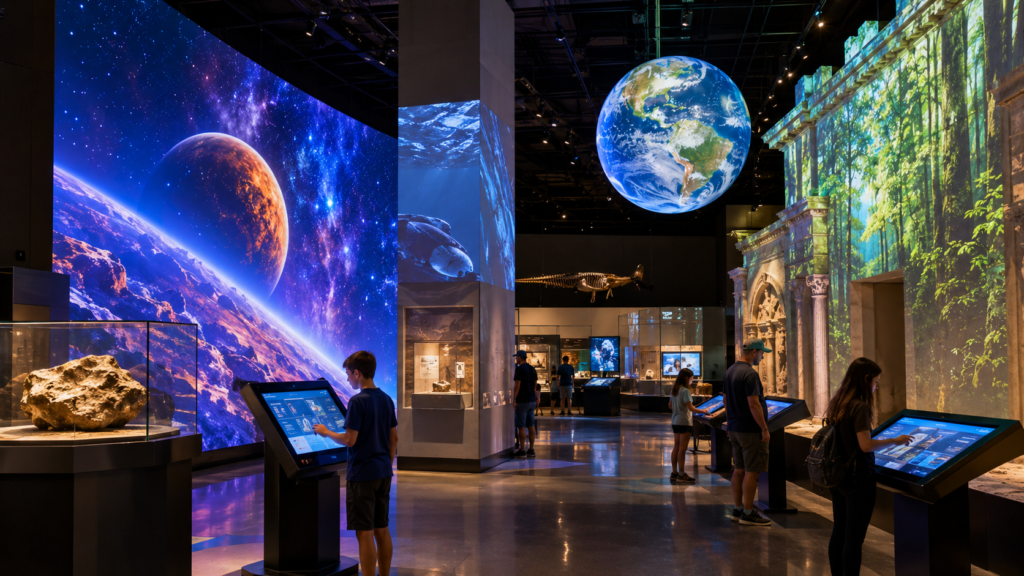
Museums have evolved dramatically over the past decade. While traditional exhibits still play an important role, visitors increasingly expect experiences that are interactive, visually engaging, and memorable.
As a result, museums around the world are investing in immersive technologies that help transform passive viewing into active participation. Furthermore, these technologies allow institutions to tell stories more effectively while improving educational outcomes.
Because modern audiences are accustomed to digital experiences in their daily lives, museums must continually find new ways to capture attention. Consequently, immersive technology has become one of the most valuable tools for increasing visitor engagement.
Why Visitor Expectations Are Changing
Today’s visitors often arrive with different expectations than previous generations.
Rather than simply reading exhibit panels, guests increasingly want experiences that allow them to explore, interact, and discover information for themselves.
Several factors are driving this shift:
- Increased exposure to digital media
- Growth of interactive entertainment
- Mobile technology adoption
- Demand for personalized experiences
- Greater interest in experiential learning
Therefore, museums that embrace technology often see stronger visitor participation and longer exhibit dwell times.
The Rise of Interactive Exhibits
Interactive exhibits continue to become a central component of modern museum design.
Instead of passively consuming information, visitors can actively participate in the learning process.
Popular interactive elements include:
- Touchscreen experiences
- Motion-triggered content
- Digital timelines
- Interactive maps
- Educational games
- Multi-language content
As a result, museums can appeal to a broader range of learning styles and age groups.
Furthermore, interactive experiences often encourage visitors to spend more time engaging with exhibits.
Large-Format LED Walls for Storytelling
Many museums now use large-format LED walls to create immersive visual environments.
Because these displays provide seamless imagery and exceptional brightness, they can transform ordinary exhibit spaces into dynamic storytelling platforms.
Common applications include:
Historical Visualizations
Museums can recreate important moments in history through large-scale visual content.
Scientific Exploration
Complex scientific concepts can be visualized through animations, simulations, and data presentations.
Nature Experiences
Visitors can experience oceans, forests, wildlife, and ecosystems through highly engaging digital environments.
Consequently, museums can communicate information more effectively while creating stronger emotional connections.
Digital Globes and Earth Visualization Systems
One of the most effective museum technologies involves spherical visualization systems.
Because Earth, planets, and many scientific concepts naturally exist in three dimensions, spherical displays often provide a more intuitive learning experience.
Applications include:
- Weather visualization
- Climate research
- Astronomy programs
- Ocean current simulations
- Global population studies
- Geographic education
Additionally, visitors can observe information from multiple viewing angles, which further enhances engagement.
Projection Mapping Creates Immersive Environments
Projection mapping allows museums to transform ordinary surfaces into educational experiences.
Unlike traditional displays, projected content can follow the shape of physical objects and architectural features.
Common applications include:
- Historical reconstructions
- Animated artifacts
- Architectural storytelling
- Science demonstrations
- Immersive exhibit rooms
Because projection mapping does not require modifying valuable artifacts, it provides an excellent way to enhance exhibits while preserving collections.
Furthermore, museums can update content without rebuilding physical installations.
Blending Physical Artifacts with Digital Content
Many museums face a common challenge.
They want to provide more information while ensuring visitors remain focused on the actual artifact.
Therefore, many institutions now use transparent display technology that overlays digital content while maintaining visibility of the object itself.
This approach allows museums to provide:
- Historical context
- Translation overlays
- Animated reconstructions
- Educational callouts
- Supplemental media
As a result, visitors receive additional information without losing sight of the artifact.
Interactive Wayfinding and Visitor Navigation
Larger museums often struggle with navigation challenges.
Because visitors may only have a limited amount of time, finding exhibits efficiently becomes important.
Interactive wayfinding systems can help visitors:
- Locate exhibits
- Plan routes
- Discover events
- Access accessibility information
- Find amenities
Consequently, guests spend less time searching and more time engaging with exhibits.
Museums Are Becoming Multi-Sensory Experiences
Traditional museums primarily focused on visual information.
However, modern institutions increasingly create multi-sensory experiences.
These environments may combine:
- Digital displays
- Interactive touchscreens
- Audio experiences
- Environmental effects
- Projection systems
- Responsive technologies
As a result, museums can create stronger emotional connections and improve information retention.
Common Mistakes Museums Make When Adding Technology
Technology alone does not guarantee engagement.
In fact, some installations fail because they prioritize technology over storytelling.
Common mistakes include:
- Using technology without purpose
- Overcomplicating interactions
- Neglecting accessibility
- Poor content design
- Insufficient maintenance planning
- Ignoring visitor flow
Therefore, successful projects always begin with the visitor experience rather than the technology itself.
Future Trends in Museum Experiences
Museum technology continues evolving rapidly.
Emerging trends include:
- AI-powered exhibit guides
- Personalized visitor experiences
- Interactive data visualization
- Mixed reality experiences
- Real-time content updates
- Multi-sensory storytelling
Furthermore, museums increasingly combine multiple technologies into unified environments rather than deploying standalone systems.
Consequently, future exhibits will likely become even more immersive, interactive, and personalized.
FAQ
Do immersive exhibits improve visitor engagement?
Yes. Interactive experiences often increase dwell time, participation, and information retention.
Are digital technologies replacing traditional exhibits?
No. Most successful museums use technology to enhance exhibits rather than replace them.
What technologies are most common in museums?
LED walls, interactive kiosks, projection mapping, spherical displays, and transparent display systems are among the most common technologies.
Can museums update digital exhibits easily?
Yes. Digital content can often be updated significantly faster than physical exhibits.
Why Choose Screen Solutions International
Screen Solutions International helps museums create engaging visitor experiences through advanced display technologies.
SSI solutions include:
- LED Video Walls
- Digital Spheres
- Interactive Kiosks
- Transparent OLED Displays
- Projection Domes
- Projection Hemispheres
- LED Floors
- Custom Immersive Environments
Additionally, SSI assists with exhibit planning, technology selection, content strategy, and installation support. As a result, museums can create experiences that balance education, engagement, and long-term flexibility.
Final Takeaway
Museums continue evolving from static environments into immersive destinations. Because visitors increasingly expect interactive and engaging experiences, technology now plays a critical role in exhibit design.
Ultimately, institutions that successfully combine storytelling, education, and immersive technology can create stronger visitor engagement while remaining relevant in an increasingly digital world.
Sources
Internal SSI Links
- https://ssidisplays.com/
- https://ssidisplays.com/digital-spheres/
- https://ssidisplays.com/interactive-kiosks/
- https://ssidisplays.com/transparent-oled-displays/
External Authority Sources