Digital Spheres: Why 360-Degree Displays Are Transforming Visitor Engagement
Organizations are constantly searching for new ways to capture attention, communicate information, and create memorable experiences. Although traditional displays remain effective in many environments, digital spheres offer something fundamentally different. Instead of presenting content on a flat surface, digital spheres allow information to be viewed from virtually every angle.
As a result, digital spheres have become increasingly popular in museums, trade shows, visitor centers, corporate headquarters, educational institutions, and experiential marketing environments. Furthermore, their unique shape naturally attracts attention and encourages interaction.
Because audiences see flat screens every day, businesses and organizations need display technologies that stand out immediately. Consequently, digital spheres have emerged as one of the most effective tools for creating visual impact and increasing visitor engagement.
What Is a Digital Sphere?
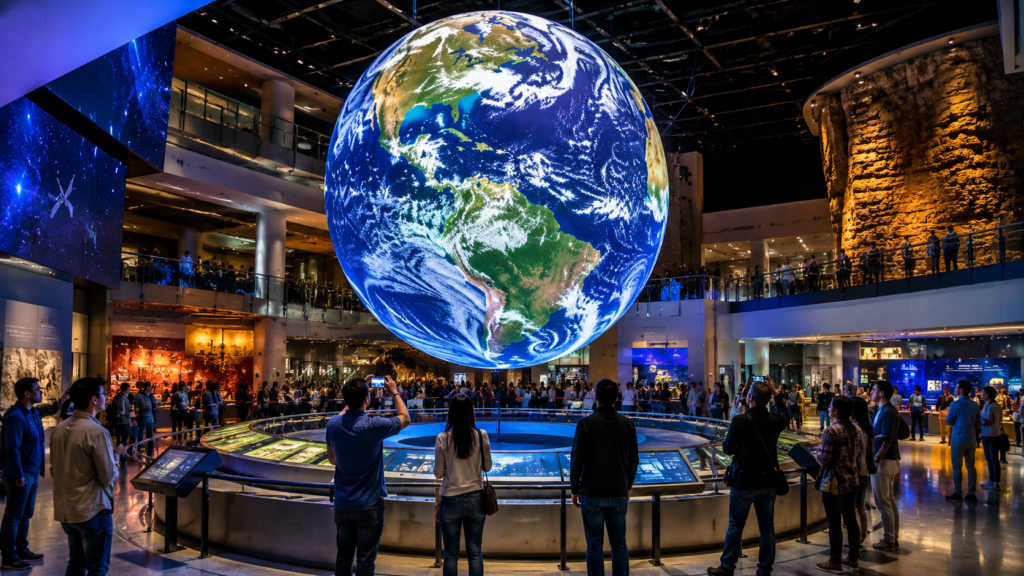
A digital sphere is a spherical LED display capable of presenting dynamic content across a three-dimensional surface.
Unlike traditional displays that restrict content to a flat screen, digital spheres wrap visuals around a complete globe. As a result, viewers can walk around the display and experience content from multiple perspectives.
In addition, digital spheres are commonly used to display:
- Earth visualizations
- Weather patterns
- Global data
- Planetary content
- Brand messaging
- Interactive experiences
- Educational content
- Artistic installations
Because digital spheres can be customized in various sizes, they can support many different environments and applications. Therefore, organizations can use them as exhibit centerpieces, trade show attractions, educational tools, or architectural features.
Why Digital Spheres Capture Attention
Most displays compete for attention using size or brightness. However, digital spheres immediately stand out because of their shape.
People naturally recognize spherical objects such as planets, globes, and celestial bodies. Therefore, a digital sphere often becomes the focal point of a room.
Key benefits include:
- 360-degree visibility
- Increased dwell time
- Higher engagement
- Strong visual impact
- Social media appeal
- Educational effectiveness
- Architectural integration
Furthermore, visitors frequently photograph and share digital sphere installations. As a result, organizations can generate exposure beyond the physical location. In many cases, the sphere becomes both a display and a destination.
Digital Spheres for Museums
Museums represent one of the fastest-growing markets for digital sphere technology.
Because many educational topics involve global or planetary information, a spherical display provides a more accurate and engaging way to present content. Additionally, the shape helps visitors understand spatial relationships that flat screens cannot show as naturally.
Applications include:
Earth Science Exhibits
Museums can visualize:
- Weather systems
- Ocean currents
- Climate data
- Geological activity
- Atmospheric patterns
As a result, visitors gain a better understanding of how global systems interact. Moreover, they can see changes and patterns unfold across the entire planet rather than on a flat map.
Astronomy Exhibits
Digital spheres can display:
- Planets
- Moons
- Star systems
- Solar activity
- Deep-space visualizations
Consequently, astronomy exhibits become more immersive and easier to understand. Instead of viewing planets as flat graphics, visitors can experience them as dimensional objects.
Data Visualization
Museums can also use spheres to present:
- Population trends
- Environmental data
- Migration patterns
- Global events
Therefore, complex information becomes more accessible to visitors of all ages. In addition, data-driven content can update over time, which helps exhibits stay current and relevant.
Digital Spheres for Trade Shows
Trade show exhibitors constantly compete for attention. Because exhibit halls contain hundreds of displays, standing out can be difficult.
However, digital spheres naturally attract visitors from across the show floor. Unlike traditional booth screens, a spherical display creates curiosity from multiple angles.
Benefits include:
- Increased booth traffic
- Greater brand visibility
- Enhanced engagement
- Better lead generation
- Stronger social media exposure
Additionally, a digital sphere can serve as a central attraction while supporting surrounding displays and product demonstrations. As a result, exhibitors often achieve stronger visitor engagement compared to traditional booth designs.
Furthermore, digital spheres work especially well when paired with LED video walls, interactive kiosks, and branded content. Together, these technologies can turn a standard booth into a full experiential environment.
Digital Spheres for Corporate Environments
Corporate organizations increasingly use digital spheres to communicate innovation and technological leadership.
Because digital spheres look futuristic and architectural, they can immediately elevate a corporate space. As a result, they work especially well in high-visibility environments where first impressions matter.
Common applications include:
Corporate Lobbies
Digital spheres create memorable first impressions for visitors, customers, and investors. Moreover, they can display branded content, global office locations, sustainability goals, or real-time company data.
Innovation Centers
Organizations can showcase products, technologies, and company achievements in a visually engaging format. Additionally, a digital sphere can help communicate future-focused thinking before a presentation even begins.
Executive Briefing Centers
Global businesses can use spheres to display worldwide operations, logistics networks, and performance metrics. Consequently, complex company information becomes easier to understand at a glance.
Furthermore, digital spheres help communicate complex information in a way that feels both visual and premium.
Digital Spheres for Education
Educational institutions continue to embrace immersive learning technologies.
Because digital spheres provide a natural platform for visualizing geographic and scientific concepts, they have become valuable educational tools. For example, students can study the Earth, planets, weather, climate, and global systems in a format that feels more realistic than a flat display.
Applications include:
- Geography instruction
- Earth science education
- Astronomy programs
- Climate studies
- Interactive learning environments
As a result, students often demonstrate higher engagement and stronger information retention. Additionally, educators can use sphere content to support lectures, demonstrations, and hands-on learning activities.
Digital Spheres for Visitor Centers
Visitor centers frequently need to communicate large amounts of information quickly.
Digital spheres can help visualize:
- Regional geography
- Tourism destinations
- Environmental conditions
- Historical information
- Interactive maps
Because a digital sphere naturally draws attention, it can help visitors orient themselves within the experience. Furthermore, visitor centers can use the sphere to present local stories, landmark locations, regional data, or seasonal content.
As a result, guests receive information in a format that feels more engaging and memorable.
Digital Sphere Content Possibilities
One of the greatest advantages of digital spheres is content flexibility.
Organizations can display:
- Animated Earth content
- Planetary systems
- Real-time weather data
- Custom branding
- Interactive applications
- Artistic experiences
- Data visualizations
- Event-specific content
Therefore, a single digital sphere can serve multiple purposes throughout its lifespan. For example, a museum may use it for science content during the day and event branding during a private rental. Similarly, a corporate lobby may rotate between branded visuals, global maps, and seasonal campaigns.
Because content can evolve, digital spheres offer long-term value beyond their initial installation.
Digital Spheres vs Traditional Displays
| Feature | Digital Sphere | Traditional Display |
|---|---|---|
| 360-Degree Visibility | Yes | No |
| Architectural Impact | Excellent | Moderate |
| Educational Value | High | Moderate |
| Visitor Engagement | High | Moderate |
| Social Media Appeal | High | Moderate |
| Global Data Visualization | Excellent | Limited |
| Immersive Experience | Strong | Moderate |
Although traditional displays remain useful for many applications, digital spheres often provide a more memorable experience. Consequently, organizations looking to maximize engagement frequently choose spherical display technology.
In contrast, traditional displays may work better for standard signage, menu boards, or linear information. However, when the goal is to create a centerpiece attraction, digital spheres provide a stronger visual presence.
Common Mistakes When Planning a Digital Sphere
Many organizations focus entirely on sphere size while overlooking other important considerations.
Common mistakes include:
- Choosing the wrong sphere size
- Ignoring viewing distance
- Underestimating content requirements
- Neglecting installation logistics
- Failing to plan power and networking
- Using non-optimized content
Because spherical content requires proper formatting, teams should plan content early in the process. Additionally, organizations should consider how visitors will move around the sphere and where the best viewing areas will be located.
Therefore, successful deployments require careful planning, thoughtful content strategy, and experienced display support.
Future Trends in Digital Sphere Technology
Digital sphere technology continues to evolve rapidly.
Emerging trends include:
- Interactive touch integration
- Real-time data visualization
- AI-driven content
- Enhanced LED resolution
- Multi-sphere environments
- Integration with immersive technologies
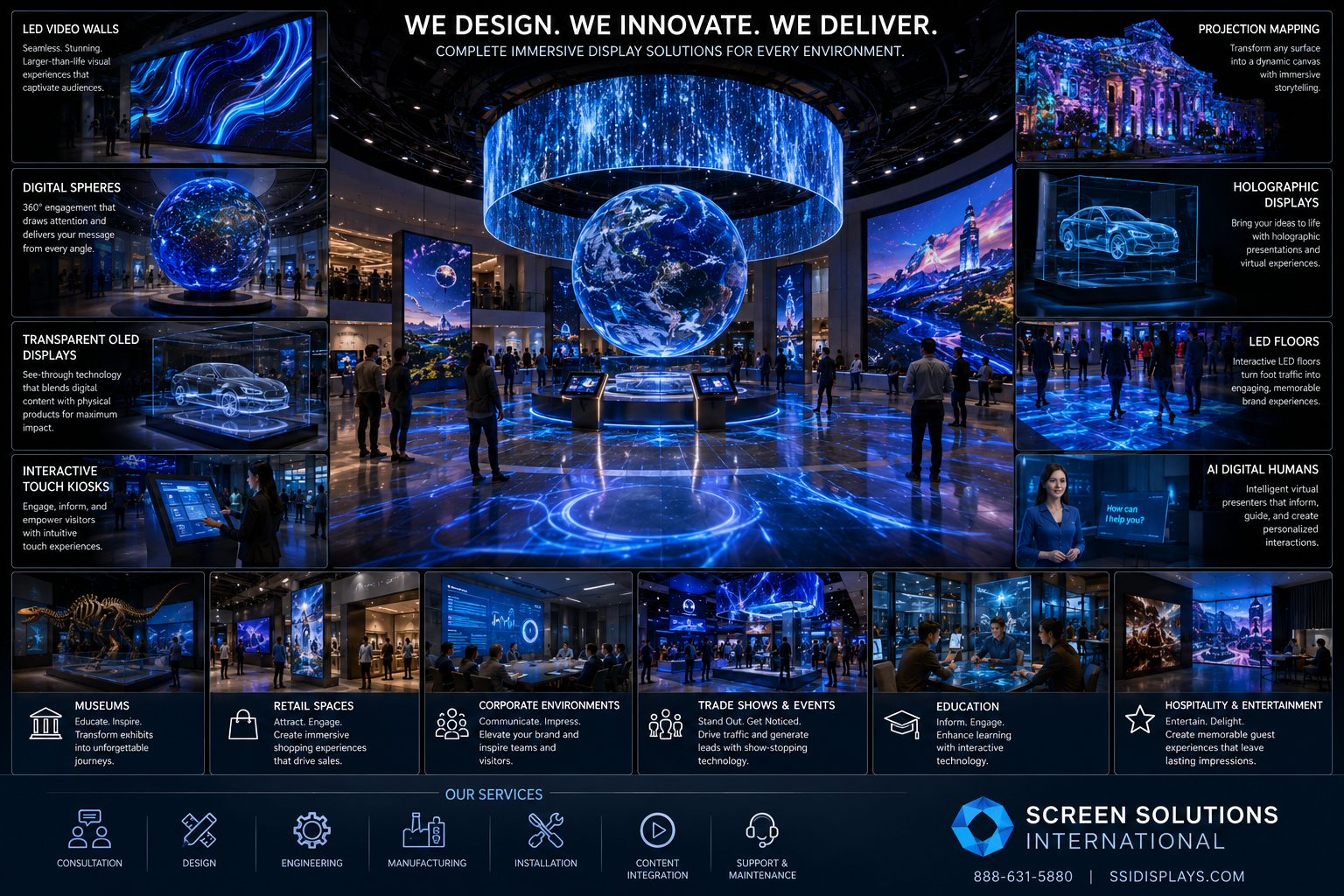
Furthermore, digital spheres increasingly work alongside technologies such as LED video walls, transparent OLED displays, projection domes, LED floors, and interactive kiosks.
As a result, organizations can create fully immersive visitor experiences that combine multiple display technologies. Over time, digital spheres will likely become even more interactive, data-driven, and personalized.
FAQ
What is a digital sphere used for?
Digital spheres are commonly used for museums, trade shows, visitor centers, corporate lobbies, educational environments, and experiential marketing.
Can digital spheres display live data?
Yes. Many digital sphere systems can visualize real-time weather, environmental, business, and geographic data.
Are digital spheres interactive?
They can be. Many installations integrate touch systems, sensors, mobile interaction, and custom software.
How large can a digital sphere be?
Digital spheres are available in various sizes ranging from small exhibit displays to large architectural installations.
Why Choose Screen Solutions International
Screen Solutions International designs and supplies advanced digital sphere solutions for organizations worldwide.
SSI solutions include:
- Digital Spheres
- LED Video Walls
- Digital Signage Displays
- Transparent OLED Displays
- Interactive Kiosks
- LED Floors
- Projection Domes
- Custom Immersive Environments
Additionally, our team provides design consultation, content guidance, installation support, and long-term project planning to help organizations maximize visitor engagement and visual impact.
Because SSI works across multiple immersive display technologies, our team can help clients create complete environments rather than isolated display installations. Therefore, each system can align with the project’s audience, space, content goals, and long-term strategy.
Final Takeaway
Digital spheres represent one of the most effective display technologies for creating immersive and memorable experiences. Because they provide 360-degree visibility, strong visual impact, and exceptional flexibility, they continue to gain popularity across museums, trade shows, corporate environments, educational institutions, and visitor centers.
Ultimately, organizations that want to create stronger engagement, improve storytelling, and differentiate themselves from competitors should consider how digital sphere technology can transform their space. As immersive experiences become more important, digital spheres will continue to help businesses and institutions turn visual content into unforgettable visitor experiences.
Internal SSI Links
- https://ssidisplays.com/
- https://ssidisplays.com/digital-spheres/
- https://ssidisplays.com/led-video-walls/
- https://ssidisplays.com/transparent-oled-displays/
External Authority Sources