
LED Display Power Consumption: What Businesses Need to Know
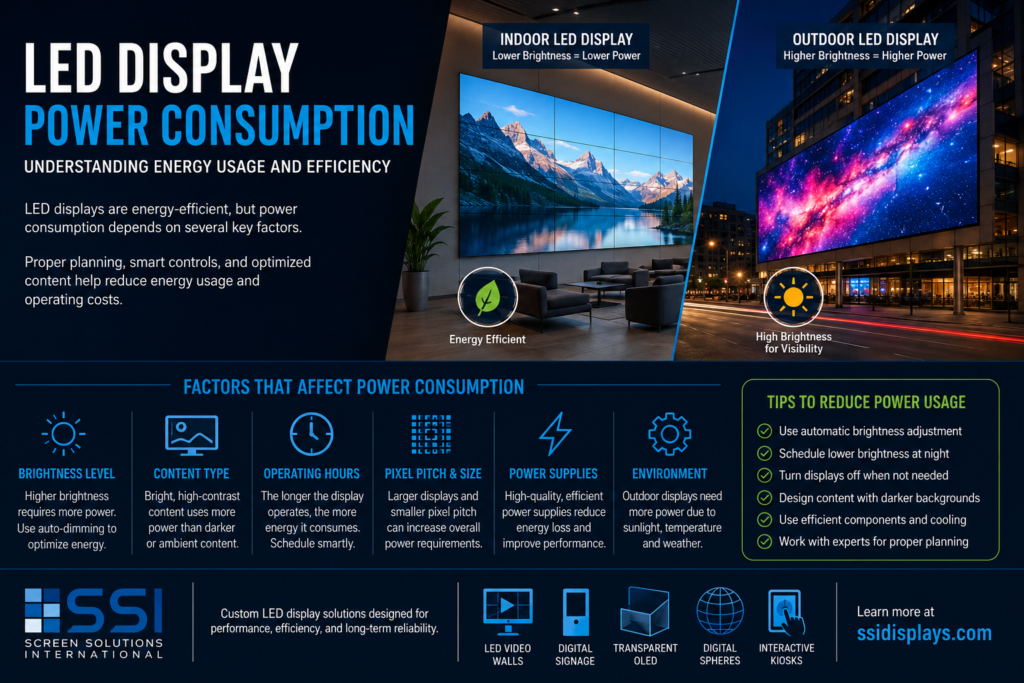
Power consumption is a critical consideration when planning an LED display, especially for large installations, outdoor environments, retail spaces, museums, corporate lobbies, and public venues. Although LED displays are energy-efficient compared to many older display technologies, total power usage still depends on several important factors.
As a result, businesses should understand how LED display power consumption works before selecting a system. With the right planning, organizations can reduce operating costs, avoid electrical issues, and ensure long-term display performance.
Why LED Display Power Consumption Matters
LED displays are often used for high-impact visual communication. However, larger displays require more power than smaller screens. Additionally, outdoor LED displays usually consume more electricity because they must operate at higher brightness levels.
Power consumption affects:
- Electrical planning
- Installation requirements
- Operating costs
- Heat management
- Long-term performance
- System reliability
Therefore, understanding power usage early in the design process helps prevent costly issues later. In addition, it allows businesses to budget more accurately for both installation and long-term operation.
What Affects LED Display Power Usage?
Several factors influence how much power an LED display uses. Although size is important, it is not the only factor.
The most important variables include:
- Display size
- Pixel pitch
- Brightness level
- Indoor or outdoor use
- Content type
- Operating hours
- Power supply efficiency
- Environmental conditions
Because each project is different, power requirements should be reviewed based on the specific display design and installation environment. Moreover, reviewing these details early helps ensure the display performs properly without creating unnecessary electrical strain.
Brightness Is the Biggest Factor
Brightness is one of the largest contributors to LED display power consumption.
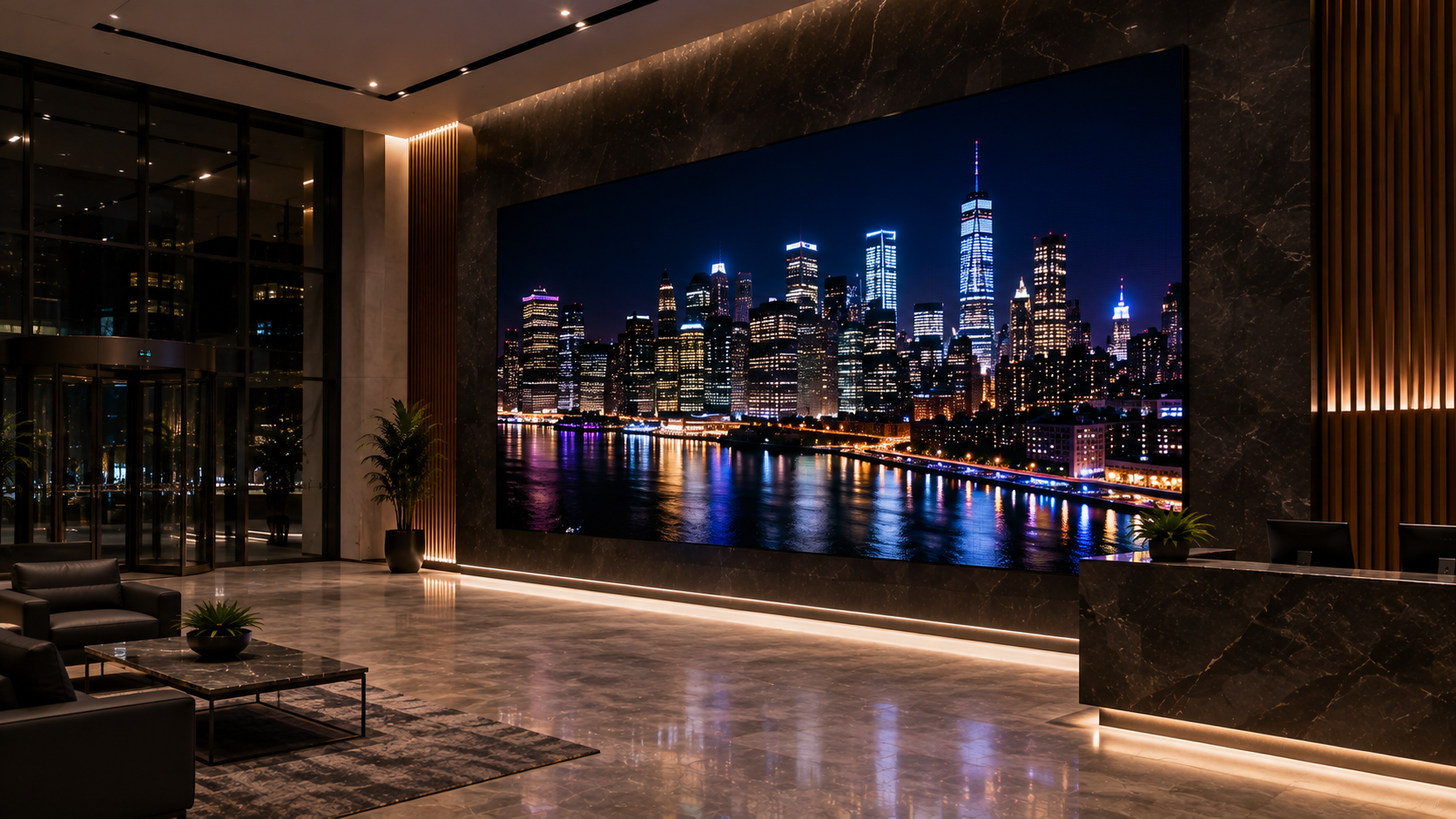
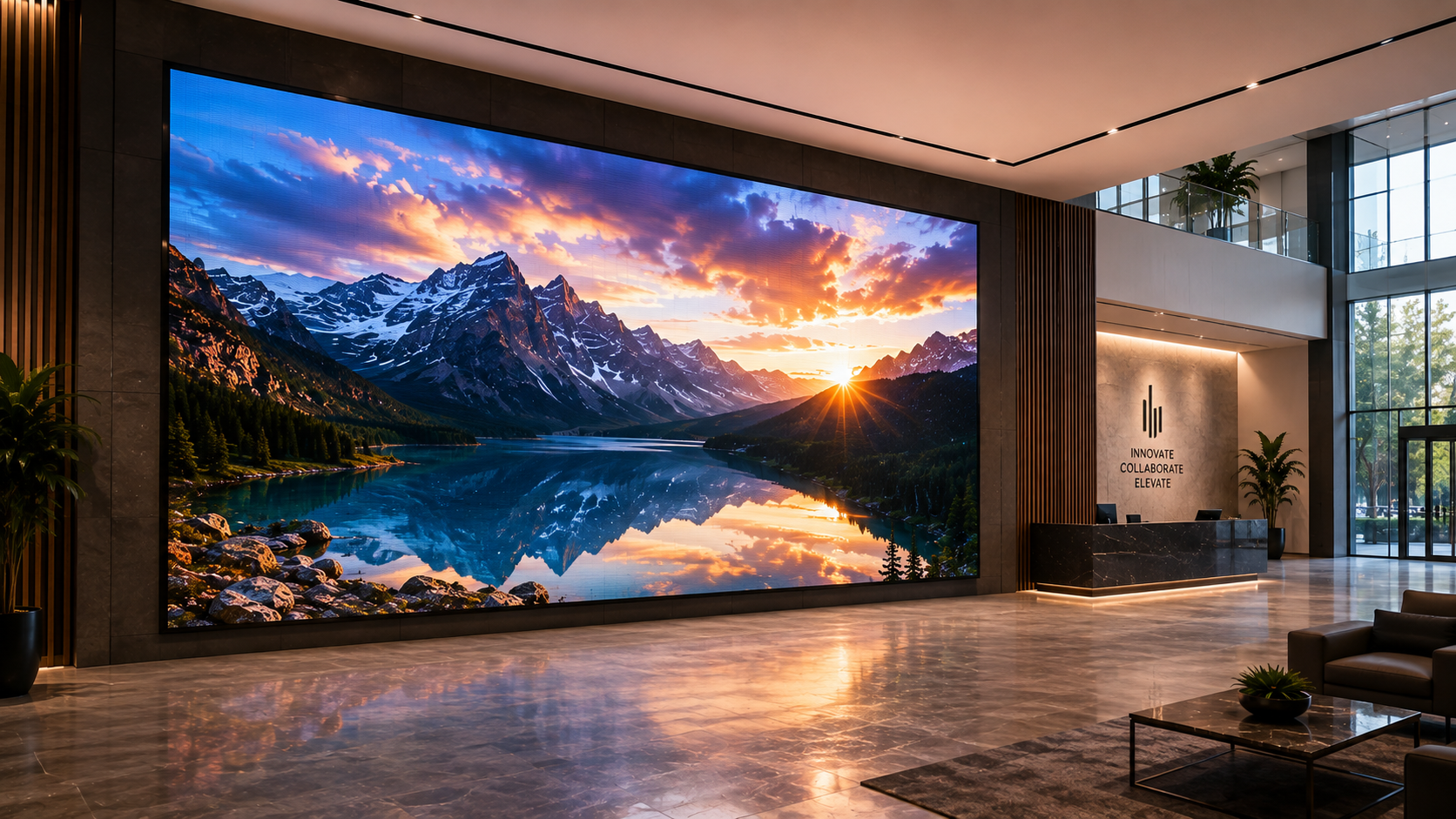
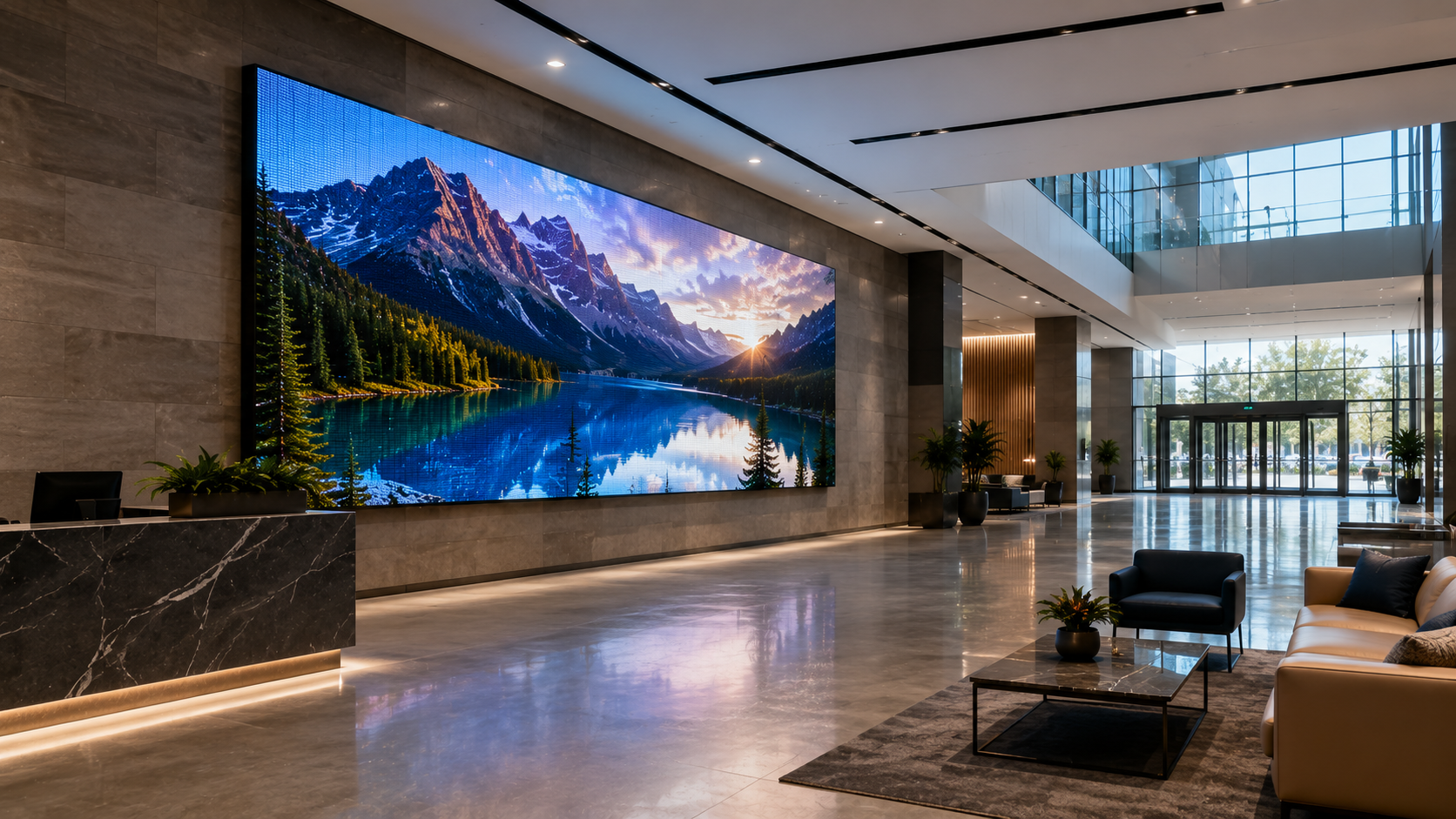
Displays running at maximum brightness consume significantly more power than displays operating in controlled indoor lighting. For example, an indoor LED video wall in a corporate lobby may run at a much lower brightness level than an outdoor LED billboard exposed to direct sunlight.
As a result, outdoor LED displays typically require higher brightness to remain visible during the day. Consequently, they may require more electrical capacity than indoor LED displays of a similar size.
Indoor vs Outdoor LED Display Power Consumption
Indoor and outdoor LED displays have different power requirements. Therefore, the installation environment plays a major role in system planning.
Indoor LED Displays
Indoor LED displays usually operate in controlled lighting conditions. Because of this, they can often run at lower brightness levels while still delivering excellent image quality.
Common indoor applications include:
- Corporate lobbies
- Retail stores
- Museums
- Universities
- Trade show exhibits
- Houses of worship
- Command centers
Since indoor displays do not need to compete with sunlight, they are often easier to optimize for power efficiency. As a result, indoor systems may require less electrical capacity than similarly sized outdoor systems.
Outdoor LED Displays
Outdoor LED displays require higher brightness, weather protection, and stronger environmental performance. Therefore, they often consume more power than indoor displays.
Common outdoor applications include:
- Stadiums
- Outdoor advertising
- Building signage
- Transportation hubs
- Public plazas
- Entertainment venues
Because outdoor displays may operate in sunlight, heat, cold, rain, or dust, proper electrical and thermal planning becomes even more important. Additionally, outdoor systems should be designed with reliable power distribution and environmental protection in mind.
Content Type Also Affects Power Usage
Content plays a major role in LED display power consumption.
Bright, high-contrast visuals generally use more power than darker or ambient content. For example, a full white screen will typically consume more energy than content with darker backgrounds and balanced motion graphics.
Therefore, content strategy can directly impact operating costs. In many cases, small creative changes can reduce energy usage without weakening the visual message.
Power-conscious content design may include:
- Darker backgrounds
- Balanced contrast
- Reduced full-white scenes
- Scheduled brightness adjustments
- Motion graphics optimized for visibility
- Lower brightness content during evening hours
As a result, businesses can reduce energy use without sacrificing visual impact. Furthermore, optimized content can help extend the life of the display system.
Operating Hours and Scheduling
The number of hours a display operates each day also affects total energy cost.
A display running 24/7 will naturally consume more electricity than a display operating only during business hours. However, modern LED control systems often allow organizations to schedule brightness levels and operating times.
For example, a display may run at higher brightness during the day and automatically reduce brightness at night. Additionally, displays can be scheduled to turn off during closed hours.
As a result, scheduling helps reduce unnecessary energy usage while extending the life of the display system. Moreover, it gives businesses better control over operating costs.
Power Supplies and System Efficiency
Efficient power supplies help reduce wasted energy.
High-quality LED display systems are designed to deliver stable power while minimizing unnecessary electrical loss. In addition, proper cabinet design, ventilation, and thermal management help maintain efficient performance.
Poorly planned systems may consume more energy, generate more heat, and require more maintenance over time. Therefore, choosing the right display partner matters. With better planning, businesses can reduce performance issues and improve system reliability.
Electrical Planning for LED Displays
Before installing an LED display, electrical requirements should be reviewed carefully.
Important planning considerations include:
- Total display size
- Maximum power draw
- Average power consumption
- Circuit requirements
- Voltage requirements
- Cable routing
- Heat management
- Backup power needs
- Local code requirements
Because LED displays can vary widely in power demand, businesses should avoid guessing. Instead, the electrical plan should be based on the actual display specifications.
Additionally, early coordination with electricians, installers, and display providers helps prevent delays during installation.
Average Power vs Maximum Power
When reviewing LED display specifications, it is important to understand the difference between average power and maximum power.
Maximum power refers to the highest possible power draw, often based on the display running bright content at high output. Average power, however, is usually a more realistic estimate of normal operation.
Even so, electrical infrastructure must still be planned safely. Therefore, installers and electricians often use maximum power figures when determining circuit requirements.
How to Reduce LED Display Power Consumption
Businesses can reduce LED display power usage through smart planning and system control.
Common strategies include:
- Use automatic brightness adjustment
- Schedule lower brightness during evening hours
- Turn displays off when not needed
- Use efficient power supplies
- Choose the correct pixel pitch
- Avoid excessive brightness settings
- Optimize content design
- Maintain proper ventilation
Together, these steps can lower operating costs while supporting long-term system reliability. In addition, they help businesses get the best performance from their display investment.
Custom LED Systems from Screen Solutions International
Screen Solutions International provides custom LED display solutions for commercial, educational, entertainment, museum, retail, and corporate environments.
Through ssidisplays.com, businesses can explore advanced display technologies including:
- LED video walls
- Digital spheres
- Transparent OLED displays
- Interactive kiosks
- Projection systems
- LED floors
- Custom immersive display solutions
Additionally, SSI helps clients evaluate the full display environment, including brightness requirements, viewing distance, installation conditions, and power planning. As a result, each system can be designed for strong visual performance without unnecessary energy waste.
Final Takeaway
LED display power consumption depends on display size, brightness, content, operating hours, and system efficiency. Although LED technology is highly effective for modern visual communication, every installation should be planned carefully.
With proper electrical planning, efficient components, intelligent brightness control, and optimized content, businesses can reduce operating costs while maintaining impressive visual impact.
Ultimately, organizations planning a new LED video wall, digital signage system, or custom immersive display should consider power consumption early in the process. Screen Solutions International can help design a solution that balances performance, reliability, and energy efficiency.
Use throughout the article:
Screen Solutions International
LED Video Walls
https://ssidisplays.com/led-video-walls/
Digital Signage
https://ssidisplays.com/digital-signage/
Transparent OLED Displays
https://ssidisplays.com/transparent-oled-displays/
Digital Spheres
https://ssidisplays.com/digital-spheres/
Interactive Kiosks
https://ssidisplays.com/interactive-kiosks/
External Sources
U.S. Department of Energy
Provides information on energy efficiency technologies and commercial energy management.
ENERGY STAR
Resource for understanding energy-efficient electronic systems and operational savings.
Digital Signage Federation
https://www.digitalsignagefederation.org/
Industry information regarding digital signage deployment and best practices.
AVIXA
Professional audiovisual industry association with resources on LED displays, video walls, and system design.
Samsung Business LED Displays
https://displaysolutions.samsung.com/
Reference for LED display specifications, brightness, and commercial deployment examples.
LG Business Solutions
https://www.lg.com/us/business
Industry reference for commercial LED display technologies and performance considerations.
Planar LED Display Resources
Technical resources related to LED video wall planning and power considerations.
Absen LED
Global LED manufacturer with educational resources regarding LED display operation and efficiency.